
Understanding the Cost Factors of Installing Solar Panels on Two-Story Houses
As a homeowner considering solar energy, it’s essential to understand the various factors that can impact the overall cost of installing solar panels, especially on a two-story house. The design of your home can influence not only the installation costs but also the efficiency and functionality of a solar system. In this article, we’ll explore three key cost factors you should consider when evaluating solar panel installation for your two-story home.
1. Roof Design and Accessibility
The first major cost factor when installing solar panels on a two-story house is the roof design and accessibility. The complexity of the roof can significantly affect labor costs and the overall installation process.
Roof Pitch and Type
Two-story homes often have varying roof pitches and materials, which can affect installation. For example:
- Steeper Roofs: Steeper pitches can make it more challenging for installers to work safely and efficiently, potentially increasing labor costs.
- Material Considerations: Roofs made from materials like slate or tile may require more careful handling and specific mounting techniques compared to asphalt shingles, leading to higher installation costs.
Accessibility Challenges
Accessibility plays a crucial role in installation costs. If your two-story house has limited access due to landscaping, fences, or narrow streets, the installation process may require additional equipment, such as scaffolding or specialized lifts, which can further drive up costs.
2. Electrical System Upgrades
Another key factor to consider is whether your existing electrical system can support a solar installation. Depending on your home’s age and electrical capacity, you may need to make upgrades that can add to your overall costs.
Assessing Your Electrical Panel
Your electrical panel is responsible for distributing power throughout your home. If it’s outdated or not equipped to handle solar energy, you might need to upgrade it. Here are some points to consider:
- Panel Capacity: Ensure your panel can accommodate the additional load from solar panels. If not, an upgrade may be necessary.
- Wiring and Breakers: Older wiring might not meet the current code or may need to be replaced to handle the power produced by the solar system.
It’s advisable to have a professional assessment of your home’s electrical system to identify any necessary upgrades before installation. This information can be crucial when obtaining quotes from solar installers.
3. Permitting, Inspection, and Incentives
Finally, the permitting and inspection process can influence the cost and timeline of your solar installation. Each locality has its own rules, fees, and requirements that can add variability to your project’s overall cost.
Navigating Local Regulations
Before installation, you must obtain the necessary permits from your local government. This process typically includes:
- Building Permits: Required for structural alterations or installation of solar panels.
- Electrical Permits: Needed for any changes to the electrical system.
- Inspections: Your installation will likely require one or more inspections to ensure compliance with local codes.
Each of these steps can incur fees that vary widely based on location. Be sure to check with your local building department for current fees and requirements.
Understanding Incentives
Many homeowners are also interested in potential incentives for solar installation. These can vary significantly by state and locality. It’s essential to research current federal, state, and local incentives that might be available to you. However, keep in mind that these incentives often require independent verification and may not be guaranteed. Consulting with a qualified solar installer can help you understand what incentives apply to your situation.
Key Takeaways for Homeowners
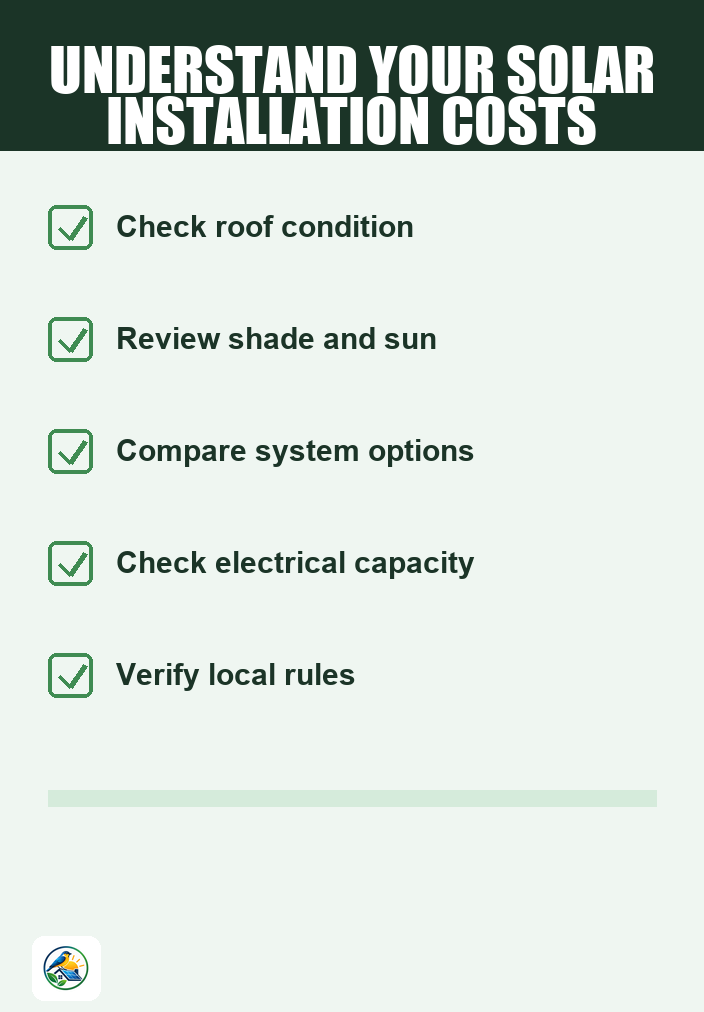
When considering solar panel installation for your two-story home, it’s crucial to evaluate the factors discussed above:
- Assess your roof design and accessibility, as these can impact installation costs.
- Evaluate whether your electrical system needs upgrades to accommodate solar energy.
- Familiarize yourself with local permitting requirements and potential incentives that may be available.
By understanding these cost factors, you can make a more informed decision about whether solar energy is a viable option for your home.
Next Steps
As you move forward, consider obtaining itemized quotes from qualified solar installers. These quotes will help you understand the specific costs associated with your installation, including any necessary upgrades, permitting fees, and potential incentives. Comparing multiple quotes will provide a clearer picture of your options and help you make the best decision for your energy needs.


















