
Understanding Solar Installation Contractors: Key FAQs for Homeowners
As a homeowner considering a residential rooftop solar system, whether or not to install solar panels can feel overwhelming. With numerous contractors vying for your attention, it’s critical to ask the right questions and understand your options. This article answers frequently asked questions to help you compare contractors and make informed decisions about solar installations.
What Should I Look for When Comparing Solar Installation Contractors?
When evaluating solar installation contractors, focus on several key factors to ensure a reliable and effective installation:
- Experience and Reputation: Look for contractors with a solid track record in your area. Check reviews and testimonials from past clients to gauge their reliability and quality of work.
- Licensing and Insurance: Ensure that the contractor is licensed and insured in your state. This protects you from liability and ensures compliance with local regulations.
- Warranties and After-Sales Support: A reputable contractor should offer warranties on both the equipment and installation work. Inquire about what is covered and for how long.
- Financing Options: Understand the financing options available through the contractor. This includes payment plans, leases, or power purchase agreements (PPAs).
- System Design: Ask how the contractor designs the system. A customized approach should consider your home’s orientation, roof pitch, and shading factors.
What Questions Should I Ask Potential Contractors?
To ensure you’re making a well-informed decision, consider asking these specific questions:
- Can you provide references? Speak with past clients about their experiences, including installation quality and ongoing support.
- What is the expected timeline for installation? Understanding the timeline helps you plan for the installation process and any necessary preparations.
- How do you handle permits and interconnection? A good contractor should manage all necessary permits and help you navigate local utility interconnection requirements.
- What type of equipment will you use? Inquire about the brands and types of solar panels and inverters they recommend, and why.
- What happens if my roof needs repairs? Understand how the contractor handles roof repairs and whether they will assist in these situations.
How Do I Compare Quotes from Different Contractors?
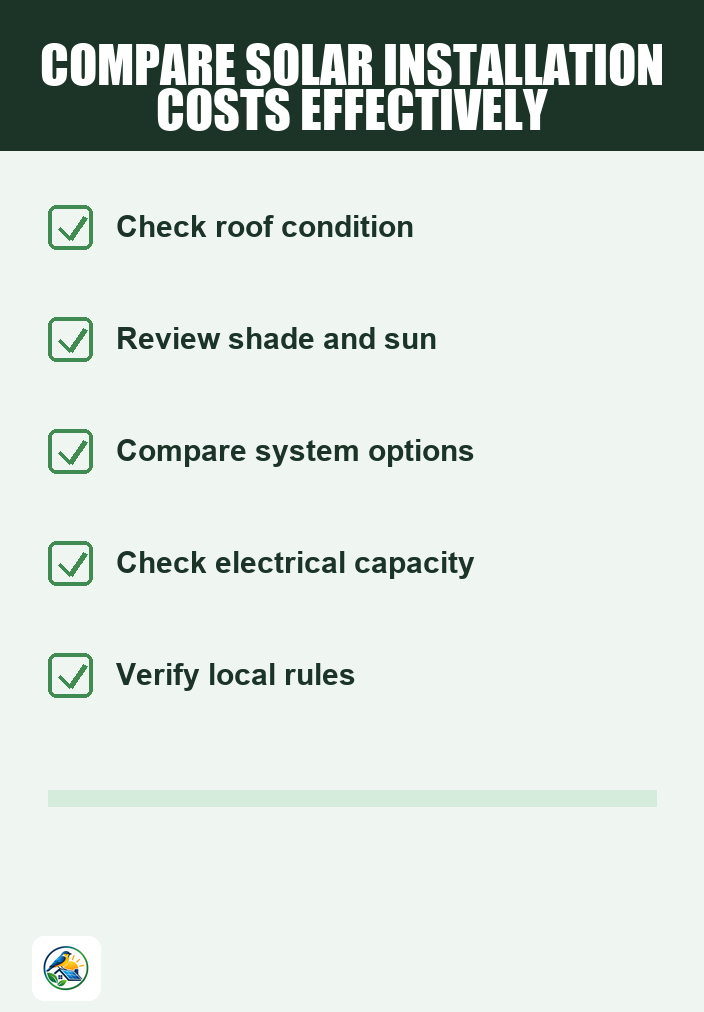
When comparing quotes, look beyond the bottom line. Here’s how to break it down:
- Itemized Breakdown: Ensure each quote provides a detailed list of equipment, installation costs, labor, and any additional fees. This transparency allows for clearer comparisons.
- System Size and Output: Compare the size of the solar systems being proposed. Look for estimates of how much energy each system can produce based on your energy needs.
- Incentives and Financing: Review how each contractor incorporates local incentives and financing options into their quotes. This can significantly affect your overall costs.
- Warranty Terms: Compare the warranties offered on equipment and installation. Longer warranties typically indicate a contractor’s confidence in their work.
What Are the Different Types of Solar Systems I Should Consider?
Homeowners can choose from several types of solar systems, each with unique benefits and considerations:
- Grid-Tied Systems: These are the most common and connect directly to the utility grid. They allow homeowners to take advantage of net metering, where excess energy produced can be sent back to the grid for credits.
- Battery Backup Systems: These systems store energy for use when the grid is down or during peak hours. They can provide peace of mind but may involve additional costs and maintenance.
- Off-Grid Systems: Ideal for remote locations, these systems operate independently of the grid. They require careful planning for energy needs and may necessitate larger battery storage.
- Hybrid Systems: Combining grid-tied and battery backup features, hybrid systems can provide flexibility and energy independence while still connecting to the utility grid.
What Maintenance Do Solar Systems Require?
Understanding maintenance requirements is essential when considering solar installations. Here are some key points:
- Regular Cleaning: Dust, debris, and bird droppings can affect energy production. Regular cleaning, typically once or twice a year, can help maintain efficiency.
- Inspections: Annual inspections by a qualified technician can help identify potential issues before they become significant problems.
- Monitoring Performance: Many modern systems offer monitoring software to track performance. Keeping an eye on this can help you catch performance drops early.
Are There Any Drawbacks to Installing Solar Panels?
While solar panels offer many benefits, there are some potential drawbacks to consider:
- Initial Costs: The upfront costs can be significant, and while financing is available, it’s essential to evaluate how it fits your budget.
- Roof Condition: If your roof is old or in poor condition, it may need repairs or replacement before installation, adding to costs.
- Shade and Orientation: Trees, buildings, or other obstructions can affect solar panel efficiency. Consultation with a contractor can help assess your site.
- Utility Policies: Local utility policies regarding net metering and interconnection can vary widely and may impact your savings and system performance.
Next Steps: Making Your Solar Decision
As you consider a solar installation, take the time to compare itemized quotes from qualified contractors. Look for transparency in pricing, equipment quality, and customer support. Always verify local utility, government, and tax incentive information to ensure you’re making a well-informed decision.
With the right information and careful comparisons, you can confidently choose a solar installation contractor that aligns with your needs and goals. Solar energy has the potential to enhance your home’s efficiency and sustainability—making the effort to find the right fit worthwhile.


















