
Understanding the Challenges of Steep Roofs for Solar Panel Installation
Installing solar panels on steep roofs presents unique challenges and opportunities for homeowners considering a residential solar energy system. While the inclination of the roof can enhance sunlight exposure, it also raises specific considerations that can impact the efficiency and feasibility of the installation. In this article, we will explore key factors to maximize solar panel efficiency on steep roofs and provide practical insights to help you make informed decisions.
The Benefits of Steep Roofs for Solar Panels
Homeowners with steep roofs may find that their property has certain advantages for solar panel installation:
- Increased Sun Exposure: Steep roofs can often capture more sunlight during the day, especially in areas with significant seasonal variations in sunlight.
- Better Drainage: The slope allows for effective water runoff, reducing the risk of water pooling which can lead to roof damage.
- Visual Appeal: A well-installed solar panel system on a steep roof can be aesthetically pleasing, blending seamlessly with the home’s architecture.
Key Considerations for Maximizing Efficiency
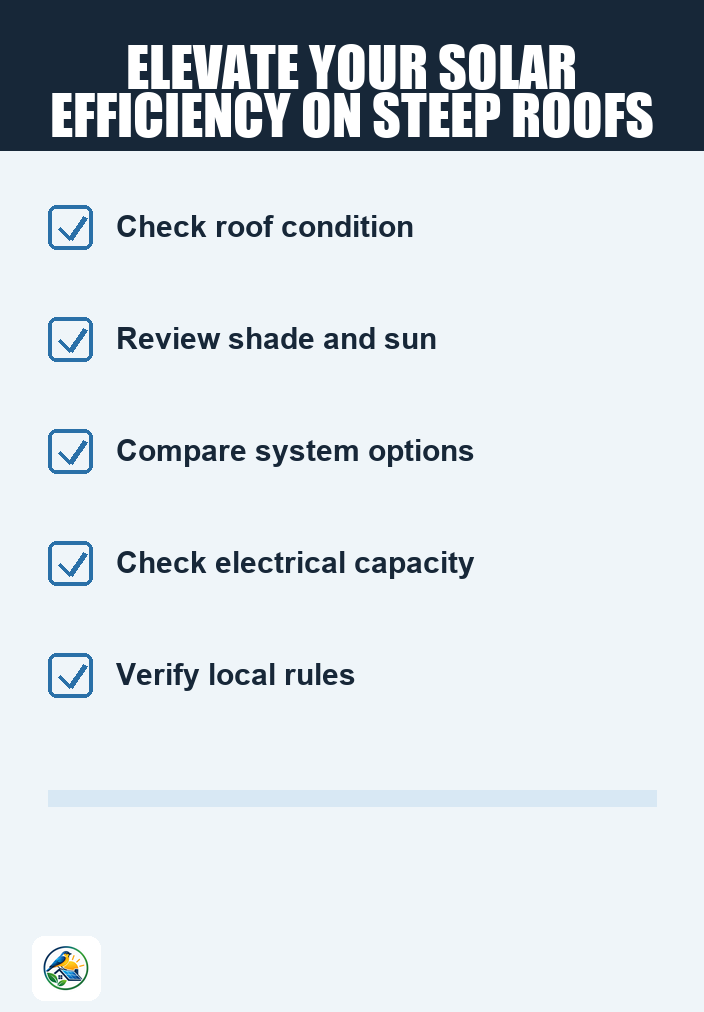
While steep roofs offer benefits, there are several critical considerations to keep in mind when planning your solar panel installation. Here are some of the most important factors:
1. Roof Orientation and Angle
The direction your roof faces plays a significant role in solar energy production. In the U.S., south-facing roofs typically receive the most sunlight, optimizing energy production. However, east and west orientations can also be effective depending on your energy needs and daily usage patterns. The angle of the roof affects how much sunlight the panels will receive throughout the day and year. Ideally, the pitch should be between 30 and 45 degrees for optimal performance.
2. Shade Analysis
Evaluate any potential shading from nearby trees, buildings, or other structures. Even a small amount of shade can significantly reduce the efficiency of solar panels. It’s essential to conduct a thorough shading analysis, ideally over the course of a year, to determine how sunlight will interact with your roof and the proposed solar system.
3. Roof Condition and Age
Before investing in solar panels, assess the condition of your roof. If your roof is older or in poor condition, it might require repairs or replacement before installation. A stable, well-maintained roof is crucial since solar panels can last 25 years or more. Additionally, ensure that your roof structure can support the weight of solar panels and mounting equipment.
4. Solar Panel Tilt and Mounting Options
Steep roofs often lend themselves to specific mounting options. Adjustable mounts can allow you to tilt panels at an optimal angle for maximum sunlight exposure. However, these systems can be more expensive and require careful installation to ensure they are secure and weather-resistant.
5. Electrical System Compatibility
Before installation, consult with a professional to assess your current electrical system. Depending on your home’s age and structure, upgrades may be necessary to handle the energy produced by your new solar panels. This might include enhancing your inverter system or upgrading your electrical panel.
6. Local Regulations and Permitting
Always check local building codes and regulations regarding solar installations on steep roofs. Some regions may have specific requirements for roof-mounted solar systems, including permits, structural assessments, and inspections. Engaging a qualified solar installer who understands local laws can save you time and potential headaches.
Trade-offs and Limitations
While steep roofs can provide benefits, there are trade-offs to consider:
- Installation Complexity: Steeper roofs can complicate the installation process, potentially increasing labor costs and installation time.
- Safety Risks: Working on a steep roof poses safety concerns for installers. Make sure to choose a reputable company that prioritizes safety and has experience with steep installations.
- Maintenance Challenges: If your roof is steep, maintenance may be more difficult. Regular cleaning and inspections are essential to keep your solar panels functioning efficiently.
Comparing Solar Panel Systems
When considering solar panels for your steep roof, you may come across different types of systems, including grid-tied, battery backup, and off-grid solutions. Here’s a brief comparison:
- Grid-Tied Systems: These systems connect directly to the local utility grid, allowing you to draw electricity when solar production is low and feed excess energy back into the grid.
- Battery Backup Systems: These systems store energy produced during the day for use at night or during outages. They can be especially beneficial if you have frequent power outages or a high reliance on electricity.
- Off-Grid Systems: These are standalone systems not connected to the grid. They are often more expensive and require careful planning to ensure energy needs are met year-round.
Next Steps: Getting Professional Quotes
After considering the various factors that impact solar panel efficiency on steep roofs, the next step is to obtain quotes from qualified solar installers. Look for companies with experience in steep roof installations and ask for itemized quotes detailing the costs of equipment, installation, and any necessary upgrades.
Compare these quotes carefully, considering not just the price but also the quality of materials, warranty offerings, and customer reviews. This comprehensive approach will help you make an informed decision about whether solar is the right fit for your home.


















