
Understanding the Synergy Between Solar Panels and Heat Pumps
As homeowners increasingly seek sustainable solutions to reduce energy costs and enhance home efficiency, the combination of solar panels and heat pumps has gained attention. This synergy can potentially maximize energy efficiency and reduce reliance on traditional energy sources. But how exactly do solar panels enhance home efficiency when integrated with heat pumps? Let’s explore the interplay between these two technologies, their benefits, and the considerations homeowners should keep in mind.
How Solar Panels Work with Heat Pumps
Solar panels convert sunlight into electricity, which can be used to power various household appliances and systems, including heat pumps. Heat pumps operate by transferring heat rather than generating it through combustion, making them an efficient option for heating and cooling spaces. When combined, solar panels can provide the electricity needed to run heat pumps, leading to a more energy-efficient home.
The Benefits of Combining Solar Panels with Heat Pumps
- Reduced Energy Costs: By using solar energy to power your heat pump, you can potentially lower your electricity bills. This is particularly beneficial in regions with high heating and cooling demands.
- Environmental Impact: Both systems help reduce carbon footprints when compared to traditional fossil fuel-based heating and cooling systems. Using renewable energy for your heat pump further enhances sustainability.
- Increased Home Resilience: If equipped with a battery storage system, homeowners can store excess solar energy generated during the day to power heat pumps during the night or on cloudy days.
- Year-Round Efficiency: Heat pumps can provide both heating and cooling, making them versatile. Using solar power for these systems can enhance energy efficiency year-round.
Key Considerations for Homeowners
While the combination of solar panels and heat pumps can offer significant benefits, several factors should influence your decision:
1. Roof Condition and Orientation
The effectiveness of a solar panel system relies heavily on the condition and orientation of your roof. A roof in good condition with optimal southern exposure will likely yield the best results. If your roof is shaded by trees or has a steep pitch, it may not be ideal for solar installation.
2. Local Climate
Climate plays a crucial role in the efficiency of both solar panels and heat pumps. In colder climates, heat pumps may require supplementary heating sources, while solar production can be less reliable in regions with frequent cloudy weather. Understanding your local climate can help you gauge the potential effectiveness of these systems.
3. Electrical System Upgrades
Before installing solar panels or heat pumps, it’s essential to assess your home’s electrical system. Older homes may require upgrades to accommodate the new technology, which can add to the overall project cost. Consulting with an installer can help determine whether your existing electrical system is compatible.
4. Installation Costs and Financing
The installation costs for solar panels and heat pumps can vary widely based on your location, the size of the system, and the complexity of the installation. Additionally, financing options may be available, but it’s important to evaluate how these options fit into your long-term financial planning. Always obtain itemized quotes from multiple qualified installers to compare costs accurately.
5. Incentives and Permitting
Many local, state, and federal incentives may be available for solar panel and heat pump installations. However, these incentives can change over time, so it’s crucial to verify current eligibility requirements and application processes. Additionally, local permitting processes can impact installation timelines, so understanding these regulations beforehand is essential.
Evaluating Your Home’s Compatibility
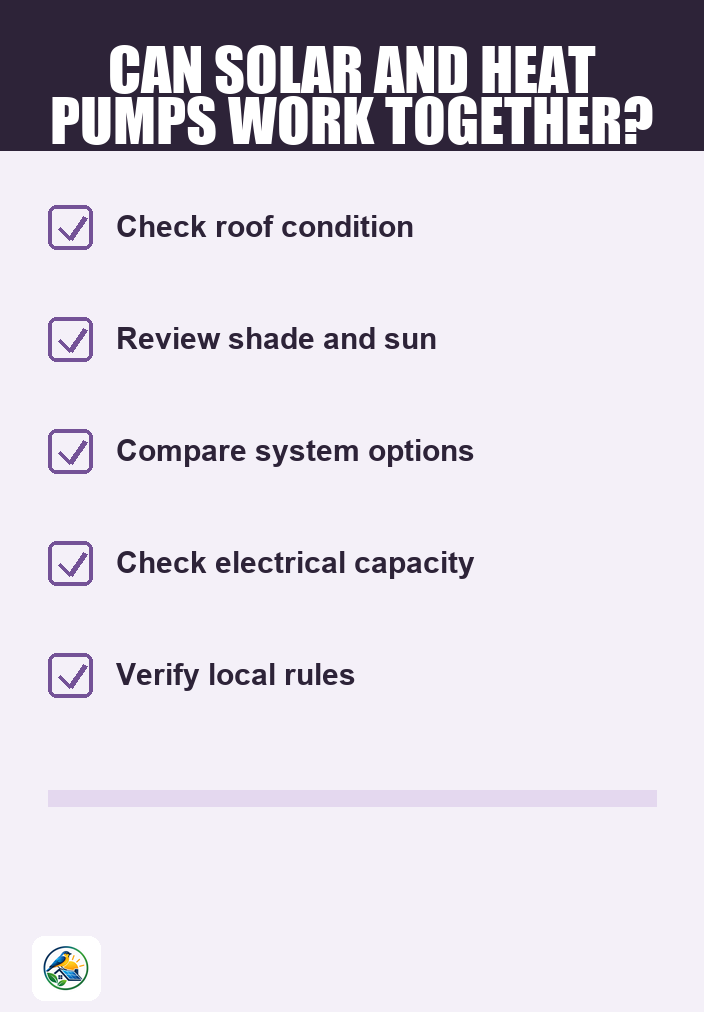
Not every home is a perfect candidate for solar panels or heat pumps. Here’s a quick checklist to help you evaluate your property:
- Is your roof in good condition and positioned favorably for solar exposure?
- Do you live in a climate that supports the efficient operation of heat pumps?
- Is your electrical system up to date and capable of handling additional loads?
- Have you researched local incentives and permitting requirements?
Potential Drawbacks to Consider
While the combination of solar panels and heat pumps is promising, it’s important to consider potential drawbacks:
- Initial Costs: The upfront costs can be significant. Homeowners should weigh these against long-term savings and benefits.
- Maintenance: Both systems require regular maintenance. Understanding these responsibilities is crucial for long-term efficiency.
- Weather Dependency: Solar energy production can be affected by weather conditions, which may impact the overall system efficiency.
Next Steps for Homeowners
If you’re considering enhancing your home’s efficiency with solar panels and heat pumps, start by conducting thorough research. Here are some practical next steps:
- Assess your roof condition and orientation.
- Evaluate your local climate and electrical system.
- Research local incentives and permitting processes.
- Obtain itemized quotes from multiple qualified installers to compare costs and services.
Integrating solar panels with heat pumps can indeed enhance home efficiency, but it requires careful consideration of your specific circumstances. By taking the time to understand the trade-offs and opportunities, you can make a more informed decision about whether this combination is right for your home.


















