
Understanding Solar Installation Warranties
When considering a solar installation for your home, one critical aspect that often gets overlooked is the warranty. Solar warranties can significantly impact your long-term satisfaction and investment in a solar system. This article aims to provide you with a beginner’s insight into the different types of warranties available, what they cover, and how to evaluate them as you compare quotes from installers.
Types of Solar Warranties
There are generally three main types of warranties associated with solar systems: product warranties, performance warranties, and installation warranties. Each serves a unique purpose and is essential for different reasons.
1. Product Warranties
Product warranties cover defects in materials or workmanship. For solar panels, this typically means that if a panel fails due to manufacturing defects, the manufacturer will repair or replace it at no cost to you. Most solar panels come with a product warranty that lasts between 10 to 25 years. Here are some important points to consider:
- Duration: A longer warranty often indicates a manufacturer’s confidence in their product.
- Coverage: Check what specifically is covered (e.g., materials, components, etc.) and what isn’t.
- Transferability: If you sell your home, can the warranty be transferred to the new owner?
2. Performance Warranties
Performance warranties guarantee a certain level of energy production over time. This warranty ensures that your solar panels will produce a specified percentage of their rated output for a certain number of years, often around 80-90% after 25 years. Key considerations include:
- Initial Output: What is the expected energy output in the first year?
- Degradation Rate: How much will the panel’s efficiency decline each year?
- Claim Process: Understand how to file a claim if your panels aren’t performing as promised.
3. Installation Warranties
Installation warranties cover the workmanship of the installation itself. If there are issues like leaks or structural problems due to improper installation, this warranty ensures that the installer will address those issues. Consider the following:
- Duration: Installation warranties typically last from 1 to 10 years.
- Scope: Know what types of issues are covered and any exclusions.
- Installer Reputation: Research the installer’s history; a good reputation can indicate fewer problems.
Comparing Warranties: What to Look For
When comparing warranties among different installers, here are some steps to ensure you make an informed decision:
- Request Warranty Information: Don’t hesitate to ask for detailed warranty documents from each installer.
- Compare Coverage: Look for the specifics of what is covered and for how long. A warranty with broader coverage can offer more peace of mind.
- Check Reviews: Look for customer reviews and testimonials about the manufacturer’s and installer’s service and reliability.
- Ask About Claims Process: Understand how the warranty claims process works, including any documentation you might need to provide.
- Evaluate Costs: Sometimes, more extended warranties can come at a higher price. Weigh the cost against the potential benefits.
Common Trade-offs and Considerations
While warranties are essential, they are just one piece of the puzzle. Here are some trade-offs and considerations to keep in mind:
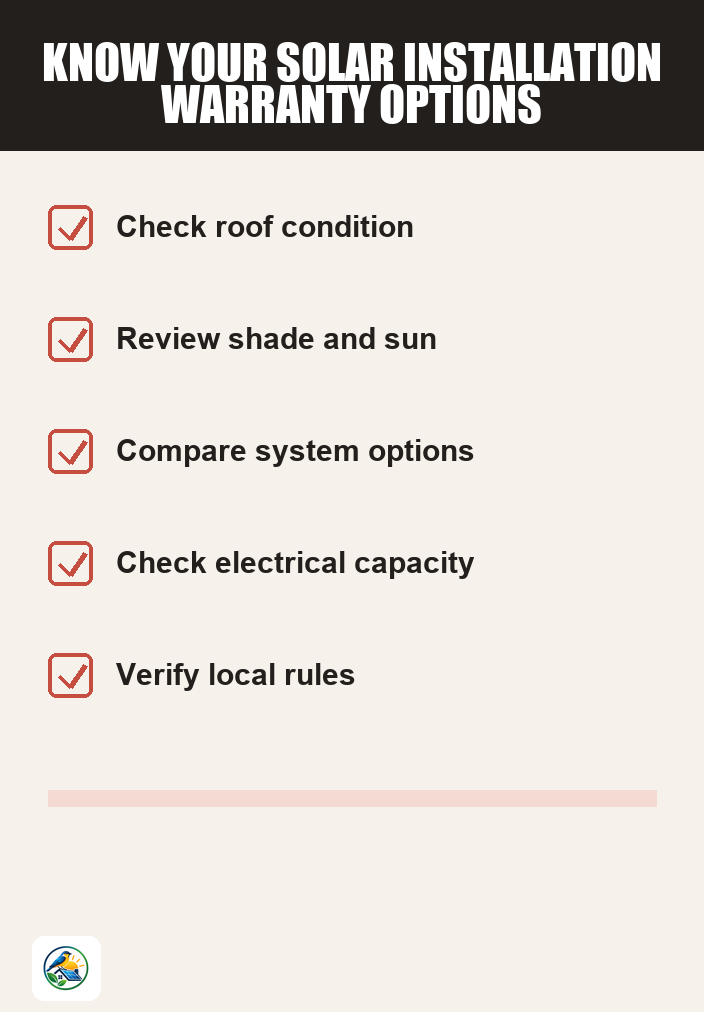
- Roof Condition: Ensure your roof is in good condition before installation, as this can affect both warranty claims and overall performance.
- Shading and Orientation: Your roof’s orientation and any shading can impact energy production and performance warranty claims.
- Electrical Upgrades: If your home needs electrical upgrades, this can affect installation costs and timelines.
- Financing Costs: If you’re financing your solar system, consider how that impacts your overall budget and whether it affects warranty options.
- Weather Considerations: Some systems may be more resilient in harsh climates. Check warranties specific to your local weather conditions.
Next Steps for Homeowners
As a homeowner considering solar energy, it’s crucial to compare itemized quotes from qualified installers. Be sure to ask for detailed warranty information and any additional documentation that outlines what is covered. Since local utility policies, permitting, and incentives vary, ensure you verify current information relevant to your area.
Ultimately, understanding solar installation warranties is a crucial step in the decision-making process. While they may not be the most exciting aspect of solar installation, having robust warranties can provide you with peace of mind and protect your investment for years to come.


















