
Understanding the Compatibility of Solar Panels and Metal Roofs
As a homeowner considering solar energy, you might be wondering whether solar panels are a suitable option for your metal roof. Metal roofs have become increasingly popular due to their durability, longevity, and modern aesthetic appeal. However, the decision to install solar panels on a metal roof involves various factors that need careful consideration. This article will guide you through the key aspects of this decision, helping you determine if solar panels are the right fit for your home.
Benefits of Installing Solar Panels on Metal Roofs
Metal roofs offer several advantages that can complement a solar panel installation:
- Durability: Metal roofs are known for their resilience, often lasting 40-70 years. This longevity can align well with the lifespan of solar panels, which typically last around 25-30 years.
- Lightweight: Metal roofing is generally lighter than traditional roofing materials, which can simplify the installation process and reduce structural load concerns.
- Installation Flexibility: Many metal roofs come with standing seams, which provide ideal mounting points for solar panels without penetrating the roof surface, minimizing the risk of leaks.
- Energy Efficiency: Metal roofs reflect sunlight, which can help reduce cooling costs in warmer climates. This may enhance the overall energy efficiency of your home when combined with solar energy production.
Considerations and Trade-Offs
While there are benefits, it’s essential to consider potential drawbacks and trade-offs:
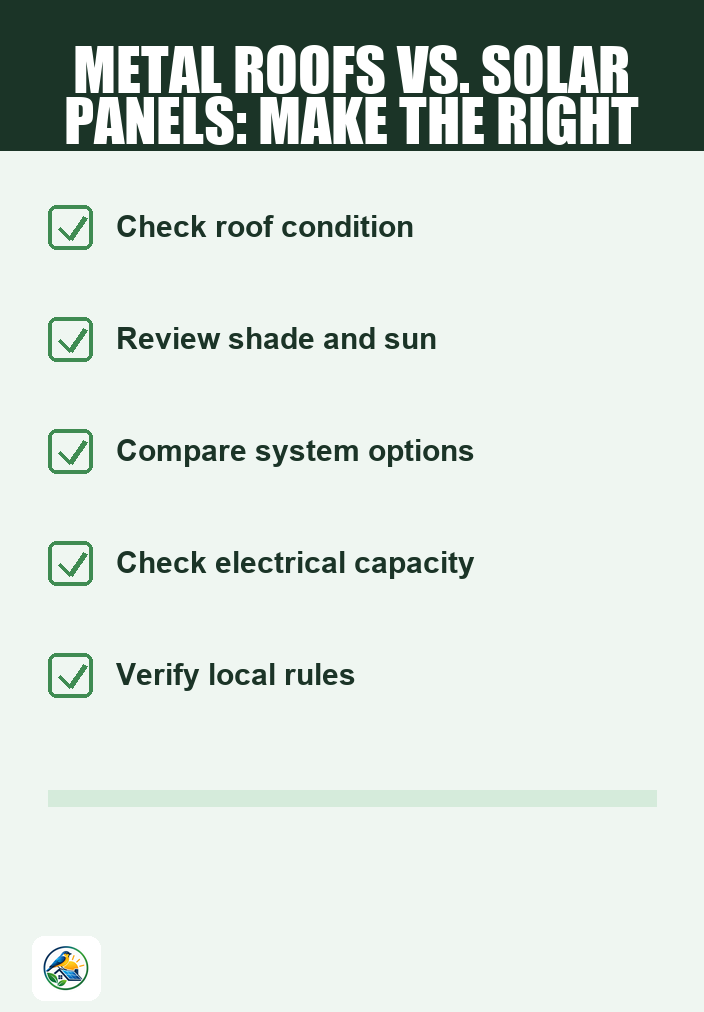
Roof Condition
Before installing solar panels, assess the condition of your metal roof. If your roof has significant wear or damage, it may be prudent to repair or replace it before proceeding with solar installation. This can prevent the need for costly removals and re-installations in the future.
Shade and Orientation
The location of your home and surrounding trees or structures can affect solar panel efficiency. Panels should ideally be installed in areas that receive maximum sunlight exposure throughout the day. If your metal roof is shaded or not optimally oriented, the energy output may be lower than expected.
Electrical System Compatibility
Make sure your home’s electrical system can handle the additional load from solar panels. If your electrical system is outdated or not designed for solar integration, upgrades may be necessary, which can add to the overall cost.
Permitting and Utility Regulations
Installing solar panels often requires permits and adherence to local utility regulations. Check with your local government and utility company to understand specific requirements and any potential impact on your installation timeline.
Types of Solar Systems to Consider
When deciding on solar panels for your metal roof, you’ll need to consider which type of system suits your needs:
- Grid-Tied Systems: These systems connect to the local utility grid, allowing you to draw power from the grid when solar production is low and send excess power back to the grid. This is often the most cost-effective option for homeowners.
- Battery Backup Systems: If you’re concerned about power outages or want to maximize energy independence, consider a battery backup system. This allows you to store excess energy produced during sunny days for use during nighttime or outages.
- Off-Grid Systems: For those living in remote areas without access to grid power, off-grid systems provide complete energy independence. However, these systems often require more significant upfront investment and careful planning.
Cost Considerations and Financial Planning
Understanding the financial implications of installing solar panels on your metal roof is crucial:
- Installation Costs: Get itemized quotes from multiple qualified solar installers. This helps you compare costs and understand what’s included, such as equipment, labor, and any required upgrades.
- Incentives: Research local and federal incentives that may be available to you, but be aware that these can vary significantly. Confirm current details from reliable sources.
- Financing Options: Explore different financing options, such as cash purchases, loans, or leasing. Each has its implications for total cost and potential savings over time.
Maintenance and Long-Term Considerations
Solar panels require minimal maintenance, but it’s still essential to keep a few points in mind:
- Cleaning: Dust, debris, and snow can accumulate on solar panels, particularly in certain climates. Regular cleaning may be necessary to maintain efficiency.
- Monitoring Performance: Many systems come with monitoring tools that help track energy production. Regularly check performance to ensure your system is operating as expected.
- Future Home Plans: Consider your long-term plans for your home. If you anticipate moving or making significant renovations, ensure that solar installation aligns with those future plans.
Next Steps in Your Solar Journey
Deciding whether solar panels on your metal roof are right for your home involves a thoughtful evaluation of the benefits, considerations, and overall compatibility. Here are some practical next steps:
- Assess your roof’s condition and shading.
- Research local installers and request itemized quotes to compare options.
- Explore available financial incentives and financing options.
- Consult with a professional installer to discuss specific needs and obtain advice tailored to your situation.
By considering these factors and engaging with qualified professionals, you can make an informed decision about whether solar energy is a viable option for your home.


















