
Understanding Solar Panel Equipment Warranties
When considering a residential solar panel system, one crucial aspect that often gets overlooked is the warranty associated with the equipment. Solar panel warranties can significantly influence your long-term satisfaction and financial stability regarding your solar investment. This article aims to help you navigate the key mistakes homeowners make when deciding on solar panel equipment warranties, ensuring you make an informed decision.
Types of Solar Panel Warranties
Before diving into common mistakes, it’s essential to understand the types of warranties typically offered with solar panel systems:
- Product Warranty: This warranty covers defects in materials and workmanship. Most manufacturers offer a product warranty ranging from 10 to 25 years.
- Performance Warranty: This guarantees a certain level of energy production over time. It’s common for manufacturers to promise that panels will produce at least 80% of their rated output after 25 years.
- Installation Warranty: Provided by the installer, this warranty covers the installation quality. It typically lasts from 1 to 10 years, depending on the company.
Common Mistakes to Avoid When Choosing Warranties
1. Overlooking the Fine Print
One of the most significant mistakes homeowners make is not reading the warranty terms carefully. Warranties often contain exclusions and conditions that can affect your coverage. Pay attention to:
- What specific issues are covered?
- Are there any conditions that void the warranty?
- What is the process for filing a warranty claim?
Understanding these details can save you from unexpected costs later on.
2. Ignoring the Installer’s Reputation
Homeowners often focus solely on the equipment warranties and overlook the importance of the installer’s reputation. A poorly installed system can lead to failures that may not be covered under the product warranty. Research the following:
- Reviews and testimonials from previous customers.
- The installer’s experience and credentials.
- Whether they offer a robust installation warranty.
A reputable installer can significantly reduce the risk of issues arising down the line.
3. Failing to Compare Warranties Across Products
Another common mistake is not comparing warranty offerings from different manufacturers. Warranties can vary greatly, and a product that seems cheaper upfront might have a shorter warranty period or less favorable terms than a slightly more expensive option. Consider:
- How long is the product warranty?
- What is the performance warranty duration and percentage guarantees?
- How do the warranties compare for similar products?
Take the time to evaluate multiple options to find the best balance of price and warranty coverage.
4. Neglecting Future Changes in Energy Needs
Your energy needs may change over time due to lifestyle changes, renovations, or energy efficiency upgrades. Choosing a solar system with a rigid warranty may limit your ability to adapt. Think about:
- Whether the equipment can be easily expanded or modified in the future.
- If the warranty covers changes or upgrades to your system.
Flexibility can be a significant advantage as your energy requirements evolve.
5. Not Considering Local Climate and Conditions
Your local climate and environmental conditions can affect the performance and durability of solar panels. Some warranties may not cover damage from extreme weather, such as hail or heavy snow. Investigate:
- What climate-related issues are specifically covered or excluded?
- Do the panels come with additional protective features for your environment?
Choosing equipment suited for your local conditions can prevent potential warranty issues.
6. Overlooking Maintenance Requirements
Some warranties may require regular maintenance to remain valid. Failing to adhere to maintenance guidelines can void your warranty. When reviewing warranties, check:
- What routine maintenance is required?
- Are there recommended service intervals?
Understanding these aspects upfront can ensure you maintain your warranty without additional costs.
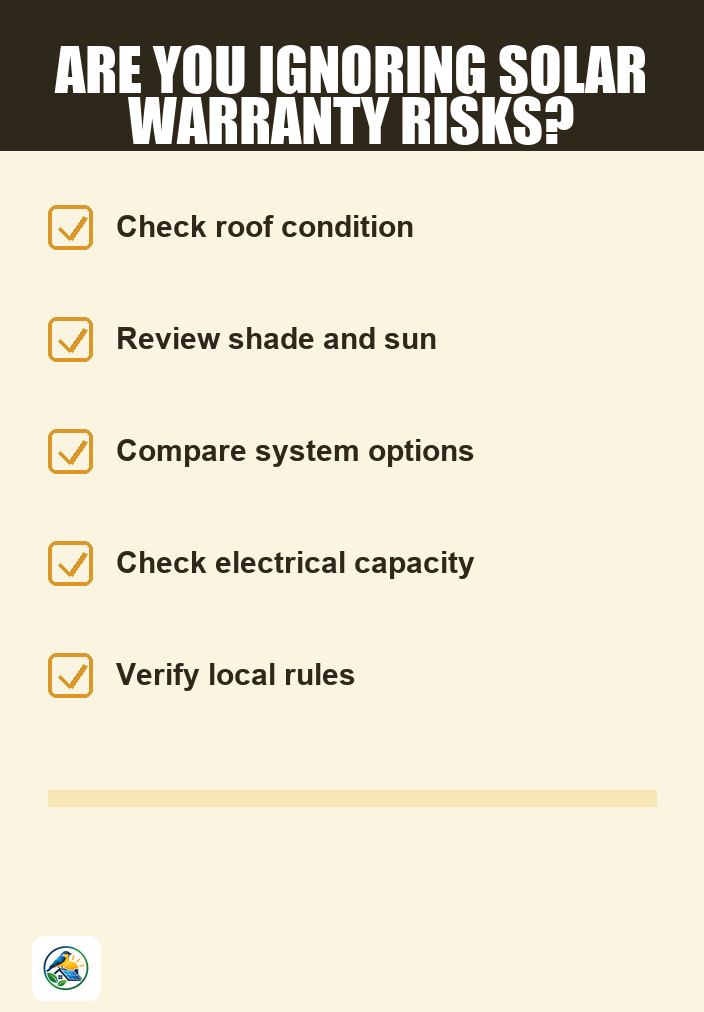
Checklist for Evaluating Solar Panel Warranties
To simplify your decision-making process, here’s a checklist for evaluating solar panel warranties:
- Read the fine print carefully.
- Research the installer’s reputation and warranty offerings.
- Compare warranties across different products.
- Consider your future energy needs.
- Evaluate climate suitability and warranty coverage.
- Understand maintenance requirements for keeping the warranty valid.
Next Steps for Homeowners
Before finalizing your solar panel choice, obtain itemized quotes from multiple qualified installers. These quotes should detail equipment, installation costs, and warranties. Comparing these details will give you a clearer picture of what you are investing in and how well it aligns with your needs.
Lastly, remember to verify any current local incentives or tax credits that may apply to your situation, as these can change over time. Doing thorough research and avoiding common pitfalls will help ensure you choose the right solar panel system for your home.


















