
Understanding Your Reasons for Cancellation
Before deciding to cancel your solar project, it’s essential to take a step back and evaluate your motivations. Understanding why you’re considering cancellation can help clarify whether it’s the right decision for you. Here are some common reasons homeowners might contemplate canceling a solar installation:
- Financial Concerns: Rising costs or unexpected expenses may lead you to reconsider the investment.
- Home Value: Concerns about how solar panels might affect your home’s resale value.
- Home Condition: Issues with your roof or electrical system that may complicate installation.
- Incentives or Rebates: Changes in federal or state incentives that make solar less appealing.
- Utility Policies: New rules affecting net metering or other financial incentives from your utility company.
Evaluating Financial Factors
Financial considerations are often at the forefront of any decision to cancel a solar project. However, it’s important to understand the full scope of costs associated with solar installation. Here are some key financial questions to consider:
What Are the Total Costs?
Review the total costs of your solar project, including:
- Initial installation costs
- Maintenance costs over time
- Potential financing charges
Compare these costs with your initial estimates and current financial situation. If you’ve received itemized quotes from multiple installers, this could provide clarity on what you’re getting for your investment.
Have You Explored Financing Options?
If financing is a concern, consider different payment options. Some homeowners choose to finance their solar installations, while others may opt for leasing. Each option has its pros and cons:
- Cash Purchase: Full ownership but requires significant upfront capital.
- Financed Purchase: Pay over time, but interest can add to the overall cost.
- Leasing: Lower upfront costs, but you may not benefit as much from incentives.
Consulting with a financial advisor might provide additional insights tailored to your specific situation.
Assessing Your Home’s Suitability for Solar
The physical condition of your home plays a critical role in the viability of a solar installation. Here are factors to consider:
Is Your Roof in Good Condition?
Before installing solar panels, ensure your roof is structurally sound. An aging or damaged roof may require replacement before solar panels can be installed. If you need to invest in roof repairs, this could significantly influence your decision.
How Is Your Roof Orientation and Shade?
Solar panels perform best when they receive maximum sunlight. Assess the orientation of your roof:
- South-Facing: Ideal for solar energy production.
- East/West-Facing: Can still work but may produce less energy.
- Shaded Areas: Trees or buildings casting shadows can reduce efficiency.
Consider whether trimming trees or making other adjustments is feasible, or if the shading is significant enough to warrant cancellation.
Understanding Incentives and Utility Policies
Changes in local incentives or utility policies can impact your decision significantly. Here’s what to keep in mind:
What Are the Current Incentives?
Federal, state, and local incentives fluctuate over time. Verify the current status of:
- Tax credits
- Rebates from your utility company
- Net metering policies
If the incentives have decreased since you initially considered solar, this may affect your financial calculations. Always consult your local utility or a tax professional for the most current information.
How Do Utility Policies Affect Your Decision?
Utilities often have specific policies governing how solar energy is handled. This includes net metering, which allows homeowners to receive credits for excess energy produced. If your utility has changed its policy, it could impact your overall savings.
Considering Future Plans
Your long-term plans should also factor into your decision. Ask yourself:
- Do you plan to stay in your home long-term?
- Are you considering renovations that could affect your solar installation?
- Is your family’s energy usage likely to change?
If you anticipate moving in a few years, the benefit of solar may not be realized fully. Conversely, if you plan to stay, the long-term benefits may outweigh short-term challenges.
Consulting with Professionals
If you’re still uncertain about canceling your solar project, consulting a professional installer can provide valuable insight. They can evaluate your specific circumstances and help you understand the potential benefits of moving forward versus canceling. An installer can also re-evaluate your estimates based on current incentives and policies.
Next Steps for Homeowners
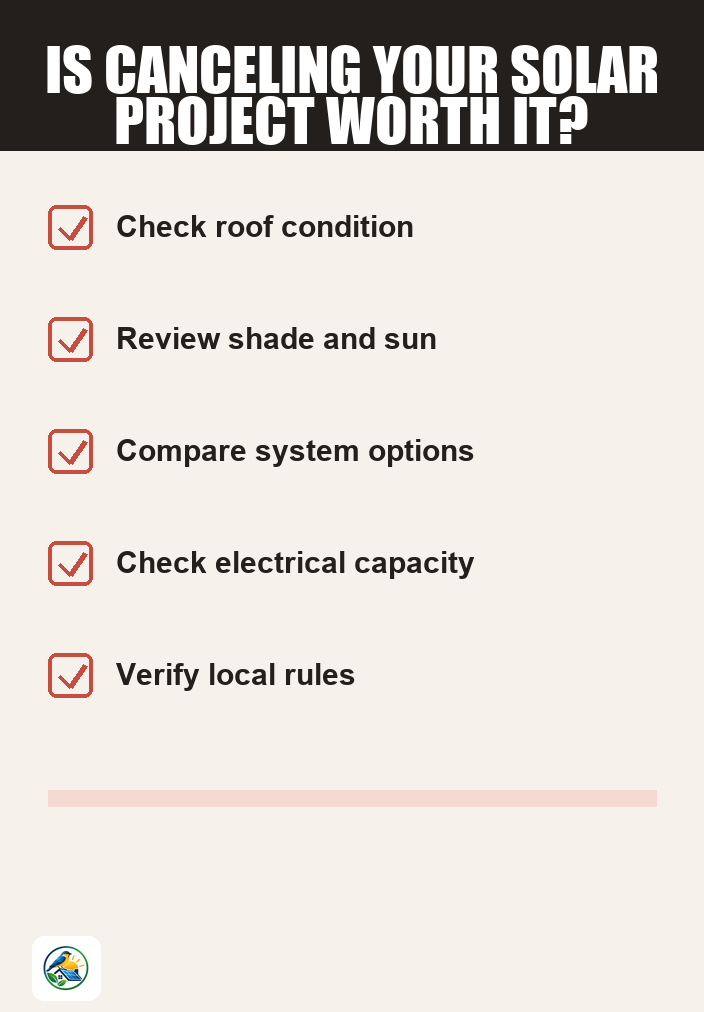
Before making a final decision on your solar project, consider these actionable steps:
- Review itemized quotes from multiple qualified installers.
- Assess the condition of your roof and electrical system.
- Research current local incentives and utility policies.
- Reflect on your long-term plans regarding your home.
- Consult with a financial advisor or solar professional.
Taking these steps will help ensure that your decision is well-informed and aligns with your financial and lifestyle goals. Remember, canceling a solar project is a significant decision, and understanding all the factors at play is crucial.


















