
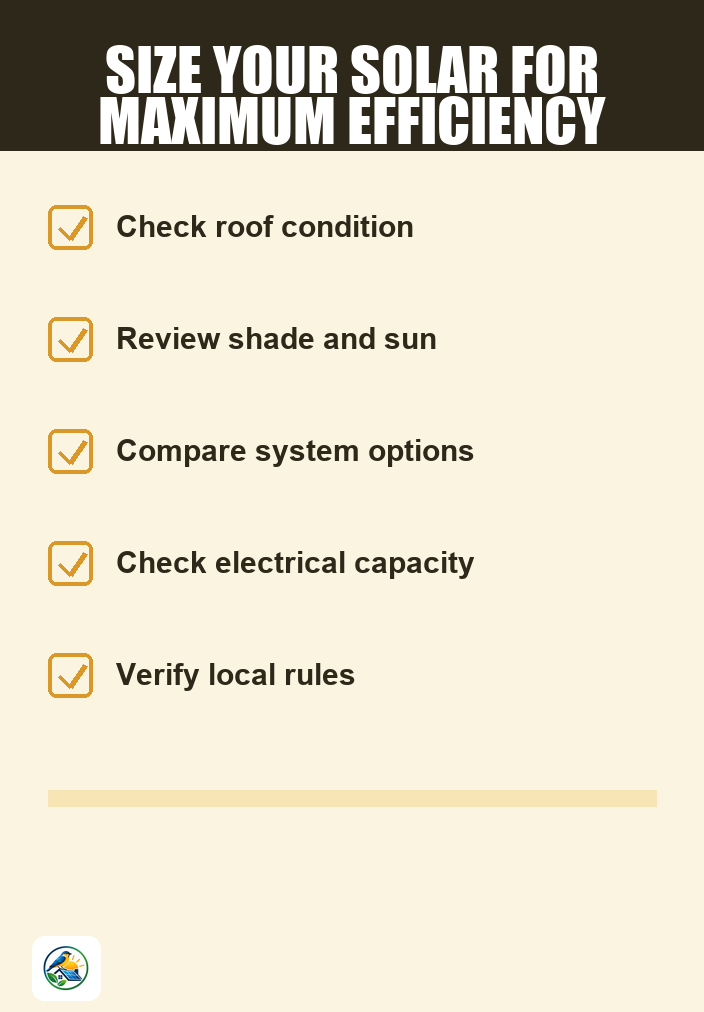
Understanding Solar Panel System Sizing
When considering a solar panel system for your home, one of the most critical steps is determining the right size. A correctly sized system maximizes energy production, fits your household needs, and aligns with your budget. This comprehensive planning guide outlines essential factors that homeowners need to consider when sizing a solar panel system, whether you’re opting for a grid-tied system, adding a home battery, or exploring off-grid solutions.
Core Factors in Solar Panel Sizing
To effectively size a solar panel system, you’ll need to evaluate several key components:
- Energy Consumption: Review your past electricity bills to determine your average monthly energy usage in kilowatt-hours (kWh). This figure will help you estimate how much solar energy you need to produce.
- Solar Panel Output: Understand that different solar panels have varying efficiencies. The output of a solar panel is typically measured in watts. Higher wattage panels produce more electricity, which can influence the total number of panels you’ll need.
- Sunlight Hours: Assess the average sunlight hours your location receives. This factor varies by region and season. Areas with more sun will generally require fewer panels to meet energy needs.
- Roof Space and Orientation: The size and slope of your roof, along with its orientation (south-facing roofs typically perform best), will influence how many panels can be installed and how effectively they’ll work.
Calculating Your Solar Needs
Once you’ve gathered the necessary information, you can begin calculating your solar needs. Here’s a straightforward approach:
- Determine your average monthly energy usage from your electricity bills.
- Convert that number to daily usage by dividing by 30.
- Estimate the number of peak sunlight hours your location receives daily. This can range from 3 to 7 hours depending on your area.
- Use the following formula:
System Size (kW) = Daily Energy Usage (kWh) / Peak Sunlight Hours (h)
For example, if your daily energy usage is 30 kWh and you receive an average of 5 peak sunlight hours, your calculation would be:
System Size = 30 kWh / 5 h = 6 kW
This means you would need a 6 kW solar system to meet your daily energy needs under optimal conditions.
Considering Battery Storage
If you’re considering adding a home battery to your solar system, you’ll need to account for additional factors:
- Daily Energy Storage Needs: Determine how much energy you want to store for nighttime or cloudy day usage. This will impact the battery size required.
- Battery Type: Different types of batteries (lithium-ion, lead-acid, etc.) have varying capacities, lifespans, and costs. Research which battery type aligns with your energy goals.
Trade-offs and Constraints
As you move forward with sizing your solar system, it’s essential to consider potential trade-offs and constraints:
- Roof Condition: Ensure your roof is in good condition; if it requires repairs or replacement, this should be addressed before installation.
- Shade Issues: Trees, buildings, or other obstructions that cast shadows on your roof can significantly reduce solar production. It may be necessary to trim trees or consider alternative locations.
- Electrical Upgrades: Some homes may need electrical panel upgrades to accommodate the new solar system. Consult an electrician to assess your current setup.
- Permitting and Utility Regulations: Understand local permitting requirements and utility interconnection policies, which can vary widely.
Getting Professional Quotes
After calculating your needs and considering the factors above, it’s time to gather quotes from qualified solar installers. A professional assessment can provide valuable insights specific to your property and local conditions. Here’s how to prepare:
- Collect Your Data: Have your energy usage data, roof dimensions, and any shading information ready for the installer.
- Ask Questions: Inquire about the types of panels and batteries they recommend, installation timelines, and warranties.
- Compare Itemized Quotes: Look closely at the details in each quote, including equipment, installation costs, and any ongoing maintenance fees.
Next Steps for Homeowners
Mastering solar panel system sizing is a vital step in the journey toward energy independence. By understanding your energy needs, evaluating your property, and seeking professional guidance, you can make informed decisions. Remember, solar isn’t a one-size-fits-all solution; careful planning is necessary to determine if it fits your home and lifestyle.
As you move forward, compare itemized quotes from qualified installers to ensure you get the best solution tailored for your needs. Always verify current incentives and local regulations before making any commitments.


















