
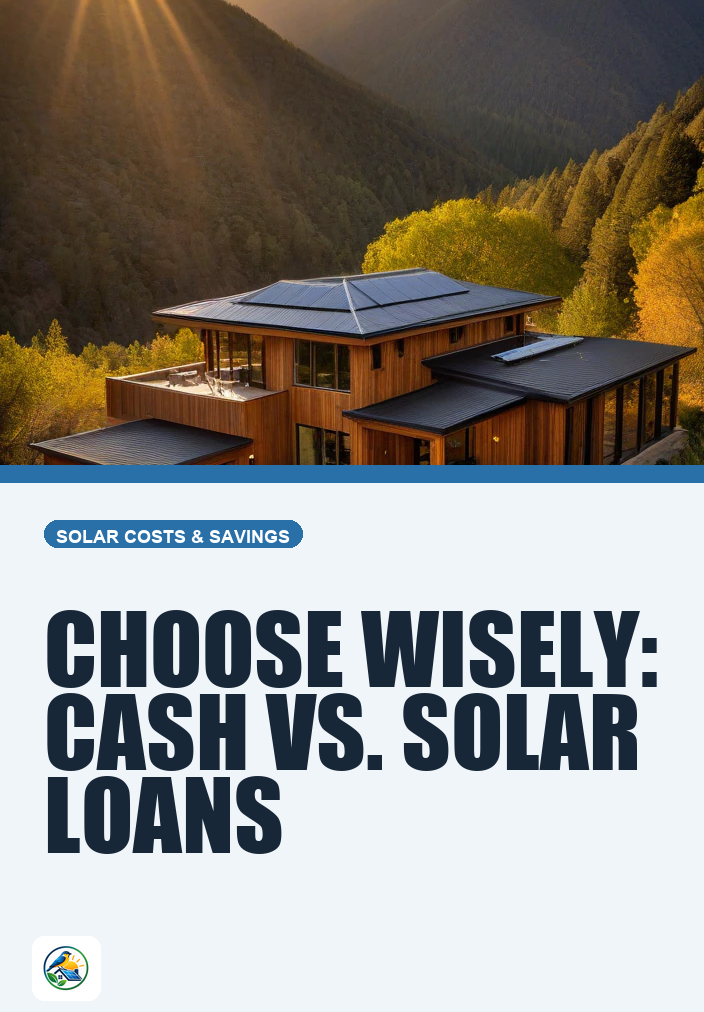
Understanding Your Financing Options for Solar
When considering a rooftop solar system for your home, one of the first decisions you’ll face is how to finance it. Two popular options are cash payments and solar loans. Each has its advantages and drawbacks, and the best choice depends on your individual financial situation, goals, and the specifics of your home. This article will help you navigate the decision-making process by examining the factors that could influence your savings over time.
Cash Payments: The Upfront Investment
Paying for your solar system in cash means making a sizable upfront investment. This option can be appealing for several reasons:
- No Monthly Payments: Once you buy your solar system outright, you won’t have to worry about monthly loan payments, which can ease your monthly budget.
- Ownership Benefits: Owning your solar system outright means you can take full advantage of potential tax credits and incentives without any financing entanglements.
- Long-Term Savings: Without interest payments associated with loans, you could save more money over the lifespan of the solar system.
However, there are also some considerations to keep in mind:
- High Upfront Cost: The initial investment can be substantial, which may not be feasible for every homeowner.
- Opportunity Cost: Using a large amount of cash for solar may limit your ability to invest that money elsewhere, potentially missing out on other growth opportunities.
- Maintenance Responsibility: As the system owner, you will be responsible for maintaining and repairing the system, which may incur additional costs over time.
Solar Loans: Financing Your Solar System
Solar loans provide an alternative to paying cash. With this option, homeowners can finance their solar installation and pay it off over time. Here are some benefits of solar loans:
- Lower Upfront Costs: Solar loans often require little to no down payment, making it more accessible for homeowners who may not have enough cash on hand.
- Potential for Immediate Savings: Depending on your loan terms and local utility rates, your monthly loan payment could be less than your current electricity bill, resulting in immediate cash flow relief.
- Flexible Terms: Many solar loans offer various term lengths, allowing you to choose a repayment schedule that fits your financial situation.
That said, there are trade-offs to consider with solar loans:
- Interest Costs: Loans come with interest, which adds to the total cost of the solar system over time. This can offset some of the savings you might expect from going solar.
- Debt Obligation: Having a solar loan means you are taking on debt, which can impact your credit score and financial flexibility.
- Financing Terms: Not all loans are created equal; some may have hidden fees or unfavorable terms, so it’s essential to read the fine print.
Comparing Cash and Solar Loans: Key Considerations
When deciding between cash payments and solar loans, consider the following factors:
1. Financial Situation
Evaluate your current financial standing. Do you have enough cash on hand to cover the purchase without jeopardizing your emergency savings? If not, a solar loan may be the better option.
2. Long-Term Plans
Think about how long you plan to stay in your home. If you intend to move within a few years, financing options might be more attractive, as you may not see the full benefit of a cash purchase before selling.
3. Local Incentives and Tax Credits
Research available incentives and tax credits for solar installations in your area, as these can significantly impact your decision. Some incentives may be more beneficial if you pay cash, while others might not affect your choice as much.
4. Energy Needs and System Size
Consider your household’s energy consumption and the size of the system you require. A larger system typically means a higher upfront cost, which could sway your decision towards financing.
5. Interest Rates and Loan Terms
If opting for a solar loan, shop around for the best interest rates and loan terms. This will help you understand how much you could end up paying over time.
When to Get a Professional Installer Quote
Before making a final decision, it’s wise to obtain quotes from professional solar installers. An installer can evaluate your home’s specific characteristics—such as roof orientation, shading, and electrical system capacity—to provide accurate estimates for both cash and financing options. This can help you assess the potential costs and savings tailored to your unique situation.
Next Steps: Making Your Decision
Ultimately, the choice between cash and solar loans depends on your financial circumstances and energy goals. Here are some practical next steps:
- Assess your financial situation and determine how much you can afford to invest upfront.
- Research local solar incentives and tax credits to understand their impact on your potential savings.
- Get itemized quotes from qualified solar installers to compare cash and financing options effectively.
- Consider the long-term implications of each option on your financial health and energy consumption.
By carefully weighing the pros and cons of cash versus solar loans, you can make a more informed decision that aligns with your financial goals and energy needs.


















