
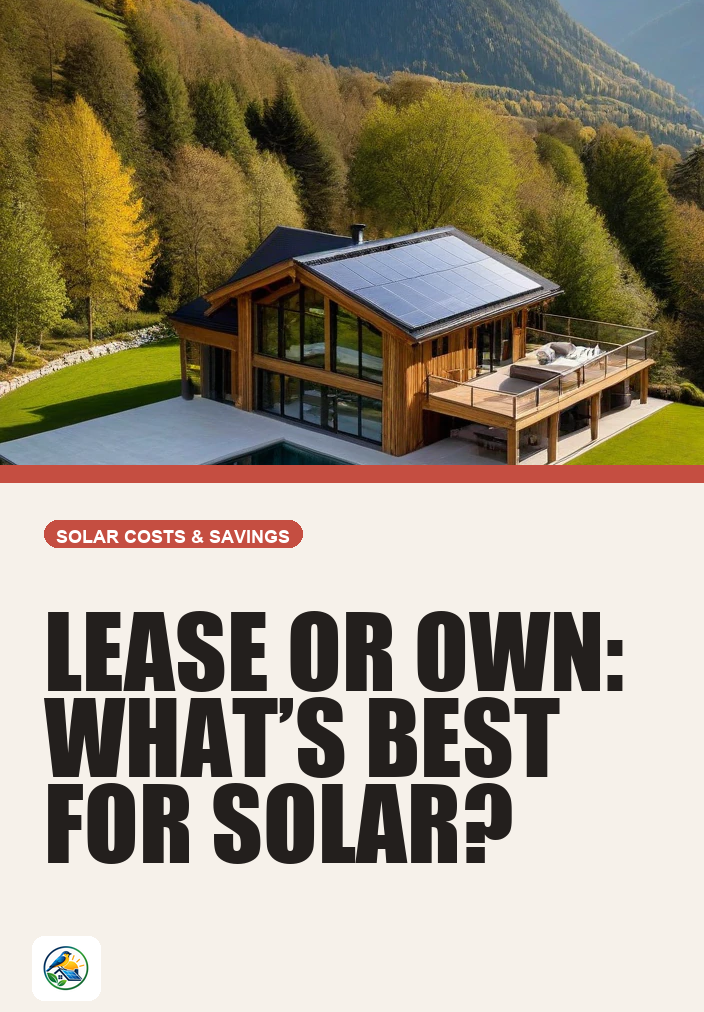
Understanding Solar Leases and Owned Panels
As U.S. homeowners increasingly turn to solar energy, one of the most significant decisions to make is whether to lease solar panels or purchase them outright. Each option comes with its own set of advantages and trade-offs that can affect both short-term and long-term financial outcomes. This article delves into the cost-effectiveness of solar leases versus owned panels, helping you make an informed decision tailored to your unique circumstances.
The Basics: Solar Leases vs. Owned Panels
Solar leases allow homeowners to install solar systems with little to no upfront cost. Under this arrangement, a solar company owns the panels and is responsible for their maintenance. Homeowners pay a fixed monthly fee or agree to purchase the generated electricity at a predetermined rate.
On the other hand, owning solar panels means that you purchase the system upfront or through financing options. As the owner, you benefit from tax credits, potential energy savings, and any profit generated from selling excess energy back to the grid. However, this also means you are responsible for maintenance and any associated costs.
Cost Considerations: Upfront vs. Long-Term
When evaluating the cost-effectiveness of solar leases versus owned panels, consider both the upfront costs and long-term financial impacts:
- Upfront Costs: Leasing typically requires minimal initial investment, making it accessible for those who may not have the cash to purchase a system outright. In contrast, buying a system may involve a significant upfront payment or financing costs.
- Monthly Payments: With a lease, homeowners pay a monthly fee, which can vary based on the agreement. Owning the panels may lead to lower monthly utility bills, but you will also need to account for any financing payments if you chose that route.
- Maintenance Costs: Leased systems often include maintenance, while homeowners are responsible for upkeep when they own their panels. Factor in potential repair costs when making your decision.
Tax Incentives and Financial Benefits
One of the key financial advantages of owning solar panels is the ability to take advantage of federal tax credits. However, these incentives can change and may require verification based on your location and the time of purchase. Be sure to consult a tax professional to understand what credits you may qualify for.
Leased systems typically do not allow for tax incentives to be claimed by the homeowner since the solar company retains ownership of the panels. This can be a significant factor in determining the long-term cost-effectiveness of each option.
Energy Savings and Production
With both leasing and owning panels, energy savings will depend on various factors, including local electricity rates, the size of the solar system, and the amount of sunlight your home receives. Since leased panels are owned by the solar company, homeowners may benefit from lower rates for the electricity generated, but this is often at a fixed price that may not be as competitive as utility rates.
When you own your panels, any excess energy produced can often be sold back to the grid, potentially creating additional savings. However, policies on net metering vary by location, so it’s essential to check with local utilities to understand how excess energy production will be compensated.
Property Value and Resale Considerations
Another factor to consider is how each option impacts your home’s value. Owned panels can increase a property’s resale value, as buyers may be attracted to the prospect of lower energy bills. In contrast, leased panels may complicate the sale, as incoming buyers may need to assume the lease agreement, which can deter some potential buyers.
Conditions and Limitations
Before deciding between leasing and owning solar panels, evaluate your home’s specific conditions:
- Roof Condition: Ensure your roof is in good condition and can support the weight of solar panels. If your roof needs repairs or replacement soon, it might affect your decision.
- Shade and Orientation: Homes with ample sunlight and optimal roof orientation will benefit more from solar installations. If your roof is shaded or poorly oriented, the efficiency of solar panels will be compromised.
- Future Plans: Consider your long-term plans for the home. If you plan to move soon, leasing may seem more appealing due to lower upfront costs, while owning may provide better long-term savings.
Assessing the Right Option for You
Ultimately, the choice between a solar lease and owned panels depends on your personal financial situation, energy needs, and long-term goals. Here are some steps to help you assess the right option:
- Gather quotes from multiple installers and compare their offerings, including financing options and lease terms.
- Evaluate your current and projected energy usage to understand how much energy you need your solar system to produce.
- Consult with a financial advisor or tax professional to evaluate potential savings and tax credits based on your situation.
- Consider your home’s specific attributes—roof condition, sunlight exposure, and future plans—when making your decision.
Next Steps: Making Your Decision
After gathering all the necessary information, you should have a clearer picture of whether a solar lease or owned panels are more suitable for your home. Comparing itemized quotes from qualified installers can provide additional insight into potential costs and savings, allowing you to make a more informed decision.
Remember, the solar landscape is constantly changing, and factors like local regulations, utility policies, and financial incentives can greatly influence your decision. Always verify the latest information to ensure you’re making the best choice for your home.


















