
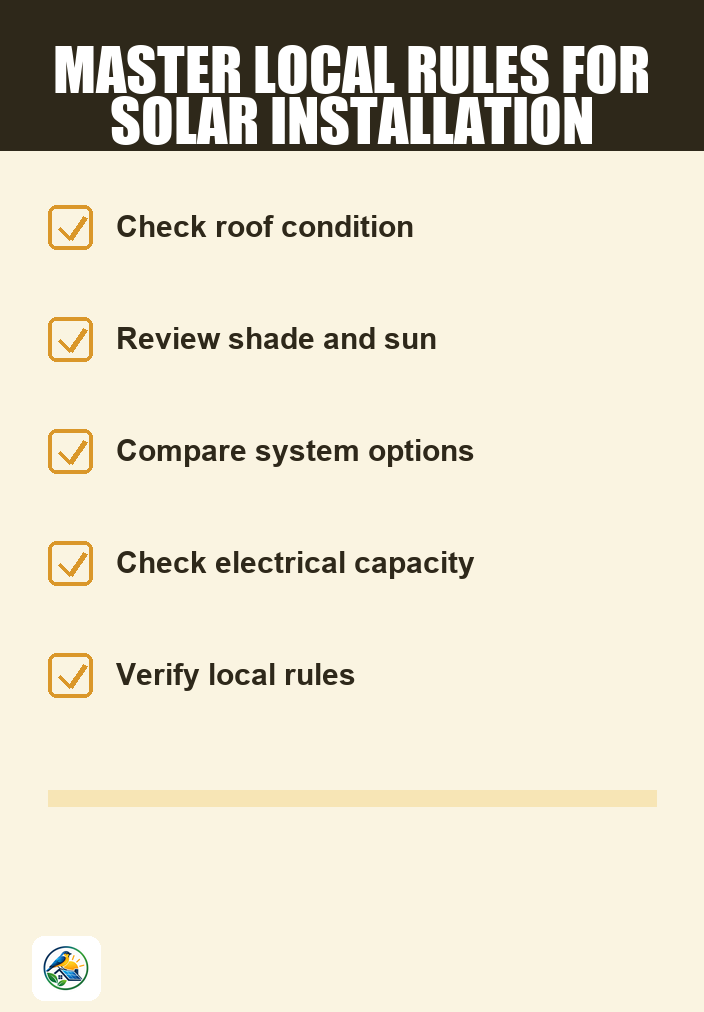
Understanding Local Regulations for Solar Installation
When considering the transition to solar energy, one of the most critical aspects to navigate is the local regulations that govern the installation process. These regulations can vary significantly from one municipality to another, and they can greatly influence your experience and the feasibility of your solar project. Understanding these regulations is essential for homeowners looking to install a residential rooftop solar system, whether you also plan to incorporate a home battery or not.
Why Local Regulations Matter
Local regulations affect nearly every aspect of solar installation, including:
- Permitting requirements
- Interconnection processes with your utility provider
- Incentives and rebates available to you
- Net metering policies
- Safety codes and installation standards
Failing to understand these regulations can lead to delays, unexpected costs, or even the inability to install your system. Thus, it’s crucial to familiarize yourself with the specific rules in your area before moving forward.
Researching Local Permitting Requirements
Permitting is often the first step in the solar installation process. Different cities and counties have their own regulations regarding solar installations, which may include:
- Application processes
- Inspections
- Fees
Before you choose an installer, you should research the permitting requirements specific to your location. Many local governments have their guidelines available online, often within their planning or zoning departments. Some installers may also assist with this process, but it’s wise to verify their approach and understand your responsibilities.
Example: How Permitting Can Vary
For instance, a homeowner in California may encounter a streamlined permitting process due to state-level initiatives aimed at promoting solar energy. In contrast, a homeowner in a rural area of the Midwest might face a more complex permitting process, requiring more documentation or longer wait times. Understanding these nuances can help you set realistic expectations for your project timeline.
Interconnection with Utility Providers
Once your solar system is installed, it needs to connect to the local electrical grid, which involves specific interconnection agreements with your utility provider. These agreements outline the technical and safety requirements for connecting your system.
Understanding your utility’s interconnection process is essential. Some utilities have more straightforward requirements, while others may require additional inspections or paperwork. Additionally, certain utilities may impose fees for interconnection, which can affect overall installation costs.
Net Metering Policies
Net metering allows homeowners to receive credits for the excess energy their solar systems produce and feed back into the grid. This policy is also regulated at the state or local level, and the specifics can vary widely. Some key things to consider include:
- The compensation rate for excess energy
- Time-of-use rates that might affect your credits
- Limits on the size of systems eligible for net metering
Familiarizing yourself with net metering policies can help you understand the potential benefits and limitations of your solar system’s performance.
Incentives and Rebates
Many local, state, and federal incentives can help offset the costs of solar installation. However, these incentives can change frequently and often require specific qualifications. Some common incentives include:
- State tax credits
- Local rebates for solar installation
- Federal tax credits (subject to verification)
It’s crucial to verify current incentives with your local government or utility provider. Some installers also provide guidance on available incentives, but you should independently confirm the details to ensure you receive all potential benefits.
Safety Codes and Installation Standards
Safety codes are designed to ensure that your solar system is installed correctly and safely. These codes can include:
- Electrical codes
- Building codes
- Fire safety regulations
Professional installers should be knowledgeable about these codes and ensure compliance during the installation process. However, it’s always a good idea for homeowners to ask about how these safety measures will be addressed in their specific project.
Considerations for Your Home
Before engaging with a solar installer, consider the following aspects of your home, as they can impact your installation process:
- Roof Condition: A roof in disrepair may require upgrades before solar installation can proceed.
- Orientation and Shade: The direction your roof faces and any shading from trees or buildings can affect energy production.
- Electrical Upgrades: Some homes may require electrical panel upgrades to accommodate a solar system.
- Future Plans: Consider whether you might expand your system or change your energy needs in the future.
Example: Roof Considerations
A homeowner with a flat roof may have different installation options compared to one with a steeply sloped roof. Additionally, homes with significant tree cover may face challenges in energy production unless proactive measures are taken, like tree trimming or considering alternative locations for solar panels.
Choosing the Right Installer
After understanding local regulations and evaluating your home’s unique characteristics, it’s time to choose a solar installer. When comparing quotes, consider the following:
- Itemized breakdown of costs
- Permitting and interconnection assistance
- Experience and reputation
- Warranty options and after-installation support
A detailed, itemized quote will help you understand what you’re paying for and ensure transparency in the process. Don’t hesitate to ask questions about any aspect of the installation or the installer’s experience with local regulations.
Next Steps
As you progress toward solar installation, take the time to compare itemized quotes from qualified installers. Verify the current local regulations, permitting requirements, and available incentives. Engaging with multiple installers can provide valuable insights and help you make an informed decision tailored to your home and energy needs.


















