
Understanding Your Financing Options: Solar Loan vs. Cash Payment
Deciding to install a residential solar system is an exciting step towards energy independence, but it also comes with important financial considerations. Homeowners typically face two primary options for financing: a solar loan or making a cash payment. Each option has its own set of advantages and trade-offs. This checklist will help you evaluate which method might be right for your home.
Evaluating Your Financial Situation
Before diving into the specifics of loans and cash payments, it’s crucial to assess your financial health. Here are some key factors to consider:
- Current Savings: Do you have enough cash reserves to cover the entire cost of a solar system without impacting your emergency funds?
- Credit Score: A higher credit score may qualify you for better loan terms, while a lower score could lead to higher interest rates.
- Monthly Budget: Can you comfortably fit a monthly loan payment into your budget, or would a larger upfront cash payment be more feasible?
- Long-Term Financial Goals: Are you planning to sell your home in the near future, or do you intend to stay for many years? This could influence your decision.
Pros and Cons of a Solar Loan
A solar loan allows homeowners to finance the installation of a solar system, making it possible to go solar without a large upfront payment. Here are some pros and cons to consider:
Advantages of Solar Loans
- Lower Upfront Cost: A loan typically requires less initial capital compared to a full cash payment, allowing you to retain more of your savings for other investments or emergencies.
- Potential for Tax Benefits: Depending on current regulations, you may still be eligible for tax credits on the amount financed, but always verify with a tax professional.
- Build Equity: As you pay off your loan, you build equity in your home, which can be beneficial if you decide to sell.
- Monthly Payments Spread Out Costs: Instead of paying a lump sum, you can spread the cost over several years, which can feel more manageable.
Disadvantages of Solar Loans
- Interest Costs: While you spread payments over time, interest can increase the total amount you pay for the system, depending on the loan terms.
- Debt Obligation: Taking on a loan means you will have a monthly payment that may restrict your budget until the loan is paid off.
- Credit Impact: Applying for a loan can affect your credit score, particularly if you take on significant debt.
Pros and Cons of Cash Payments
Paying cash for a solar system is often seen as a straightforward option. However, it comes with its own advantages and disadvantages:
Advantages of Cash Payments
- No Interest Payments: Paying cash means you avoid interest costs, which can save you money in the long run.
- Immediate Ownership: You own the system outright from day one, allowing you to take full advantage of any incentives or tax credits.
- Increased Home Value: Installing solar may enhance your home’s value, and as the owner, you receive the full benefit.
- Simplified Process: Cash payments often lead to a more straightforward transaction without the need for credit checks or loan agreements.
Disadvantages of Cash Payments
- Large Upfront Cost: Paying in cash requires a significant initial investment, which may deplete your savings or affect your finances.
- Opportunity Cost: The cash used for solar could potentially earn a return if invested elsewhere. Consider how this impacts your overall financial strategy.
- Less Flexibility: Once your cash is spent, it’s not available for other needs or emergencies.
Assessing Your Home’s Suitability for Solar
Before deciding on a financing method, it’s vital to evaluate your home’s suitability for solar energy. Here are some factors to consider:
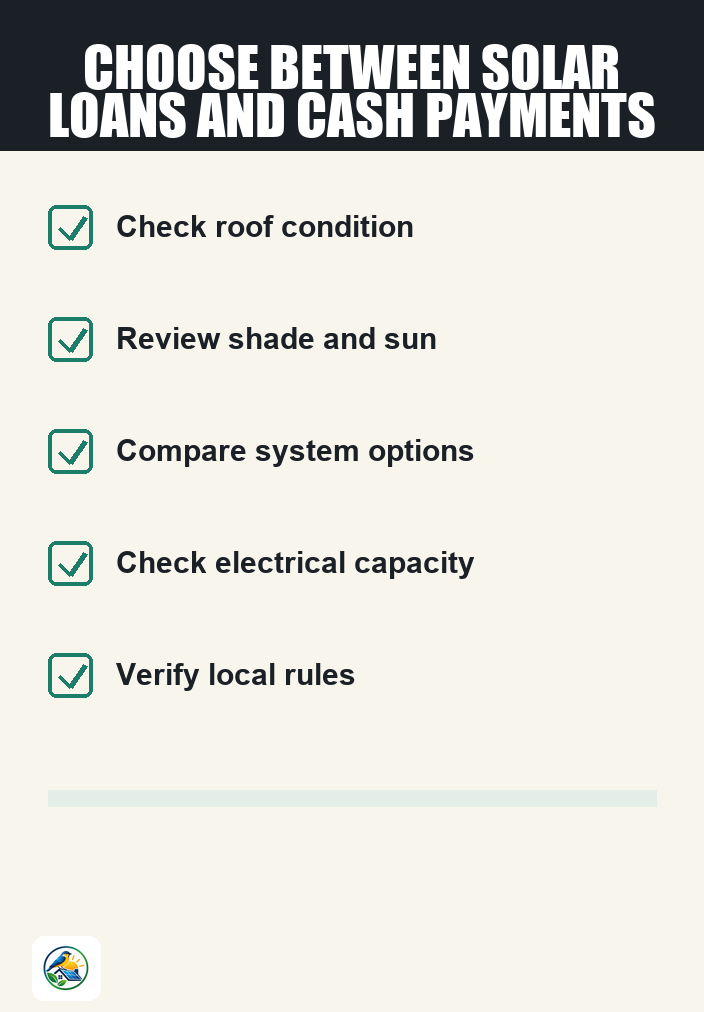
- Roof Condition: Is your roof in good shape? Solar panels require a sturdy, unobstructed surface for installation.
- Shade and Orientation: Does your roof receive ample sunlight throughout the day? Trees, buildings, or other obstructions can impact energy production.
- Electrical System Compatibility: Does your home’s electrical system meet the requirements for solar installation? Upgrades may be necessary.
- Local Regulations: Be aware of local permitting, zoning rules, and homeowners association guidelines that could affect your installation.
Making the Decision: A Quick Checklist
To help you decide between a solar loan and cash payment, consider the following checklist:
- Assess your financial situation, including savings, credit score, and monthly budget.
- Evaluate the pros and cons of both financing methods.
- Determine your home’s suitability for solar, taking into account roof condition, orientation, and local regulations.
- Consider your long-term plans for staying in your home versus potential resale.
- Get quotes from multiple qualified solar installers to compare detailed costs and financing options.
Next Steps
Once you’ve considered your financing options and assessed your home’s suitability for solar, it’s time to take action. Reach out to several qualified solar installers for itemized quotes and detailed information about the systems they offer. Comparing these quotes will give you a clearer picture of your investment and help you make an informed decision.
Remember, going solar is a significant investment that can benefit your home for years to come, but it’s essential to choose the financing option that aligns best with your financial situation and goals.


















