
Understanding Your Roof’s Condition
Installing solar panels on an older roof can be a complex decision. Before diving into the potential benefits of solar energy, homeowners must first assess the condition of their current roofing system. An older roof may present challenges that can affect the installation process, costs, and the overall effectiveness of the solar system.
Check for Damage and Wear
Start by examining your roof for any signs of damage or wear. Look for:
- Missing or broken shingles
- Leaks or water stains inside your home
- Visible sagging or structural issues
- Flashing that is rusted or damaged
If your roof shows significant wear or damage, it may be wise to consider repairs or a full replacement before installing solar panels. A new roof can provide a solid foundation for solar installation and may extend the lifespan of your solar system.
Roofing Material Matters
The type of roofing material can also influence the decision to install solar panels. Some materials are more suitable for solar installation than others. Common roofing materials include:
- Asphalt shingles
- Metal roofing
- Clay or concrete tiles
- Flat roofs
For example, metal roofs often have a longer lifespan than asphalt shingles, making them a more favorable option for solar panels. Conversely, tile roofs may require additional structural support due to their weight, which can complicate installation.
Evaluating Roof Orientation and Shade
The orientation and shading of your roof are critical factors that can significantly impact the efficiency of a solar panel system.
Understanding Orientation
In the U.S., south-facing roofs typically receive the most sunlight throughout the day, making them ideal for solar panel installation. West- and east-facing roofs can also be effective, but may produce less energy. If your roof faces north, it may not be suitable for solar panels unless you have a unique situation that allows for sufficient sun exposure.
Assessing Shade
Shade from trees, buildings, or other structures can reduce the effectiveness of solar panels. Consider the following:
- Look for nearby trees that may cast shadows on your roof.
- Evaluate how the sun moves across your roof throughout the day.
- Use tools or apps that can help assess solar exposure to identify shaded areas.
If shading is a significant concern, you may need to consider trimming trees or exploring different solar technologies that can perform better in shaded conditions, such as microinverters or power optimizers.
Understanding Electrical Upgrades
Installing solar panels may require upgrades to your home’s electrical system. It’s essential to consider the following:
Current Electrical Capacity
Your existing electrical panel may not be equipped to handle the additional load from a solar system, especially if you are also considering adding a home battery. A licensed electrician can evaluate your panel’s capacity and recommend necessary upgrades.
Wiring and Connections
Check the condition of your home’s wiring. Older homes may have outdated wiring that needs to be replaced or upgraded to meet modern safety standards. This can add to the overall cost of your solar installation.
Cost Considerations and Financing Options
When considering solar panels for an older roof, it’s vital to understand the financial implications. Here are some factors to keep in mind:
Installation Costs
Costs can vary widely based on your location, the size of your system, and any required upgrades. A professional installer can provide you with a detailed quote that outlines all costs associated with the installation, including any necessary roof repairs or electrical upgrades.
Financing Options
Explore financing options available for solar installations. Be aware that loans, leases, and power purchase agreements (PPAs) can carry different costs and benefits. Ensure you understand the terms and any potential long-term costs associated with these options.
Permitting and Utility Considerations
Before proceeding with solar installation, familiarize yourself with local permitting requirements and utility policies. Each municipality may have different rules governing solar installations, including:
- Building permits
- Interconnection agreements with your utility
- Net metering policies
Contact your local permitting office and utility provider to gather the necessary information and ensure compliance with all regulations.
When to Consult a Professional Installer
Once you have assessed your roof’s condition, electrical capacity, and local regulations, it may be time to consult a professional solar installer. A qualified installer can provide valuable insights and a detailed quote specific to your situation. They can help you:
- Evaluate your roof for solar readiness
- Discuss the best solar technologies for your needs
- Provide an itemized breakdown of installation costs and potential financing options
Next Steps for Homeowners
Installing solar panels on an older roof requires careful consideration and planning. To navigate this process effectively:
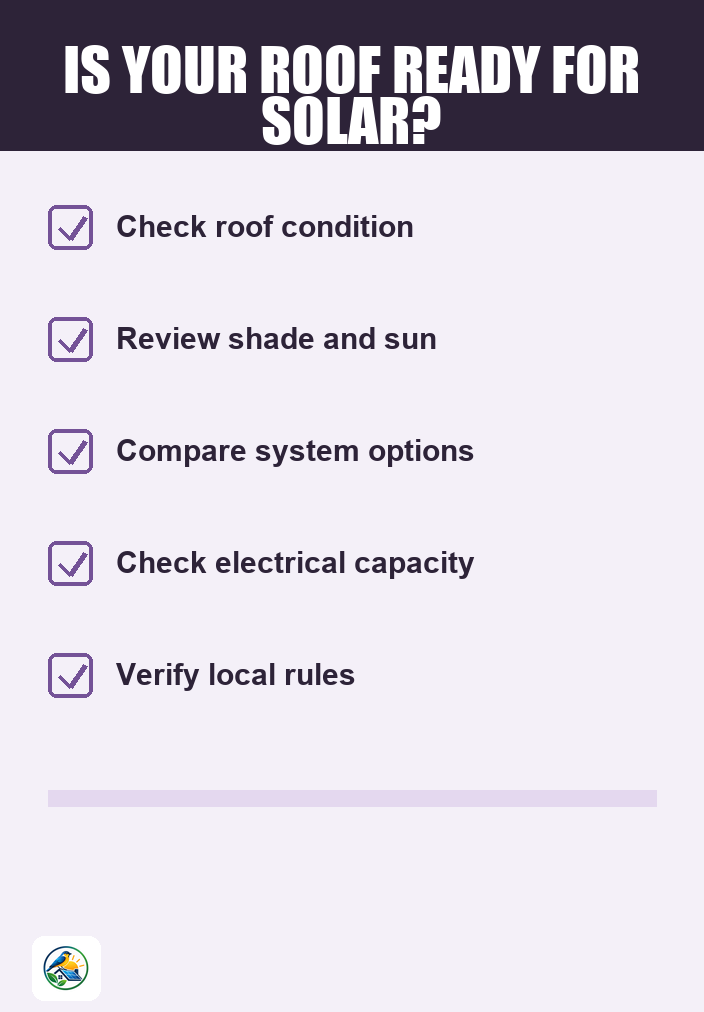
- Assess your roof’s condition, orientation, and shading.
- Evaluate your electrical system and potential upgrade needs.
- Research local permitting requirements and utility policies.
- Consult with qualified solar installers to compare itemized quotes and options.
By taking these steps, you can make an informed decision about installing solar panels on your home, ensuring that it fits your needs and budget while maximizing the benefits of solar energy.


















