
Understanding Cash Purchases vs. Solar Loans
When considering a residential solar system, one of the most crucial decisions homeowners face is whether to buy the system outright with cash or finance it through a solar loan. Each option carries its own set of financial implications, and understanding these can help you make an informed decision that aligns with your financial situation and long-term energy goals.
Evaluating Cash Purchases for Solar Systems
Purchasing a solar system outright with cash can seem like a straightforward choice, especially for homeowners with sufficient savings. Here are some key factors to consider:
- Immediate Ownership: Paying in cash means you own the system outright from day one. This can simplify your finances, as you won’t have to worry about monthly payments.
- No Interest Costs: Cash purchases eliminate interest payments often associated with loans, potentially saving you money in the long run.
- Tax Incentives: In some cases, cash buyers can take full advantage of federal and state tax incentives to reduce the overall cost of their solar installation, though you should verify current eligibility.
- Increased Home Value: A fully owned solar system can enhance your property’s value, which may be beneficial if you plan to sell your home in the future.
However, cash purchases also come with drawbacks. They require a significant upfront investment, which may not be feasible for everyone. Additionally, if your system encounters maintenance issues or requires upgrades, these costs will come out of pocket.
Exploring Solar Loans
Solar loans allow homeowners to finance their solar systems over time, making solar energy more accessible. Here’s what to consider if you’re thinking about this option:
- Lower Upfront Costs: Solar loans often require little to no down payment, making it easier to transition to solar energy without a large initial investment.
- Monthly Payments: With a loan, you’ll have to make monthly payments. While these payments can sometimes be offset by energy savings, they do add a layer of complexity to your monthly budget.
- Potential for Interest: Unlike cash purchases, loans often come with interest rates, which can increase the total cost of the system over the loan term. It’s essential to compare rates and terms before committing.
- Financing Options: Many lenders offer flexible financing terms, such as varying lengths of repayment periods. Some loans are even secured by the solar system itself, while others may require additional collateral.
While solar loans can make solar energy more affordable, it’s important to assess your ability to manage monthly payments and interest over time. Keep in mind that if your financial situation changes, the obligation to pay the loan remains.
Comparing Costs and Savings
To effectively compare cash purchases with solar loans, homeowners should conduct a thorough analysis of both options. Here’s a practical checklist to guide your evaluation:
- Get Itemized Quotes: Request detailed, itemized quotes from qualified solar installers. This will give you a clear understanding of the total cost of the system, including equipment and installation.
- Assess Financing Terms: If considering a solar loan, evaluate the interest rate, loan term, and monthly payment amount. Make sure to factor these into your overall budget.
- Calculate Potential Savings: Estimate your energy savings based on your current electricity rates and usage. Compare these savings against the monthly loan payment, if applicable.
- Evaluate Long-Term Financial Impact: Consider the total cost of ownership over the lifespan of the solar system, which typically ranges from 25 to 30 years.
Homeowner Considerations
There are several factors unique to your home and lifestyle that can influence your decision:
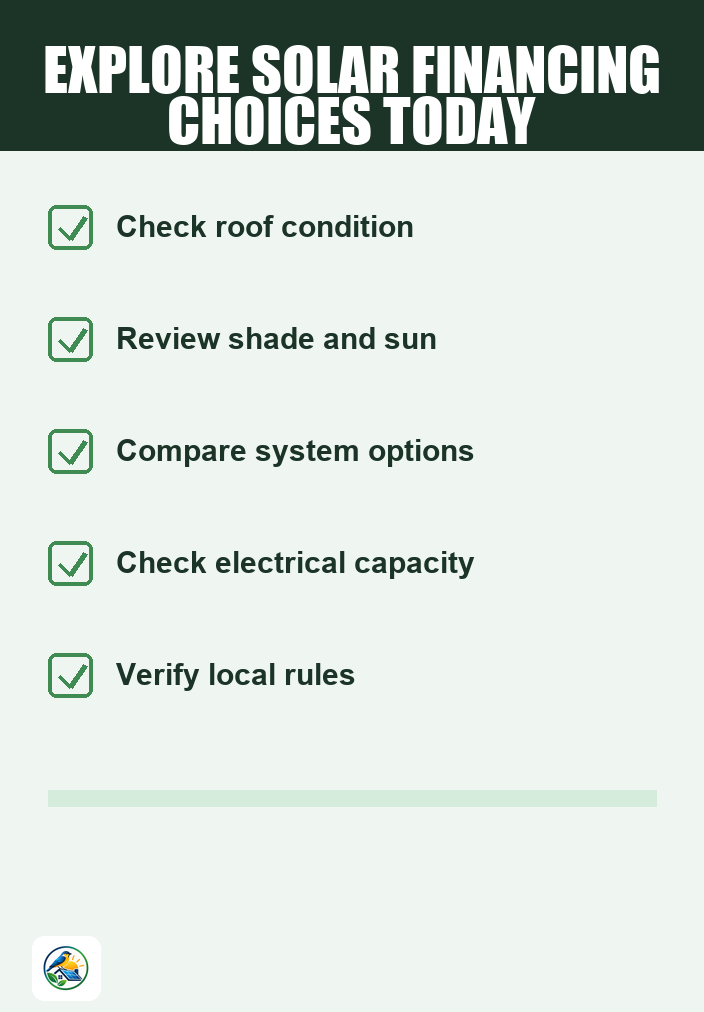
- Roof Condition: Ensure your roof is in good shape before installing solar panels. Repairs may add to your overall costs, whether you pay cash or finance.
- Shade and Orientation: Your roof’s orientation and any shading from trees or buildings can affect energy production, which in turn influences potential savings.
- Future Plans: If you plan to move in the near future, consider how owning the system outright or having a loan might impact your home sale.
- Maintenance and Upgrades: Factor in potential maintenance costs or system upgrades into your overall financial planning.
Consulting a Professional Installer
Before making a final decision, consulting with a professional solar installer can provide valuable insights tailored to your specific situation. Installers can evaluate your home’s solar potential, recommend system sizes, and help you understand the local incentives and financing options available to you. They can also clarify the specifics of tax credits and rebates, which can vary significantly by location.
Next Steps for Homeowners
Choosing between a cash purchase and a solar loan involves assessing your financial situation, understanding your home’s unique characteristics, and carefully comparing your options. Start by obtaining itemized quotes from qualified installers to see the total costs involved with each financing method. This will empower you to make a decision that aligns with your financial goals while maximizing the benefits of going solar.