
Understanding Solar Leases and Owned Panels
When considering solar energy for your home, two primary options often surface: solar leases and owning the panels outright. Each choice has its own set of benefits and trade-offs that can significantly influence your financial outcome and energy independence. Understanding these options is crucial for homeowners looking to make informed decisions about their solar investment.
Solar Leases: Overview and Benefits
A solar lease allows you to install solar panels on your roof without the upfront costs associated with purchasing them. Instead, you pay a fixed monthly fee to the solar provider, typically for a period of 20 to 25 years. This arrangement can be appealing for several reasons:
- No Upfront Costs: Since you’re not buying the system, you avoid the initial investment that can range from thousands to tens of thousands of dollars.
- Predictable Payments: Monthly payments are usually fixed, making budgeting easier, as you know exactly what to expect each month.
- Maintenance Included: Most solar leases include maintenance and monitoring, so you don’t have to worry about the upkeep of the system.
Downsides of Solar Leases
While a solar lease can provide easy access to solar energy, it’s not without its drawbacks:
- No Ownership Benefits: At the end of the lease, you may not own the system, which means you miss out on any potential tax credits, rebates, or increased home value associated with ownership.
- Long-Term Commitment: Leases typically last 20 years or more, and breaking a lease early can incur substantial penalties.
- Potentially Less Flexibility: If you decide to sell your home, transferring the lease to the new owner can complicate the sale.
Owning Solar Panels: Advantages and Considerations
Owning solar panels typically means you purchase the system outright or finance it through a loan. This option often leads to greater long-term financial benefits, though it requires a more significant initial investment.
- Tax Incentives: Homeowners who purchase solar panels may qualify for federal, state, or local tax credits, which can lower the overall cost considerably.
- Increased Home Value: Owned solar systems can enhance your property’s value, making it more attractive to potential buyers.
- Energy Independence: Once the system is paid off, you can enjoy free electricity, potentially saving thousands over the life of the system.
Challenges of Owning Solar Panels
However, ownership comes with its own set of challenges:
- High Initial Cost: The upfront costs can be a barrier for many homeowners, even with financing options available.
- Maintenance Responsibilities: As the owner, you’re responsible for any maintenance and repairs that arise, which could incur additional costs.
- Financing Considerations: If you finance the purchase, you will need to consider interest rates and the total cost of the loan.
Comparing Costs and Savings
When evaluating which option may save you more, it’s essential to consider your unique circumstances. Here are some factors to take into account:
- Current Electricity Rates: Higher electricity rates can make solar panels more appealing, whether leased or owned.
- Incentives and Rebates: Investigate local incentives for solar ownership, which might sway your decision.
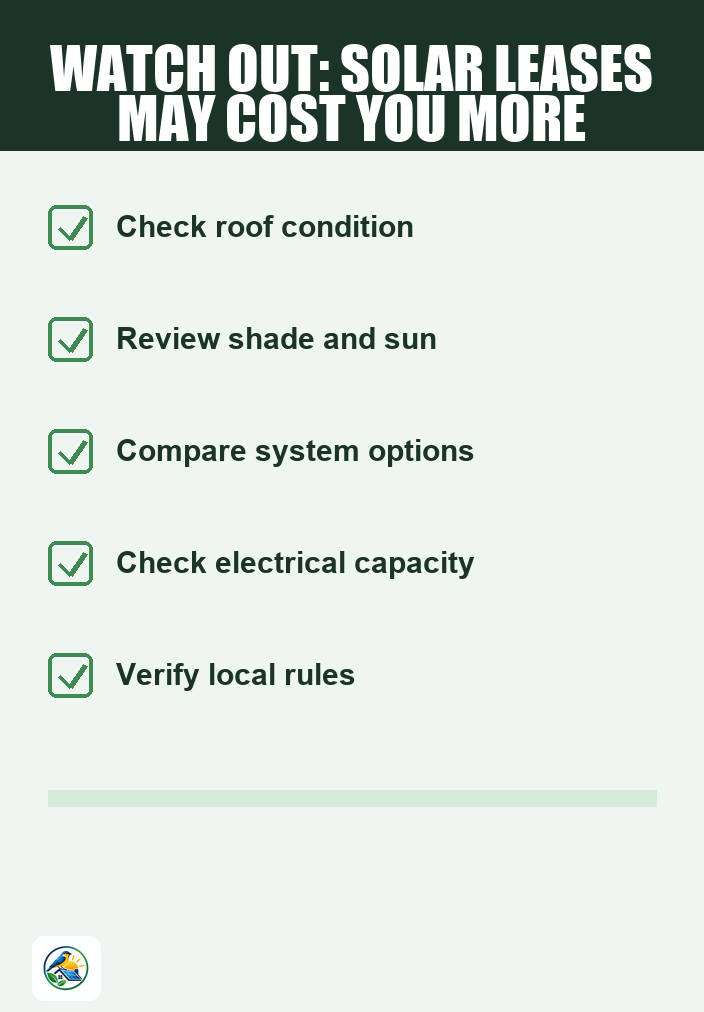
- Roof Condition and Orientation: The suitability of your roof can affect energy production and, consequently, potential savings.
Practical Examples of Each Option
To illustrate the differences, consider these hypothetical scenarios:
- Scenario A – Solar Lease: A homeowner pays $150 monthly for a solar lease. Over 20 years, they will pay $36,000. However, they won’t receive tax credits or increase their home’s value from the system.
- Scenario B – Owned Panels: A homeowner invests $25,000 in a solar system and qualifies for a $7,500 tax credit. After financing, they own the system outright within 10 years and enjoy free electricity for the remaining 15 years, potentially saving tens of thousands.
Key Considerations Before Making a Decision
Before deciding between a solar lease and owning panels, consider the following:
- Financial Situation: Can you afford the upfront cost of ownership? Are you comfortable with long-term monthly payments?
- Future Plans: Do you plan to stay in your home for the long term, or are you considering selling soon?
- Local Incentives: What tax credits or rebates might you qualify for, and how do they affect your overall costs?
Next Steps: Getting Accurate Quotes
Ultimately, the decision between solar leases and owned panels depends on your financial goals, home situation, and energy needs. To make an informed choice, consider obtaining itemized quotes from qualified solar installers. They can provide detailed information tailored to your home, helping you understand costs, savings, and available incentives.
Research local utility policies, tax incentives, and financing options thoroughly, as these can significantly impact your decision. By gathering this information, you can confidently choose the solar option that best meets your needs.


















