
Understanding Electrical Upgrades Needed for Your Solar Installation
If you’re considering a solar installation for your home, understanding the electrical upgrades that may be necessary is key to a successful transition. While solar panels can provide significant benefits, the electrical system of your home plays a crucial role in how effectively they operate. This article will explore the types of electrical upgrades you may need, the trade-offs involved, and the considerations to keep in mind as you move forward with your solar energy plans.
Assessing Your Current Electrical System
The first step in determining if electrical upgrades are needed for your solar installation is to evaluate your existing electrical system. A professional installer will typically conduct this assessment, which may include:
- Electrical Panel Capacity: Check the amperage rating of your electrical panel. Most modern solar systems require a panel rated at least 200 amps to handle the additional load.
- Wiring Condition: Inspect the wiring throughout your home. Older homes may have outdated wiring that can pose safety risks and may not be suitable for a solar system.
- Grounding System: Ensure your grounding system is up to code. A proper grounding system is essential for the safety and efficiency of a solar installation.
Understanding these components will give you a clearer picture of what upgrades might be necessary. However, the specifics can vary widely depending on your home’s age, size, and electrical needs.
Common Electrical Upgrades for Solar Installations
Once you’ve assessed your current system, you may find that certain upgrades are essential for a successful solar installation. Here are some common electrical upgrades to consider:
1. Upgrading Your Electrical Panel
If your electrical panel is outdated or undersized, upgrading it to a higher amperage is often necessary. A new panel can better accommodate the increased demand from your solar system and improve overall efficiency. Additionally, modern panels come equipped with safety features that older models may lack.
2. Replacing or Upgrading Wiring
Older wiring may not handle the load of a new solar system. If your home was built several decades ago, you may need to replace or upgrade the wiring. This can ensure that your system operates safely and effectively, reducing the risk of electrical issues.
3. Installing a Dedicated Circuit
Some homeowners may require a dedicated circuit for their solar inverter. This circuit allows your solar system to operate independently from other electrical loads in your home, enhancing efficiency and safety.
4. Adding a Battery Backup System
If you’re considering adding a battery backup to your solar installation, this will likely necessitate further electrical upgrades. A battery system requires additional wiring and potentially a new inverter capable of handling both solar and battery inputs. Be sure to discuss these needs with your installer.
Trade-Offs and Considerations
While upgrading your electrical system can enhance the performance of your solar installation, it’s crucial to weigh the associated trade-offs and considerations:
- Cost: Electrical upgrades can be an additional expense on top of the solar system installation. It’s important to budget for these costs and evaluate whether they fit within your overall solar investment plan.
- Permitting and Inspection: Many electrical upgrades require permits and inspections. This can extend the timeline of your project and may involve additional fees, so it’s essential to factor this into your planning.
- Homeowner Goals: Consider your long-term goals. If you plan to expand your energy usage in the future, such as adding electric vehicles, it might be wise to invest in a larger electrical panel now.
When to Seek Professional Advice
While it’s possible to assess your current electrical system on your own, obtaining a professional quote is invaluable. A qualified solar installer can provide a comprehensive evaluation of your home’s electrical needs and recommend necessary upgrades. This professional input will help you make informed decisions as you compare quotes and options.
When gathering quotes, be sure to ask installers about their assessment process. A thorough evaluation should include:
- A review of your current electrical panel and wiring
- Recommendations for necessary upgrades
- A detailed breakdown of costs associated with both solar installation and electrical upgrades
A Practical Checklist for Homeowners
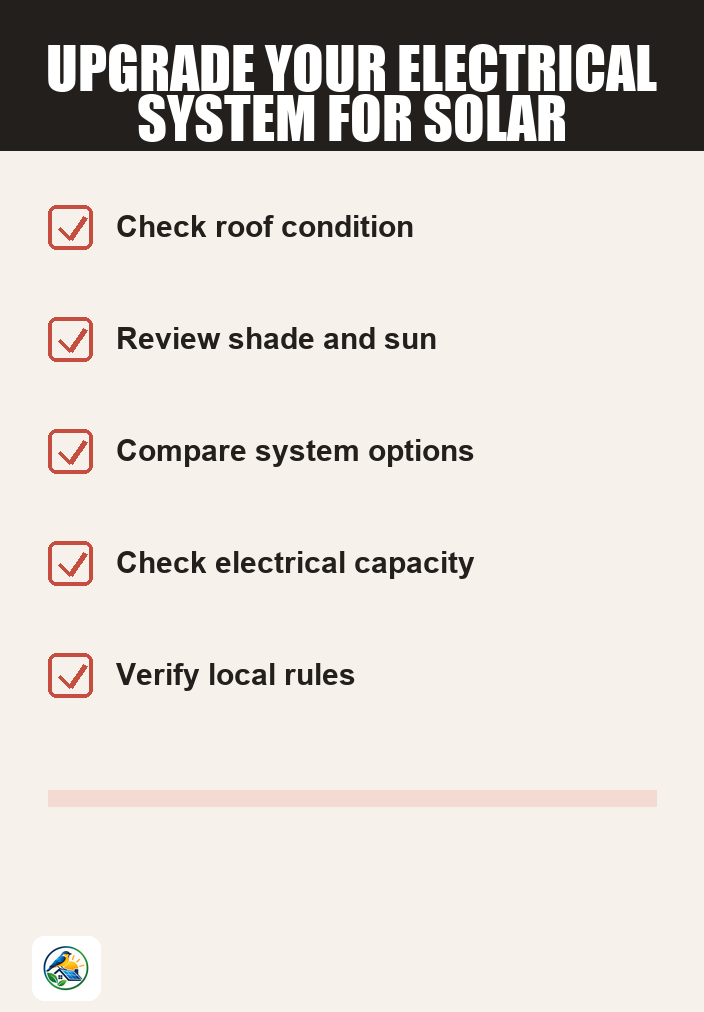
As you prepare for your solar installation, consider the following checklist to ensure you’re ready for potential electrical upgrades:
- Inspect your electrical panel and determine its amperage rating.
- Evaluate the condition of your home’s wiring.
- Consult with a professional installer to assess your electrical needs.
- Request itemized quotes from multiple installers, including details on necessary upgrades.
- Factor in potential costs for any required electrical work in your overall solar budget.
- Review local permitting and inspection requirements related to electrical upgrades.
Next Steps
Understanding the electrical upgrades needed for your solar installation is vital for a successful transition to renewable energy. By assessing your current system, considering potential upgrades, and consulting with professional installers, you can make informed decisions about your solar investment.
As you compare quotes, focus on itemized breakdowns that include both solar installation and electrical upgrade costs. This will provide clarity on what to expect and help you navigate the complexities of going solar. Remember, verifying the latest local utility, installer, government, and tax information is essential to ensure you have the most accurate and relevant data for your solar project.


















