
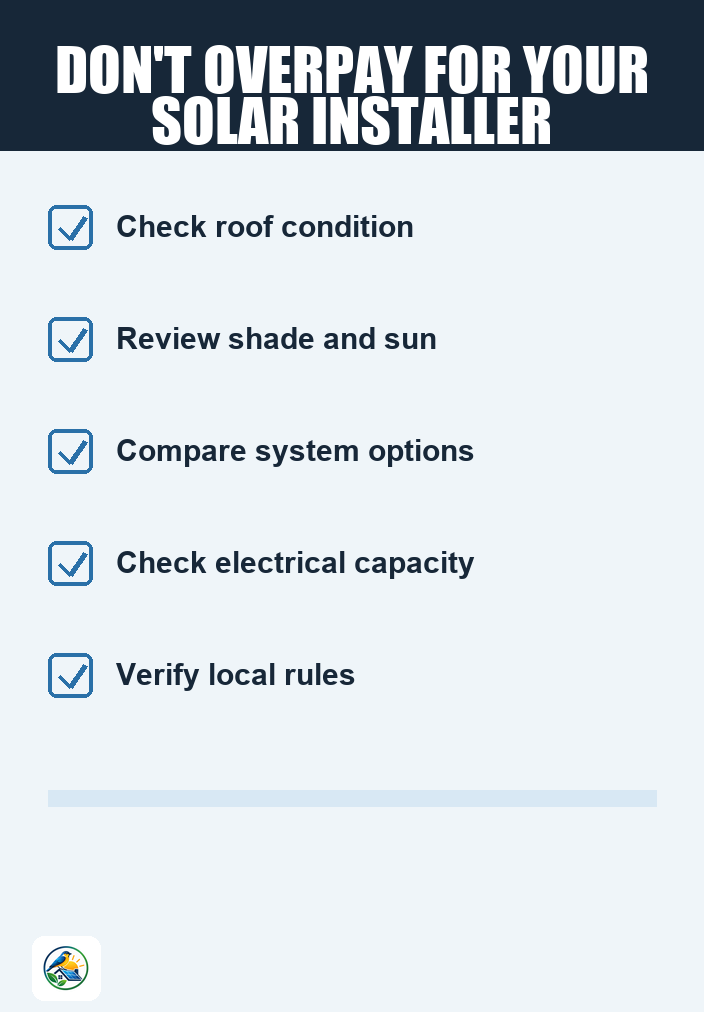
Understanding the Importance of Comparing Quotes
When considering a residential rooftop solar system, obtaining multiple quotes from different installers is essential. Each quote provides valuable insights into the options available for your home, including equipment choices, installation costs, and service terms. To make an informed decision, it’s crucial to compare specific aspects of each quote, which can ultimately influence the effectiveness and affordability of your solar investment.
1. System Size and Capacity
The first quote comparison point should be the size and capacity of the proposed solar system. Installers may recommend different wattage systems based on your energy needs, roof space, and local regulations. Pay attention to:
- Total wattage: This indicates how much energy the system can produce.
- Number of panels: More panels typically mean more energy production.
- Panel efficiency: Higher efficiency panels can produce more energy in less space.
For example, if one installer suggests a 6 kW system with 20 panels while another offers a 7 kW system with 25 panels, consider how each aligns with your energy consumption. Also, verify if the suggested size fits your roof’s orientation and shading conditions.
2. Equipment Quality and Warranty
Equipment quality can significantly impact the longevity and performance of your solar system. When reviewing quotes, examine the components included:
- Solar panels: Look for reputable manufacturers and the type of technology used.
- Inverters: These convert solar energy into usable electricity; the type and efficiency matter.
- Mounting systems: Ensure these are durable and suited for your roof type.
Additionally, check the warranties offered. A longer warranty period typically indicates higher confidence in product durability. For instance, some panels come with a 25-year performance warranty, while others might only offer 10 years.
3. Installation Costs and Labor Charges
Installation costs can vary widely between different installers. It’s essential to compare labor charges outlined in each quote. Consider these factors:
- Breakdown of costs: Ensure quotes provide a clear itemization of materials and labor.
- Permitting fees: Some installers include these in their quotes, while others may charge them separately.
- Installation timeline: Understand how long each installer estimates the project will take.
For example, one quote may indicate a total cost of $15,000, including installation and permitting, while another may show $13,000 but leave out potential additional fees. Clarity in pricing can help you avoid unexpected expenses.
4. Financing Options and Payment Plans
Understanding financing options is crucial, especially if upfront costs are a concern. Compare how each installer presents financing arrangements:
- Cash purchases: Review any discounts for paying upfront.
- Loans: Check the interest rates, terms, and total repayment amounts.
- Leases or power purchase agreements (PPAs): Consider how these affect ownership and potential savings.
For instance, one installer may offer a zero-down lease option, while another may provide a loan with a lower interest rate but requires a larger initial payment. Understanding these differences can help you choose a financially viable path.
5. Performance Guarantees and Monitoring
Some installers provide performance guarantees, ensuring a certain level of energy production. This can be particularly useful if you want assurance that your system will meet your energy needs:
- Monitoring systems: Check if the quote includes ongoing monitoring services to track performance.
- Performance clauses: Understand any commitments regarding energy output and recourse if expectations aren’t met.
For example, an installer might guarantee a minimum production of energy for the first five years, while another may not provide such assurances. Knowing these details can influence your decision.
6. Customer Service and Installation Experience
Customer service is a vital aspect of the installation process. Research how each installer handles customer interactions:
- References and reviews: Check testimonials and online reviews to gauge customer satisfaction.
- Years in business: Longer-established companies may offer more reliability.
- Response times: Evaluate how promptly each installer addresses your inquiries.
For instance, if one installer has numerous positive reviews regarding their customer service but the other has mixed feedback, you may prefer the former for peace of mind during the installation process.
7. Maintenance and Support Services
Maintenance and support can impact your overall experience with your solar system. When comparing quotes, consider:
- Maintenance plans: Does the installer offer routine checks or cleaning services?
- Support availability: Understand how easy it is to get help if issues arise.
- Response to service calls: Check how quickly they resolve any potential problems.
For example, one quote may include a complimentary maintenance check after the first year, while another does not. This can affect your long-term satisfaction with the system.
8. Incentives and Tax Credits
Incentives for solar installations can vary significantly by location and change over time. While you should verify current local incentives, be sure each quote outlines any potential tax credits or rebates:
- Federal tax credits: Confirm eligibility and amounts available.
- State or local incentives: Check for any additional financial benefits.
- Utility rebates: Some utilities offer incentives for solar installations; verify if these are included.
Each quote should clearly indicate how incentives are factored into the overall cost. For instance, one installer might present a quote that includes anticipated tax credits, while another lists the price without these benefits, which could lead to confusion.
9. System Design and Aesthetics
Finally, consider the design and aesthetics of the proposed solar system. Not all systems are created equal, and visual appeal can matter:
- Panel type: Some panels are more visually appealing than others, especially if aesthetics are a concern.
- Roof integration: Some systems integrate more seamlessly into your home’s architecture.
- Color and finish options: Check if the installer offers different styles to match your home.
For example, if you live in a historic neighborhood, you may prefer a less obtrusive panel style that blends with your home’s character.
Next Steps: Making Your Decision
Once you have gathered and compared quotes from various installers, take the time to analyze the information thoroughly. Look for discrepancies and points of clarity to understand what each installer brings to the table.
It may be helpful to create a side-by-side comparison chart to visualize key differences, making it easier to identify which installer aligns best with your needs and preferences.
Ultimately, selecting a solar installer involves careful consideration of various factors beyond just price. By focusing on essential aspects like system size, equipment quality, and customer service, you can make a more informed decision that suits your home and future energy goals.


















