
Understanding the Basics of Solar Installation Costs for Your Home
As a homeowner considering solar energy for your 1,500 square foot residence, it’s crucial to accurately estimate the installation costs associated with a solar system. Solar energy can offer great benefits, but it’s important to navigate the complexities of costs, incentives, and installation specifics without falling into common pitfalls. Here, we break down the major considerations that can help you avoid miscalculations and ensure you make an informed decision.
1. Underestimating Your Energy Needs
A major factor in determining the size and cost of your solar installation is your household’s energy consumption. Before obtaining quotes, take the time to analyze your energy usage.
How to Assess Your Energy Consumption
- Review Past Utility Bills: Look at your electricity bills from the past year to find your average monthly usage in kilowatt-hours (kWh).
- Consider Future Changes: If you plan to upgrade appliances, add electric vehicles, or make other changes that may increase consumption, factor those into your calculations.
By understanding your energy needs, you can avoid oversizing or undersizing your solar system, both of which can lead to unnecessary costs.
2. Not Considering System Type and Configuration
Solar installations can vary significantly in type. For example, you may choose a grid-tied system, which connects to the local utility grid, or a more complex off-grid system that requires battery storage. Each option has different costs and benefits.
Key Considerations for Different Systems
- Grid-Tied Systems: Typically more affordable due to lower installation costs and no need for batteries.
- Battery Backup: Provides energy storage for use during outages but adds to upfront costs. Assess if this is necessary for your situation.
- Off-Grid Systems: Requires a larger investment due to the need for batteries and additional equipment.
Determine which system aligns best with your energy goals, and make sure to discuss these options with potential installers.
3. Ignoring Roof Conditions and Orientation
Your roof’s condition, orientation, and shading significantly impact the efficiency and cost of your solar installation.
Evaluating Your Roof
- Roof Age and Condition: If your roof requires repairs or replacement, address these issues before installation, as they can add to your costs.
- Orientation and Angle: South-facing roofs generally receive the most sunlight. If your roof faces north or is heavily shaded, this could reduce energy production and affect your return on investment.
Having a professional assessment of your roof can save you from unexpected costs later on.
4. Overlooking Permitting and Interconnection Costs
Permitting and interconnection fees can vary widely depending on your local regulations and utility policies. Failing to account for these costs can lead to budget overruns.
Understanding Local Regulations
- Permitting Fees: Check with your local government to understand the required permits and associated costs.
- Interconnection Fees: Some utilities charge for connecting your solar system to the grid. Verify these costs with your local utility provider.
Incorporating these costs into your overall budget will help you avoid financial surprises.
5. Failing to Compare Quotes Effectively
When you start collecting quotes from installers, it’s essential to understand what each quote includes. Comparing bids based solely on price can be misleading.
Checklist for Comparing Quotes
- Itemized Costs: Ensure each quote breaks down equipment, installation, permits, and any additional fees.
- System Components: Compare the quality and warranty of solar panels, inverters, and other components offered.
- Installation Experience: Research the installer’s reputation and track record to ensure quality workmanship.
Asking the right questions can help you choose an installer that provides the best value for your investment.
6. Misunderstanding Incentives and Tax Credits
Government incentives, including federal tax credits and state-level programs, can significantly affect your overall solar costs. However, these incentives can change frequently and may vary by location.
Tips for Navigating Incentives
- Research Current Incentives: Check with local and federal resources to verify available solar incentives in your area.
- Consult a Tax Professional: Understanding how incentives apply to your specific situation can avoid future tax complications.
Always verify the current status of any incentives and how they apply to your installation.
7. Overlooking Maintenance and Long-Term Costs
While solar systems generally require low maintenance, certain factors can lead to additional costs over time.
What to Consider for Long-Term Maintenance
- Cleaning: Dust, debris, or snow can affect panel efficiency. Regular cleaning may be necessary, especially in dusty or snowy climates.
- Inverter Replacement: Inverters typically need replacement every 5-10 years, adding to long-term costs.
Incorporating these potential maintenance costs into your budget can help you avoid surprises after installation.
Next Steps for Homeowners
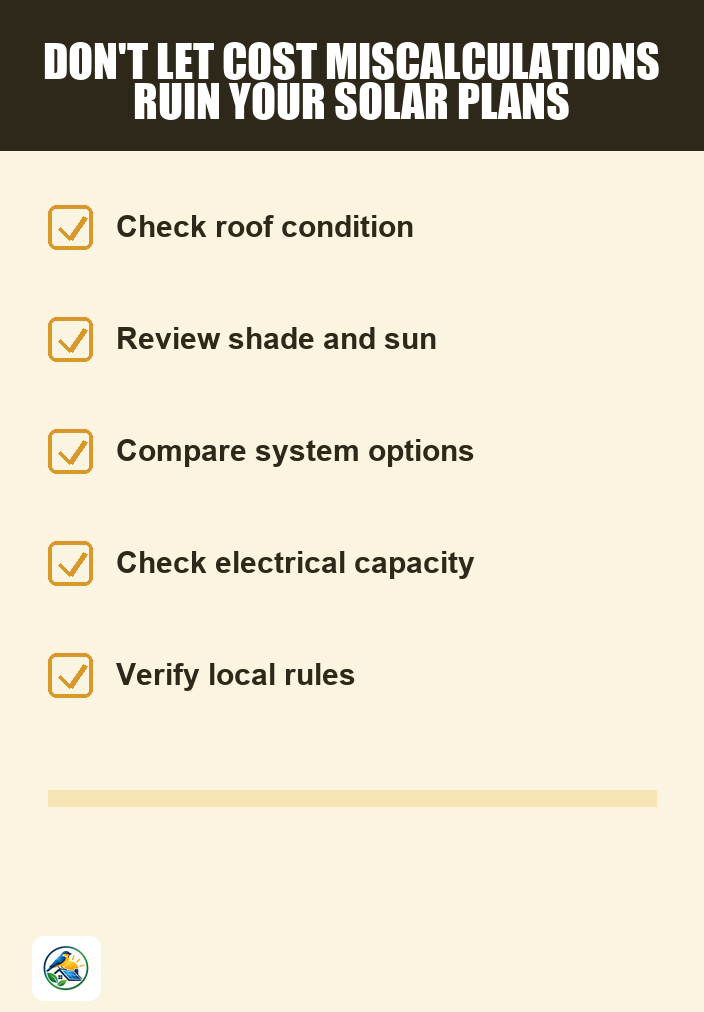
Estimating solar installation costs for your 1,500 square foot home requires careful consideration of various factors. By understanding your energy needs, system options, roof conditions, permitting, and long-term maintenance, you can avoid common pitfalls.
As you move forward, gather itemized quotes from qualified installers and compare them carefully. Ensure you ask questions and verify any incentives that may apply to your situation. With the right approach, you can make a well-informed decision about solar energy for your home.


















