
Understanding the Unique Challenges of Solar Installation on Older Roofs
Homeowners with older roofs face distinct considerations when evaluating the installation of a residential solar system. While solar power can offer long-term benefits, such as energy independence and potential savings on utility bills, the condition and age of your roof can significantly impact the feasibility and cost of the project.
Assessing Your Roof’s Condition
Before diving into solar options, it’s essential to assess the current state of your roof. Here are key factors to consider:
- Age of the Roof: Roofs typically have a lifespan ranging from 20 to 50 years, depending on the materials used. If your roof is nearing the end of its life, it may be wise to replace it before installing solar panels.
- Structural Integrity: Inspect for any signs of damage, such as leaks, sagging, or missing shingles. A roof that isn’t structurally sound may require repairs or reinforcement before solar installation.
- Roof Material: Different roofing materials have varying suitability for solar panels. For instance, asphalt shingles are generally more amenable to solar installations than tile or metal roofs, which may require specialized mounting systems.
- Pitch and Design: The pitch of your roof affects solar panel placement and efficiency. A steeper pitch may limit access for installation and maintenance.
Evaluating Roof Orientation and Shade
The orientation and shading of your roof can significantly influence solar energy generation. Consider the following:
- Orientation: South-facing roofs typically receive the most sunlight and are ideal for solar panels. East and west-facing roofs can also work but may produce less energy throughout the day.
- Shade Analysis: Trees, buildings, or other structures can cast shadows on your roof, reducing solar panel efficiency. Conduct a shade assessment to determine how much sunlight your roof receives throughout the day.
Understanding Electrical Requirements and Upgrades
Your existing electrical system must be compatible with solar technology. Here are some considerations:
- Current Electrical Panel: Older homes may have outdated electrical panels that cannot handle the additional load from solar energy systems. An upgrade may be necessary to ensure safety and compliance.
- Wiring Condition: Inspect the condition of your wiring. If it’s old or damaged, it may need to be replaced to meet the demands of a solar installation.
Considering Battery Backup Options
Many homeowners are now considering battery storage systems to maximize the benefits of solar energy. Here are factors to think about:
- Battery Capacity: Assess your energy needs and how much backup power you might require. The size of the battery will affect the overall cost and installation complexity.
- Integration with Solar System: Ensure that any battery backup system is compatible with your solar panels and inverter. Some systems are more easily integrated than others.
- Installation Space: Consider where the battery will be installed. It needs to be in a location that is easily accessible for maintenance and monitoring.
Exploring Costs and Financing Options
Cost is a critical factor when considering solar. Here’s what you should keep in mind:
- Installation Costs: The cost of solar installation can vary widely based on your roof’s condition, size, and the complexity of the installation. Obtain itemized quotes from several qualified installers to compare.
- Financing Options: Explore various financing options, including solar loans, leases, or power purchase agreements (PPAs). Each has different implications for ownership and long-term savings.
- Incentives and Rebates: Research available local, state, and federal incentives. Some programs may offer rebates or tax credits, but these can change frequently, so verify current information.
Permitting and Interconnection Considerations
Before installation can begin, you’ll need to navigate local permitting and interconnection requirements:
- Local Permits: Check with your local government for any required permits for solar installation. The process can vary significantly depending on your location.
- Interconnection Agreements: If you plan to stay connected to the grid, you’ll need to understand your utility’s interconnection policies and any fees involved.
Identifying Installer Qualifications
Choosing the right installer is crucial for a successful solar project. Here are some tips for identifying qualified installers:
- Experience and Reputation: Look for installers with a proven track record. Check reviews and ask for references from previous clients.
- Certifications: Verify that the installer is certified by relevant organizations, such as the North American Board of Certified Energy Practitioners (NABCEP).
- Warranties: Inquire about warranties on both the solar panels and the installation work. A reputable installer should offer comprehensive warranties.
Next Steps for Homeowners
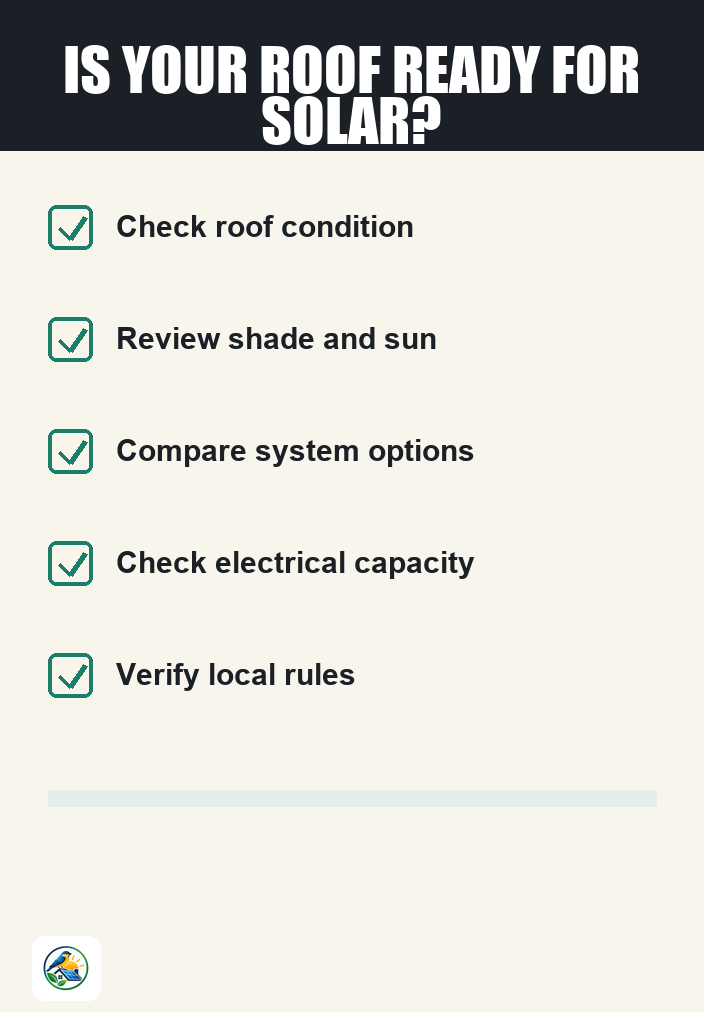
Evaluating solar energy for a home with an older roof requires careful assessment of various factors. Here’s how to proceed:
- Conduct a thorough inspection of your roof’s condition, orientation, and shading.
- Evaluate your electrical system and consider any necessary upgrades.
- Research local incentives and financing options.
- Gather itemized quotes from multiple qualified solar installers.
- Compare the pros and cons of different quotes to make an informed decision.
By taking these steps, you can better understand the feasibility of solar energy for your home and ensure that any investment aligns with your long-term goals. Remember to verify all information with local sources to make the best decision for your unique situation.


















