
Understanding Solar Panel Warranties
Investing in solar panels is a significant decision for homeowners, offering the potential for energy independence and reduced utility bills. However, like any major purchase, solar panels come with warranties that protect you against defects and performance issues. To maximize these warranties, it’s essential to avoid common mistakes that can jeopardize your protection. Here, we outline key considerations and missteps to be aware of as you navigate your solar panel investment.
Common Warranty Mistakes to Avoid
1. Neglecting to Read the Warranty Terms
Before purchasing a solar panel system, carefully review the warranty terms. Warranties typically fall into two categories: product warranties and performance warranties. A product warranty covers defects in materials and workmanship, while a performance warranty guarantees a certain level of energy production over time. Understanding these terms helps you know what is covered and for how long.
2. Failing to Register Your Warranty
Many solar panel manufacturers require you to register your warranty shortly after installation. Failing to do so can void your warranty. Make sure to submit any necessary paperwork or register online within the required timeframe. This step is crucial for protecting your investment.
3. Ignoring Installation Standards
The installation process is critical to the performance and longevity of your solar panels. If you choose an inexperienced or unqualified installer, you may inadvertently void your warranty. Always select a qualified, licensed installer with a solid reputation. Check reviews, ask for references, and ensure they follow manufacturer installation guidelines.
4. Skipping Regular Maintenance
While solar panels are generally low maintenance, they still require periodic checks to ensure optimal performance. Neglecting regular maintenance can lead to issues that might not be covered under warranty. It’s advisable to schedule regular inspections and cleanings, especially if you live in an area prone to dust or debris accumulation.
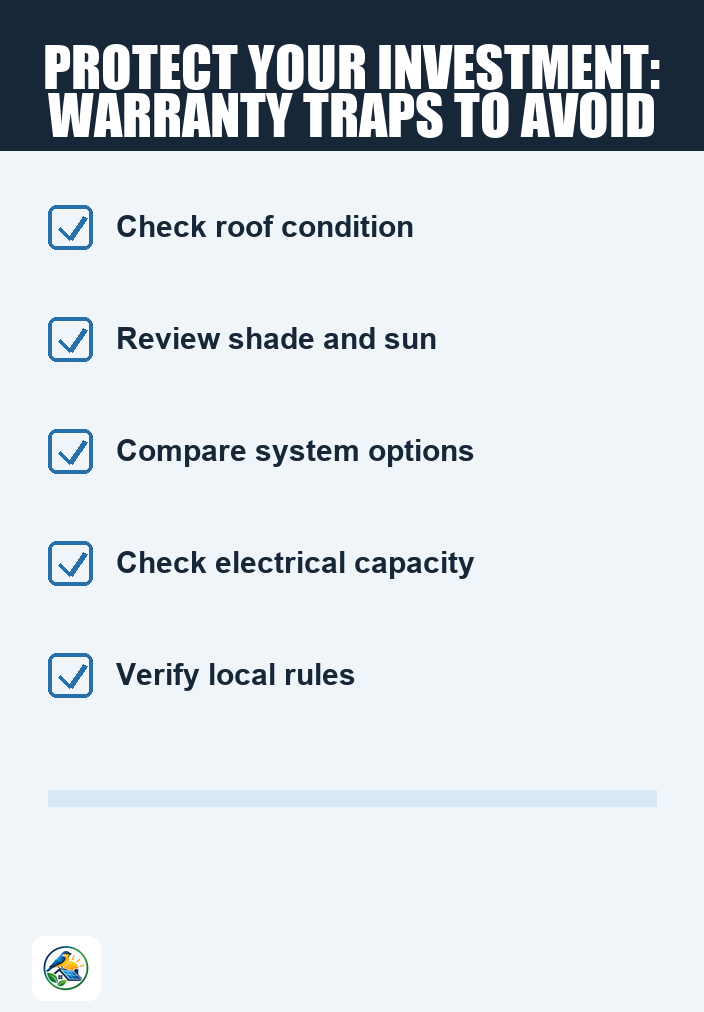
5. Not Understanding the Impact of Roof Conditions
Your roof’s condition plays a significant role in solar panel performance and warranty coverage. If your roof is aging or requires repairs, it’s wise to address these issues before installation. Installing panels on a compromised roof could not only lead to warranty issues but also jeopardize the integrity of your home.
6. Overlooking Local Regulations
Solar installations are subject to local regulations, permits, and utility rules, which can vary significantly by location. Not adhering to these guidelines can lead to fines or even the removal of your solar system. Always verify local requirements before installation, and ensure your installer is compliant with all regulations.
7. Making Unauthorized Modifications
Making changes to your solar panel system without consulting the manufacturer can void your warranty. This includes adding components, changing the installation layout, or using non-approved equipment. If you have concerns or want to make adjustments, always consult with your installer or the manufacturer first.
8. Ignoring Performance Monitoring
Many modern solar panel systems come with monitoring capabilities that allow you to track energy production. Ignoring these tools can lead to undetected issues that may affect performance and warranty claims. Regularly check your system’s output to ensure it’s functioning as expected.
9. Not Keeping Documentation
Documentation is crucial when it comes to warranty claims. Keep records of your purchase, installation, maintenance, and any correspondence related to your solar panels. This information will be essential if you ever need to file a warranty claim.
Considerations for Homeowners
Before installing a solar system, consider the following factors:
- Roof Orientation and Shade: Ensure your roof receives adequate sunlight and is free from obstructions like trees or buildings that could cast shadows.
- Electrical Upgrades: Assess whether your home’s electrical system needs upgrades to accommodate solar. This could impact installation costs and warranty coverage.
- Battery Backup Options: If you’re considering a home battery, be aware that combining systems can complicate warranties. Check compatibility with your solar panels.
- Long-Term Plans: Consider your long-term plans for your home. If you plan to sell soon, check how the solar installation might affect your property value and warranty transferability.
Next Steps
To safeguard your investment in solar panels, take the time to educate yourself about warranties and the common pitfalls associated with them. As you compare quotes from qualified installers, ensure that they can provide clear warranty information and commit to adherence to installation standards.
Always verify any current local utility, government, or tax information that may affect your decision. With the right preparation and understanding, you can confidently navigate the solar panel landscape while protecting your warranties.


















