
Understanding the Costs of Power Outages for Homeowners
As extreme weather events become more frequent and power reliability is increasingly called into question, many homeowners are considering solar energy systems paired with battery backups. While the initial investment in solar panels and batteries can seem daunting, it’s essential to understand how these systems can mitigate the costs associated with power outages. This article will guide you through the budgeting considerations for solar battery backup systems, helping you understand what you need to know to make an informed decision.
Evaluating the Costs of Power Outages
Before diving into the benefits of solar battery backup systems, it’s crucial to assess the costs associated with power outages. These costs can vary widely based on several factors:
- Duration of Outage: The longer the power is out, the higher the costs. Outages can lead to spoilage of food, disruption of work-from-home arrangements, and loss of comfort.
- Home Size and Systems: Larger homes with more appliances will feel the impact of outages more significantly, especially if multiple systems rely on electricity.
- Frequency of Outages: If you live in an area prone to outages, the potential savings from a solar battery backup might be more compelling.
- Type of Backup Power: Homeowners may also consider generators or other forms of backup, which come with their own costs and benefits.
What is a Solar Battery Backup System?
A solar battery backup system allows homeowners to store excess energy generated by their solar panels for use during power outages. This system typically consists of a solar panel array, an inverter, and a battery storage unit. This setup can provide several advantages:
- Energy Independence: Homeowners can power essential appliances even when the grid is down.
- Cost Savings: While not guaranteed, a battery can help reduce electricity costs by storing energy during off-peak hours.
- Environmental Impact: Utilizing stored solar energy reduces reliance on fossil fuels during outages.
Budgeting for a Solar Battery Backup System
When planning for a solar battery backup system, several key factors will influence your budget:
1. Initial Costs
The upfront costs for a solar battery backup system can vary significantly based on the following:
- System Size: The size of the solar panel array and battery storage capacity will directly impact the cost. A larger system typically costs more but may be necessary for larger homes or higher energy needs.
- Installation Fees: Professional installation is recommended, and costs can vary by installer and region.
- Permitting and Interconnection Fees: Local regulations may impose additional fees, which need to be factored into the overall budget.
2. Ongoing Costs
Beyond initial costs, it’s important to consider the ongoing expenses associated with a solar battery backup system:
- Maintenance: Regular maintenance is essential to ensure your system operates efficiently. This may include battery inspections and cleaning solar panels.
- Replacement Costs: Batteries have a limited lifespan and may need replacement every 5-15 years, depending on the technology.
- Electricity Costs: While a solar battery can reduce your reliance on grid electricity, you may still incur costs during cloudy days or extended outages.
3. Incentives and Financing
Before deciding to invest in a solar battery backup system, explore available incentives and financing options:
- Local and Federal Incentives: Check for available tax credits, rebates, and incentives that can help offset costs. These can vary significantly by location and may change, so always verify current details.
- Financing Options: Many installers offer financing solutions that allow homeowners to pay for their systems over time, which can make the upfront costs more manageable.
Trade-offs to Consider
Installing a solar battery backup system isn’t without its trade-offs. Here are some key considerations:
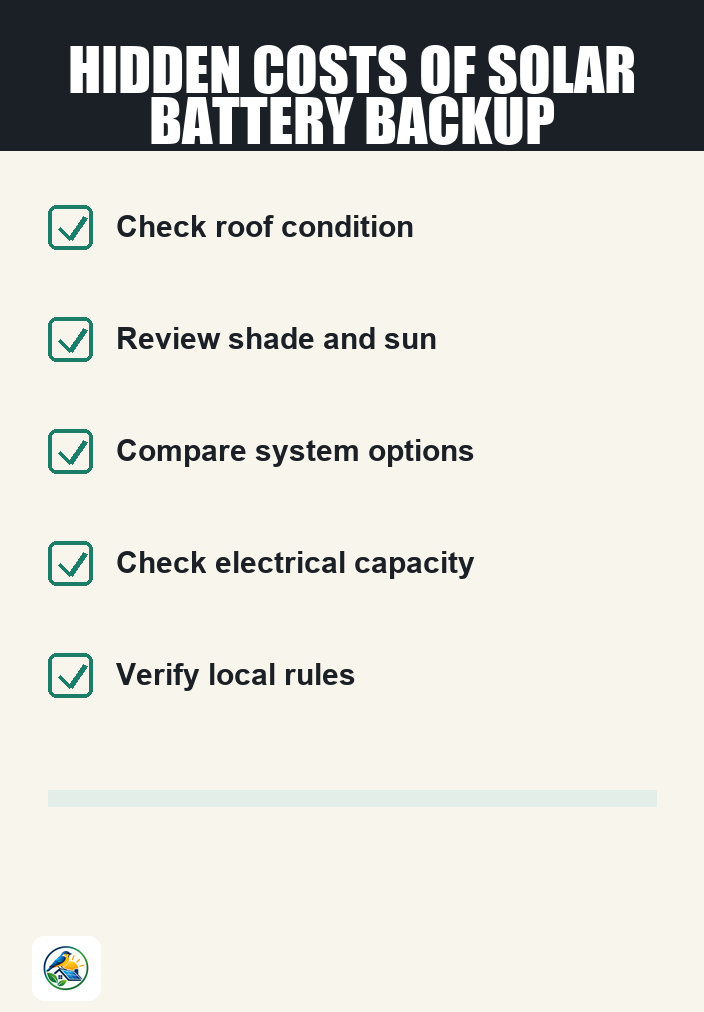
- Roof Condition and Orientation: The condition and orientation of your roof can affect the efficiency of solar panels. Ensure your roof is in good condition and ideally oriented to maximize sunlight exposure.
- Battery Limitations: Batteries have finite capacities and may not power all appliances during an outage. Prioritize which devices are essential during an outage.
- Utility Policies: Local utility policies regarding net metering and grid interconnection can impact the financial viability of a solar system. Understanding these rules is crucial before making a decision.
When to Get Professional Quotes
When considering a solar battery backup system, obtaining quotes from qualified installers is essential. A professional can provide tailored recommendations based on your home’s unique characteristics, energy needs, and local regulations. Here are some steps to ensure you gather accurate quotes:
- Assess Your Energy Needs: Before contacting installers, analyze your current energy consumption and consider how a battery backup would fit into your lifestyle.
- Request Itemized Quotes: Ensure that you receive detailed quotes that break down the costs for equipment, installation, permits, and any additional fees.
- Ask About Warranties: Inquire about warranties on both the solar panels and battery systems to understand long-term support and replacement terms.
Next Steps for Homeowners
If you’re considering a solar battery backup system, take time to evaluate your energy needs, potential costs of outages, and the benefits of solar energy. Compare itemized quotes from qualified installers to understand the financial implications better. As you plan, consider the trade-offs and local factors that may impact your decision. By thoroughly researching and consulting with professionals, you can make a more informed choice about whether solar energy is right for your home.


















