
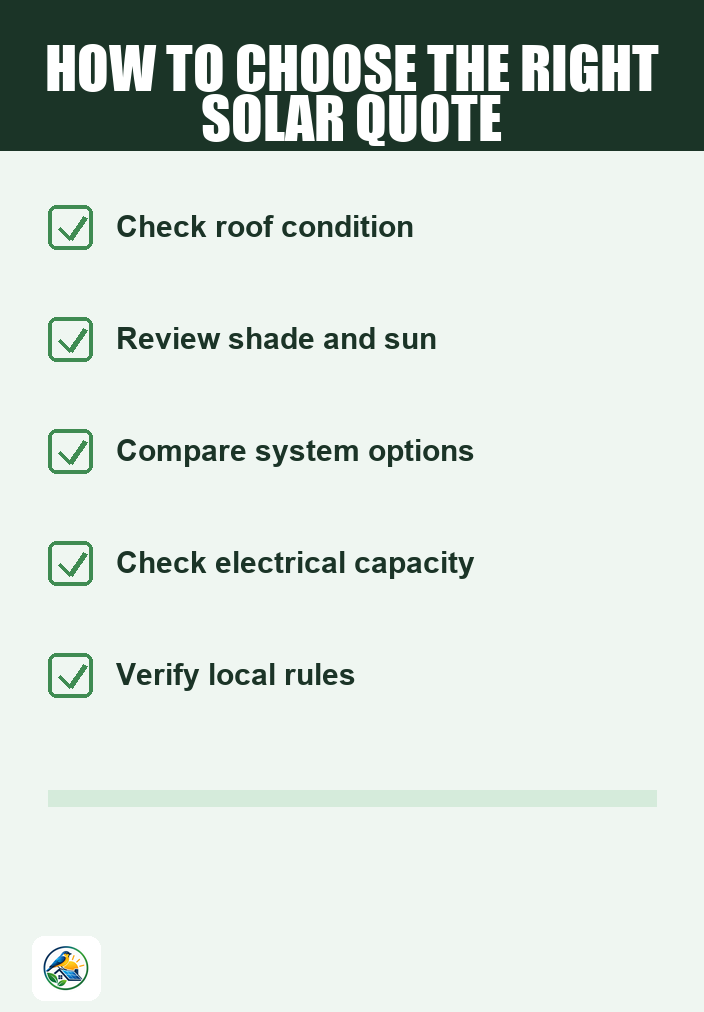
Understanding Your Solar Installation Quotes
When considering a residential rooftop solar system, homeowners often receive multiple quotes from different installers. Each quote can vary significantly in terms of cost, equipment, and services offered. Understanding which quote offers the best value for your needs is crucial to making an informed decision. This article will guide you through the key factors to consider when evaluating solar installation quotes.
Key Components of a Solar Installation Quote
Before diving into comparisons, it’s important to know what elements make up a solar installation quote. Here are the primary components you should look for:
- System Size: Measured in kilowatts (kW), this indicates the potential energy production of the solar panel system.
- Equipment Quality: This includes the type of solar panels, inverters, and any additional components like battery storage or monitoring systems.
- Installation Costs: Labor charges associated with the installation process.
- Permitting and Inspection Fees: Costs related to acquiring necessary permits and inspections required by local authorities.
- Warranties: Details on equipment and labor warranties, which can indicate the quality and reliability of the installation.
- Financing Options: Information on available financing, including loans, leases, and power purchase agreements (PPAs).
- Estimated Energy Production: Projections on how much energy the system will produce, often expressed in kilowatt-hours (kWh).
Comparing Quotes: What to Look For
Once you have a clear understanding of the components of each quote, you can begin comparing them. Here are some specific aspects to focus on:
1. System Size and Design
Consider whether the system size proposed in each quote aligns with your energy needs. A larger system may produce more energy but can also be more expensive. On the other hand, a system that is too small may not meet your household’s energy consumption, leading to increased electricity bills. Discuss your energy usage with installers to determine the appropriate system size for your home.
2. Equipment Quality
The quality of equipment can significantly impact the efficiency and longevity of your solar system. Look for:
- Solar panels with high efficiency ratings and good warranties (typically 25 years).
- Inverters that convert solar energy to usable electricity, with a reputation for reliability.
- Battery systems (if included) that match your energy storage needs and have solid performance reviews.
Be cautious of quotes that offer significantly lower equipment costs, as this could indicate lower quality components.
3. Installation Experience and Reputation
Research the installers providing quotes. Consider the following:
- Years in business and experience with residential installations.
- Customer reviews and testimonials available online.
- Accreditations or certifications, such as those from the North American Board of Certified Energy Practitioners (NABCEP).
Understanding Tradeoffs
Every solar installation comes with its own set of tradeoffs. Here are some common considerations:
1. Roof Condition and Orientation
The condition of your roof plays a crucial role in the feasibility of solar installation. If your roof needs repairs or is not oriented favorably (ideally south-facing for maximum sun exposure), it may require additional work or adjustments that could increase costs.
2. Shade and Obstructions
Nearby trees or buildings can cast shadows on your solar panels, reducing their efficiency. If shade is a concern, some quotes may include solutions like trimming trees or suggesting panel placement adjustments, which can impact the overall cost.
3. Local Regulations and Utility Policies
Permitting and interconnection processes can vary widely. Some areas may have more stringent regulations that can affect installation timelines and costs. Additionally, utility policies regarding net metering, which allows you to earn credits for excess energy produced, can influence the financial benefits of your system.
Evaluating Financial Considerations
While it’s tempting to focus solely on the upfront costs, it’s important to consider the long-term financial implications of each quote:
- Financing Options: Assess the terms and interest rates of financing options presented in the quotes. A lower upfront cost may not always mean a better deal if financing costs are exorbitant.
- Incentives and Tax Credits: Research available state and federal incentives to understand how they can affect your overall investment. Keep in mind that these incentives can change, requiring independent verification.
- Maintenance Costs: Factor in any projected maintenance costs or service fees that may arise post-installation.
Making the Final Decision
After carefully comparing quotes and considering the tradeoffs and financial implications, you should have a clearer picture of which installation offers the best value for your needs. Here are some practical next steps:
- Request itemized quotes from each installer to get a better sense of what you are paying for.
- Consult with the installers about any uncertainties regarding your roof or local regulations.
- Take your time to evaluate your energy needs and how each system fits into your lifestyle and budget.
Ultimately, selecting the right solar installation quote is a balance of cost, quality, and suitability for your home. With careful consideration and research, you can make a decision that is both financially sound and beneficial for your energy future.


















