
Understanding Price Variations in Solar Proposals
When evaluating solar proposals from different installers, you may notice significant price variations for seemingly similar systems. These discrepancies can be confusing, especially for homeowners new to solar technology. Understanding the factors that contribute to these price differences can empower you to make informed decisions about your investment in solar energy. This article will decode the critical aspects of solar proposal pricing, helping you navigate through the quotes you’ve received.
Key Components of a Solar Proposal
Before diving into the reasons behind price variations, it’s crucial to understand what typically comprises a solar proposal. Here are the main components you’ll encounter:
- Solar Panels: The type and efficiency of the solar panels can significantly affect the overall price. Higher efficiency panels may cost more upfront but can yield more energy over their lifespan.
- Inverters: The inverter converts the direct current (DC) produced by solar panels into alternating current (AC) for home use. Different types of inverters have varying costs and performance levels.
- Mounting Systems: The quality and type of mounting hardware can impact both the installation cost and the durability of the system.
- Labor Costs: Labor costs can vary based on the complexity of the installation, regional wage standards, and the experience of the installation team.
- Permitting and Interconnection Fees: Local regulations can dictate the costs associated with securing permits and connecting your system to the grid.
- Battery Storage (Optional): If you are considering a home battery, this will add to the initial cost but can provide backup power during outages.
Why Do Prices Vary So Much?
Understanding the reasons behind price variations is essential for making side-by-side comparisons of solar proposals.
1. Equipment Quality and Brand
Not all solar panels and inverters are created equal. Premium brands may offer longer warranties, better performance, and higher efficiency, often justifying a higher price. Conversely, lower-cost options might save you money upfront but could lead to reduced energy production or shorter lifespans.
2. Installer Reputation and Experience
Experienced installers may charge higher prices due to their track record of successful installations and customer service. However, this experience can result in a smoother installation process and potentially fewer issues down the line.
3. System Size and Design
The size of the solar system needed for your home will directly influence the cost. Proposals may differ based on how each installer sizes the system to meet your energy needs. A well-designed system should consider factors like roof orientation, shading, and your household energy consumption patterns.
4. Local Market Conditions
Supply and demand dynamics in your area can affect pricing. In regions where solar adoption is high, installers might have competitive pricing, while areas with fewer solar installations could see higher prices due to limited options.
5. Incentives and Financing Options
Some installers may offer financing arrangements or include local incentives in their proposals. Understanding how these affect the upfront costs and overall financial picture is crucial. Be sure to independently verify any claims regarding incentives and financing terms.
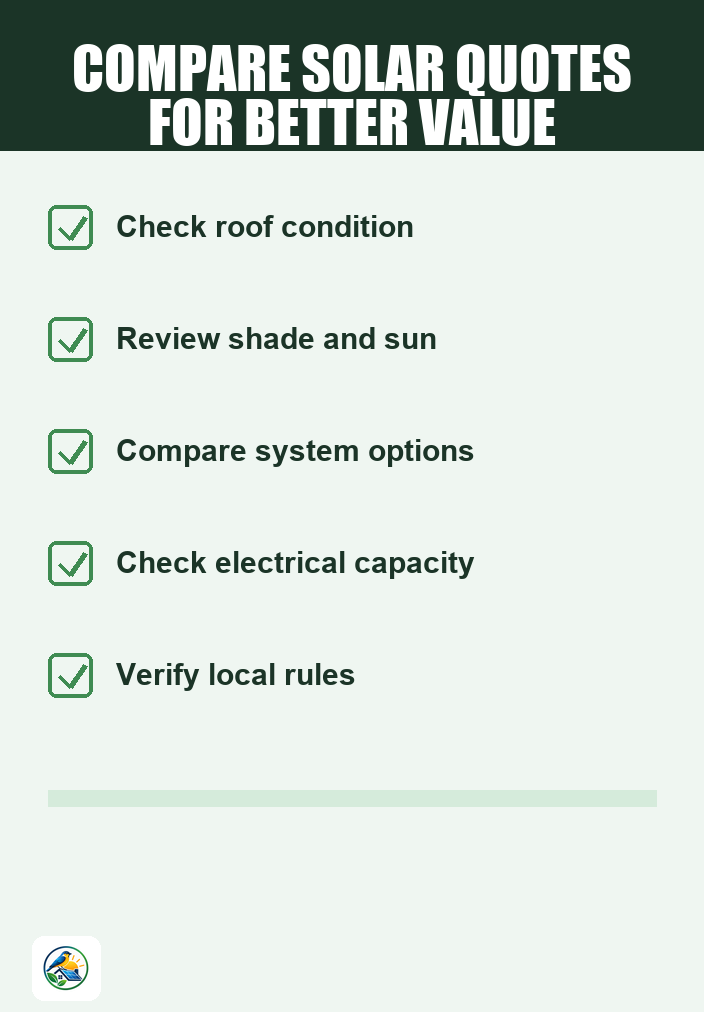
Evaluating Proposals: A Practical Checklist
When comparing solar proposals, it’s essential to ensure that you are evaluating apples to apples. Here’s a checklist to guide your analysis:
- Equipment Specifications: Compare the brand, model, and warranty of the solar panels and inverters included in each proposal.
- System Size: Look at the total wattage of the systems and how they relate to your energy needs.
- Installation Costs: Review the labor costs and any additional fees. Ensure these are clearly itemized.
- Permitting and Interconnection Fees: Are these costs included in the proposal? If not, ask for estimates.
- Financing Terms: Compare any financing offers, including interest rates and terms.
- Incentives: Verify any local, state, or federal incentives mentioned in the proposal.
Understanding Trade-offs and Considerations
Every solar installation has its unique set of challenges and considerations. Here are some key factors to keep in mind as you evaluate your solar proposals:
Roof Condition and Orientation
Your roof’s age, condition, and orientation can greatly affect system performance and cost. A roof that needs repairs may require additional costs before installation. Additionally, roofs that are shaded or poorly oriented may not be suitable for solar, potentially leading to less than optimal energy production.
Local Utility Policies
Different utilities have varying policies regarding net metering, interconnection, and incentives. Research your local utility’s rules and how they may impact your solar investment. Price differences in proposals may be due to varying interpretations of these local policies.
Future Plans
Consider any future changes to your household that may affect your energy usage, such as home renovations, electric vehicle purchases, or lifestyle changes. A system that meets your current needs may not be sufficient if your energy consumption increases.
Next Steps: Making an Informed Decision
Deciding to invest in solar energy is a significant decision that requires careful consideration. To ensure you choose the right system and installer for your home, take the following steps:
- Collect itemized quotes from multiple qualified installers.
- Use the provided checklist to evaluate each proposal fairly.
- Verify the current local incentives and financing options independently.
- Consider consulting with energy professionals to better understand your specific energy needs.
By decoding the price variations in your solar proposal comparisons, you can make a more informed choice that aligns with your goals and needs. Remember, solar energy may not be the right financial decision for every home, so take your time to weigh the options thoughtfully.


















