
Understanding Your Timeline for Home Solar Installation
Deciding to install a solar energy system on your home is an exciting step toward energy independence and sustainability. However, determining the ideal timeline for this installation is crucial for a successful transition. This article will guide you through the key factors that influence your solar installation timeline, helping you make informed decisions tailored to your unique situation.
Key Factors Influencing Your Installation Timeline
Your solar installation timeline can vary significantly based on several factors. Understanding these components will help you gauge how long the process might take and prepare accordingly.
1. Assessment of Your Property
The first step in your solar journey is assessing your property’s suitability for solar panels. Consider the following factors:
- Roof Condition: Ensure your roof is in good shape and can support solar panels. If your roof needs repairs or replacement, it’s best to address those issues before installation.
- Orientation and Pitch: South-facing roofs typically receive the most sunlight, but east and west-facing roofs can also be effective. The pitch of your roof can affect the amount of sunlight your panels receive.
- Shade Factors: Trees, buildings, and other structures can cast shadows on your roof, reducing energy production. Assess the shading throughout the day to determine the best panel placement.
2. Understanding Local Regulations and Permitting
Before installation, you will need to navigate local regulations and obtain necessary permits. This can take time and varies by location:
- Building Permits: Most jurisdictions require permits for solar installations. The application process can take from a few days to several weeks, depending on local government efficiency.
- Utility Interconnection Agreements: After installation, you’ll need to connect your system to the grid, which often involves submitting interconnection agreements to your utility company. This process can also impact your timeline.
3. Choosing the Right Installer
Your choice of installer plays a significant role in your timeline. It’s advisable to get multiple quotes from qualified solar contractors to compare options. Consider the following:
- Experience and Reputation: Look for installers with a strong track record and positive customer reviews. Experienced installers can often navigate permitting and installation more efficiently.
- Installation Schedule: Discuss potential timelines with installers. Some may have a backlog of projects, while others can schedule your installation sooner.
- Itemized Quotes: Request detailed quotes that outline all costs involved, including installation, equipment, permits, and any additional fees. This can help you compare offers effectively.
Factors to Consider Before Installation
Before proceeding with installation, there are additional considerations that can affect your timeline:
1. Financial Considerations
While financing options can make solar installation more accessible, they can also influence the timeline:
- Loan Approval: If you’re financing your solar system, securing loan approval may take time. Be sure to understand the loan terms and any associated fees.
- Incentives and Tax Credits: Check for available incentives in your area. These can impact your decision to proceed and may require verification of current eligibility.
2. Energy Needs and System Sizing
Understanding your energy needs is essential for sizing your solar system correctly. Assess your energy consumption by:
- Reviewing Utility Bills: Analyze at least a year’s worth of bills to identify your average energy usage.
- Considering Future Changes: If you plan to add electric vehicles or make significant changes to your home, factor these into your energy needs.
Potential Drawbacks and Constraints
While solar energy can be beneficial, it’s important to consider potential drawbacks or constraints that could delay your installation:
- Maintenance Requirements: Solar panels require minimal maintenance, but you should plan for occasional cleaning and inspections.
- Weather Conditions: Rain, snow, and extreme temperatures can delay installation. Consult with your installer for a realistic schedule based on your local climate.
- Battery Limitations: If you’re considering a battery backup system, understand the limitations and costs associated with battery installation and capacity.
Practical Next Steps
As you navigate your solar installation timeline, here are some practical next steps to consider:
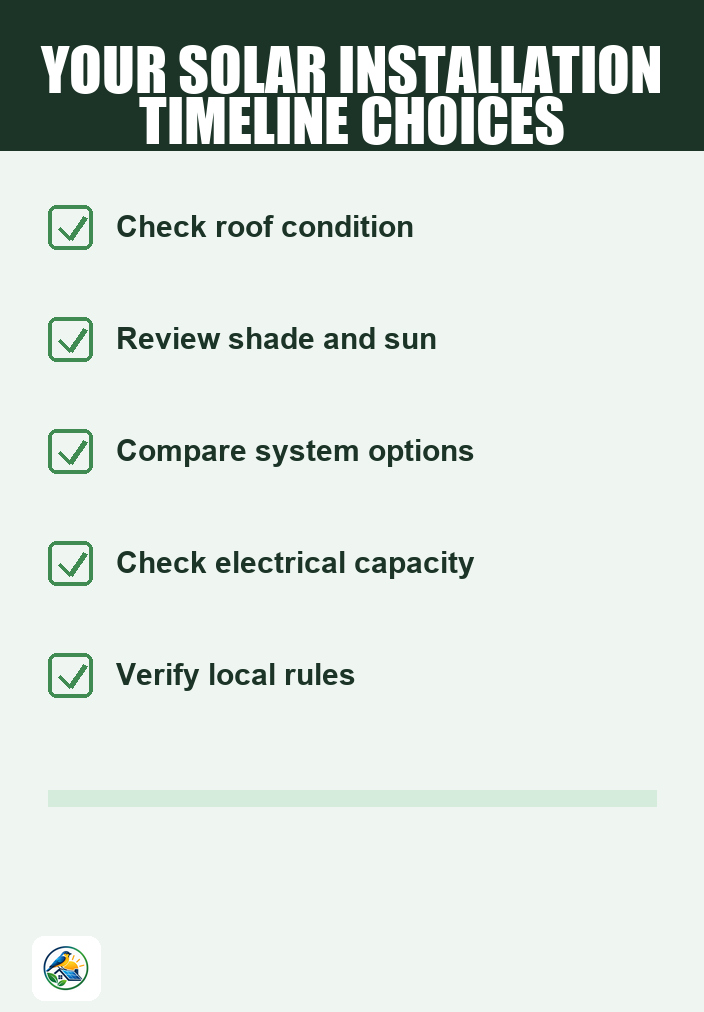
- Conduct a Property Assessment: Evaluate your roof condition, orientation, and shading.
- Research Local Regulations: Familiarize yourself with permitting and interconnection requirements in your area.
- Get Multiple Quotes: Contact qualified solar installers and compare itemized quotes to find the best fit for your needs.
- Verify Incentives: Research current incentives and tax credits to understand what may apply to your situation.
- Plan for Installation: Discuss timelines with your chosen installer to set expectations and prepare for the installation day.
Determining your ideal timeline for home solar installation involves careful consideration of your property, local regulations, and installer schedules. By taking these factors into account, you can make informed decisions that align with your energy needs and goals.


















