
Understanding Solar Panel Financing Options for Your Ranch House
Investing in solar panels for your ranch house can be a significant decision. While the benefits of solar energy, such as potential cost savings and sustainability, are appealing, understanding the financing options available is crucial. This essential checklist will help you compare different financing options, ensuring you make an informed choice that aligns with your financial and energy goals.
Types of Solar Financing Options
When it comes to financing your solar panel installation, several options are available. Each has its own set of advantages and trade-offs. Below are the most common financing methods:
- Cash Purchase: Paying for the solar system upfront allows you to avoid financing costs. This option may provide the best long-term savings, as you own the system outright from day one.
- Solar Loans: Many homeowners opt for solar loans to spread the cost over several years. These loans may come with fixed or variable interest rates, and it’s essential to compare terms, fees, and repayment periods.
- Leases: Solar leases allow you to use a solar system without upfront costs. You pay a fixed monthly fee for the system’s use while a third-party company retains ownership. While this option may reduce your energy bills, you won’t benefit from any tax credits or incentives.
- Power Purchase Agreements (PPAs): Similar to leases, PPAs allow you to pay for the electricity generated by the solar panels at a predetermined rate. This can be advantageous if you prefer a lower upfront cost but still want to benefit from renewable energy.
- Incentives and Tax Credits: Depending on your location, you may be eligible for various local, state, or federal incentives, including tax credits. It’s vital to verify current incentives with your local tax authority or a qualified installer.
Key Considerations for Each Financing Option
As you evaluate each financing option, consider the following factors:
1. Initial Costs
Understand the total upfront costs associated with each option. While cash purchases require a significant initial investment, loans, leases, and PPAs may allow for lower upfront payments. However, consider what the total cost will be over time with interest or fees.
2. Long-Term Ownership
Ownership of the solar system can affect your eligibility for tax credits and other incentives. If you lease or enter a PPA, you may miss out on these benefits, which can impact your overall savings.
3. Monthly Payments
If you choose a loan or lease, evaluate how the monthly payments fit into your budget. Compare these payments to your current electricity bills, as well as any expected increases in utility rates.
4. Maintenance and Upkeep
Consider who is responsible for maintenance and repairs. With a cash purchase or loan, you may need to manage maintenance costs. Conversely, leased systems often include maintenance in the agreement.
5. Property Value and Resale
Think about how solar panels might influence your property’s value. Owned systems may enhance resale value, while leased systems could complicate the sale process since the new owner would need to take over the lease.
Assessing Your Ranch Home’s Suitability for Solar
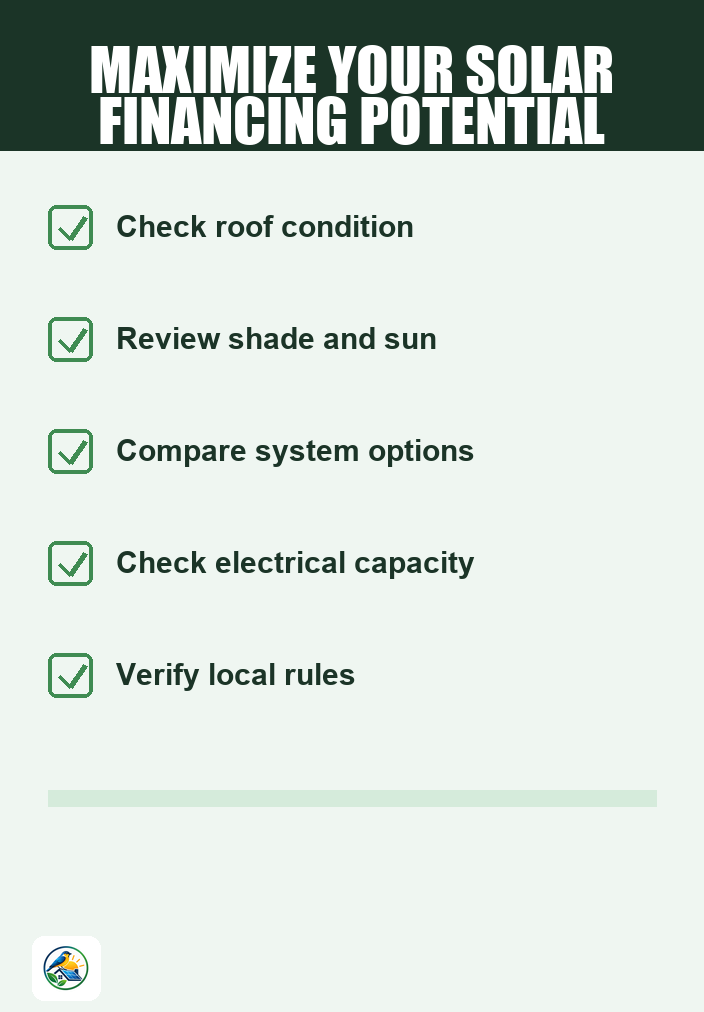
Before committing to a specific financing option, evaluate whether your ranch house is suitable for solar installation. Key factors include:
- Roof Condition: Ensure your roof is in good condition. If it requires repairs or replacement, this could add to your costs before installation.
- Orientation and Shade: The orientation of your roof and any surrounding trees or buildings that cast shade can impact the efficiency of the solar panels. South-facing roofs generally perform best.
- Electrical System: Assess your current electrical infrastructure. Older homes may require upgrades to accommodate a solar system.
- Energy Needs: Analyze your energy consumption patterns. This information will help you size the system appropriately, ensuring it meets your needs without overpaying for excess capacity.
Comparing Quotes from Installers
Once you have a clear understanding of your financing options and your home’s suitability for solar, it’s time to collect quotes from qualified installers. Here’s how to approach this step:
1. Obtain Multiple Quotes
Gather quotes from at least three different solar installation companies. This will give you a range of options and help you identify competitive pricing.
2. Request Detailed Proposals
Ensure each quote is itemized, detailing all costs, including equipment, labor, permits, and any other associated fees. This transparency will help you make accurate comparisons.
3. Evaluate Financing Terms
Look closely at the financing terms offered by each installer. Pay attention to interest rates, repayment periods, and any hidden fees that may affect your total cost.
4. Check Reviews and References
Research each installer’s reputation by reading customer reviews and asking for references. A reliable installer will have a track record of satisfied customers and quality installations.
Next Steps for Your Solar Journey
Deciding to invest in solar energy involves careful consideration of financing options, home suitability, and installation choices. Start by evaluating your financial situation, understanding different financing methods, and assessing your ranch house’s compatibility with solar technology.
Once you have a solid grasp of these elements, proceed with obtaining detailed and itemized quotes from qualified solar installers. This step is critical in ensuring you make the best financial decision for your unique circumstances.
Remember, solar energy is not a one-size-fits-all solution, and what works for one homeowner may not work for another. Taking the time to research and compare your options will lead you to a choice that best fits your needs and long-term goals.


















