
Understanding Solar Installation Warranties
When considering a solar installation for your home, warranties are a critical aspect that can significantly impact your long-term satisfaction and financial investment. An understanding of the types of warranties available and what they cover is essential for making an informed choice. In this article, we will break down the various types of solar installation warranties, what to look for, and how to evaluate them to ensure you choose the right system for your needs.
Types of Solar Warranties
There are typically three main types of warranties associated with solar installations: product warranties, performance warranties, and workmanship warranties. Each serves a different purpose and protects different aspects of your solar system.
1. Product Warranties
Product warranties cover the solar panels and other equipment, such as inverters and batteries, that are part of your solar system. These warranties generally ensure that the components will function as intended for a specified period. Here are some key points to consider:
- Duration: Most product warranties last between 10 to 25 years. Be sure to check the specifics for each component.
- Coverage: Understand what is covered under the warranty. This can include defects in materials and workmanship, but may not cover issues arising from improper installation or external damage.
- Transferability: If you sell your home, can the warranty be transferred to the new owner? This feature can enhance the value of your home.
2. Performance Warranties
Performance warranties guarantee that your solar system will produce a certain amount of energy over its lifespan. They ensure that your solar panels will operate at a specified efficiency level for a specified number of years. Consider the following:
- Guaranteed Output: This warranty often specifies a minimum energy output for the panels after a certain number of years, typically ranging from 25 to 30 years.
- Degradation Rate: Understand the expected degradation rate of the panels. Many companies guarantee that their solar panels will produce a certain percentage of their original output even after years of use.
- Performance Monitoring: Some installers may offer performance monitoring services, which can provide you with real-time data about your system’s energy production.
3. Workmanship Warranties
This warranty covers the installation of the solar system itself, ensuring that it was installed correctly and meets the industry standards. Important considerations include:
- Duration: Workmanship warranties can range from 1 to 10 years, depending on the installer. Look for longer warranties for added peace of mind.
- Scope: Verify what is included in the workmanship warranty. This typically covers issues arising from improper installation but may not include damage from natural disasters or wear and tear.
- Installer Reputation: The quality of the installation can vary significantly among contractors. Researching the installer’s history can give you insights into their reliability.
Evaluating Warranties: Key Considerations
Once you understand the types of warranties, the next step is to evaluate them against your specific needs and circumstances. Here are some practical considerations to keep in mind:
1. Compare Quotes from Multiple Installers
Getting multiple quotes helps you understand the range of warranties and services being offered. Look for:
- Warranties offered with each quote
- Differences in coverage duration and terms
- Additional services like maintenance or monitoring
2. Read the Fine Print
Warranties can have specific conditions and exclusions. Pay close attention to:
- Limitations on what is covered, such as wear and tear or damage from extreme weather
- Requirements for maintaining the warranty, such as regular maintenance checks
- The process for filing a claim and what documentation is needed
3. Consider Your Home’s Specific Needs
Your home’s characteristics can impact the suitability of a solar system and its warranty. Consider the following:
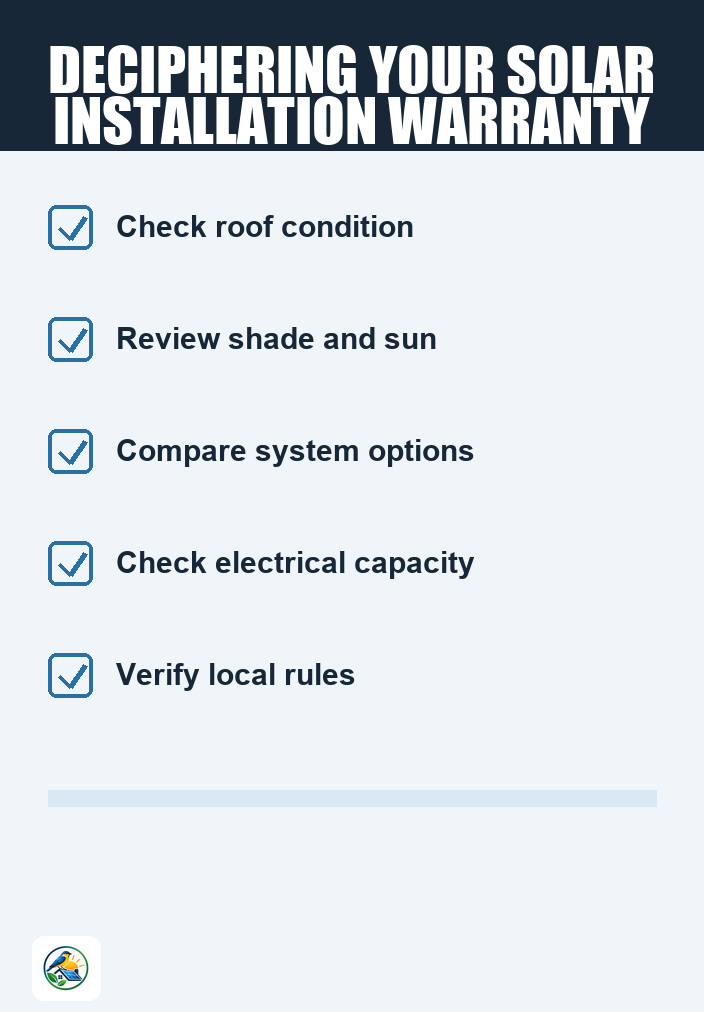
- Roof Condition: If your roof needs repairs or replacement, it may not be a good time to install solar.
- Shade and Orientation: The efficiency of your solar panels can be affected by nearby trees or building structures.
- Future Plans: If you plan to move in a few years, consider the transferability of the warranties.
Understanding Potential Drawbacks
While warranties provide protection, there are some potential drawbacks and constraints to consider:
- Maintenance Responsibility: Some warranties require the homeowner to maintain the system, which may involve costs.
- Electrical Upgrades: If your home’s electrical system is outdated, it may require upgrades for a solar installation, impacting the overall cost and warranty.
- Utility Regulations: Local utility policies can affect the integration of solar systems, especially in terms of net metering and interconnection.
Next Steps: Making an Informed Decision
As you evaluate solar installation warranties, it’s essential to gather information and consider your specific situation. Here are some practical next steps:
- Research and compare several qualified solar installers in your area.
- Request itemized quotes that clearly outline the warranties offered.
- Ask questions about anything you don’t understand regarding the warranties.
- Verify any local incentives or regulations that may impact your solar installation.
By taking the time to evaluate warranties and consider your unique circumstances, you can make a more informed decision about whether a solar installation is right for your home. Remember, the right choice will take into account not just the warranty terms but also the overall quality and suitability of the solar system for your specific needs.


















