
Understanding Solar Installation Quotes
When considering a solar installation for your home, understanding how to compare quotes is essential for making informed financial decisions. Each quote can vary significantly based on numerous factors, including system size, equipment quality, and financing options. In this article, we’ll guide you through the process of comparing solar installation quotes to help you find the best financing options available for your needs.
Why Comparing Quotes Matters
Just as you wouldn’t accept the first offer on a major purchase without exploring your options, the same principle applies to solar installations. Comparing multiple quotes allows you to gauge the market rate for residential solar systems, identify potential savings, and ensure you’re not overpaying for equipment or installation services.
Key Components of Solar Installation Quotes
Before diving into comparisons, it’s important to understand the typical components included in solar installation quotes:
- System Size: Measured in kilowatts (kW), this indicates how much power the system can generate. Larger systems typically cost more but may provide greater savings.
- Equipment Quality: Quotes should specify the type and brand of solar panels, inverters, and batteries (if applicable). Higher quality components often come with better warranties and efficiency ratings.
- Installation Costs: These are labor costs for mounting and connecting the system. Installation costs can vary based on the complexity of the job and the installer’s expertise.
- Financing Options: Different installers may offer various financing plans, including cash purchases, loans, leases, or power purchase agreements (PPAs).
- Incentives and Rebates: Look for any local, state, or federal incentives that may be included in the quote. Note that these can fluctuate based on location and time.
- Warranty Information: Installers should provide warranty details for both the equipment and installation, which can impact your long-term satisfaction and costs.
Steps to Compare Solar Installation Quotes
Now that you know what to look for, follow these steps to effectively compare solar installation quotes:
1. Gather Multiple Quotes
Get quotes from at least three reputable solar installers in your area. This will give you a broad perspective on pricing and options. Ensure that each installer provides a detailed itemized quote, making it easier to compare apples to apples.
2. Evaluate System Size and Design
Check the proposed system size against your energy consumption needs. A well-designed system should balance your energy use, roof space, and potential shading issues. If one quote suggests a significantly larger or smaller system than the others, ask for clarification on their calculations.
3. Assess Equipment Quality
Look closely at the specifications for the solar panels and inverters. Consider the efficiency ratings, warranty lengths, and manufacturer reputation. For instance, a system using high-efficiency panels may have a higher upfront cost but could yield more energy over its lifetime.
4. Compare Installation Costs
Installation costs can vary widely based on the complexity of the installation and local labor rates. Ensure that quotes reflect similar installation conditions. If one quote is significantly lower, inquire about what might be missing.
5. Review Financing Options
Understand the financing terms offered by each installer. Compare interest rates, loan terms, and monthly payments. If considering a lease or PPA, evaluate the long-term implications on your property and energy costs.
6. Check for Incentives
Incentives can significantly affect the final cost of your solar system. Verify any claims made in the quotes about tax credits, rebates, or other financial incentives. Keep in mind that these incentives can change, so check with local government or utility sources for the most current information.
7. Read the Fine Print
Be sure to review warranty and service agreements carefully. Understand what is covered and for how long, as this can impact your long-term investment. Look for any exclusions or limitations that could affect your system after installation.
Potential Drawbacks and Considerations
While solar can be a beneficial investment for many homeowners, there are also potential drawbacks to consider:
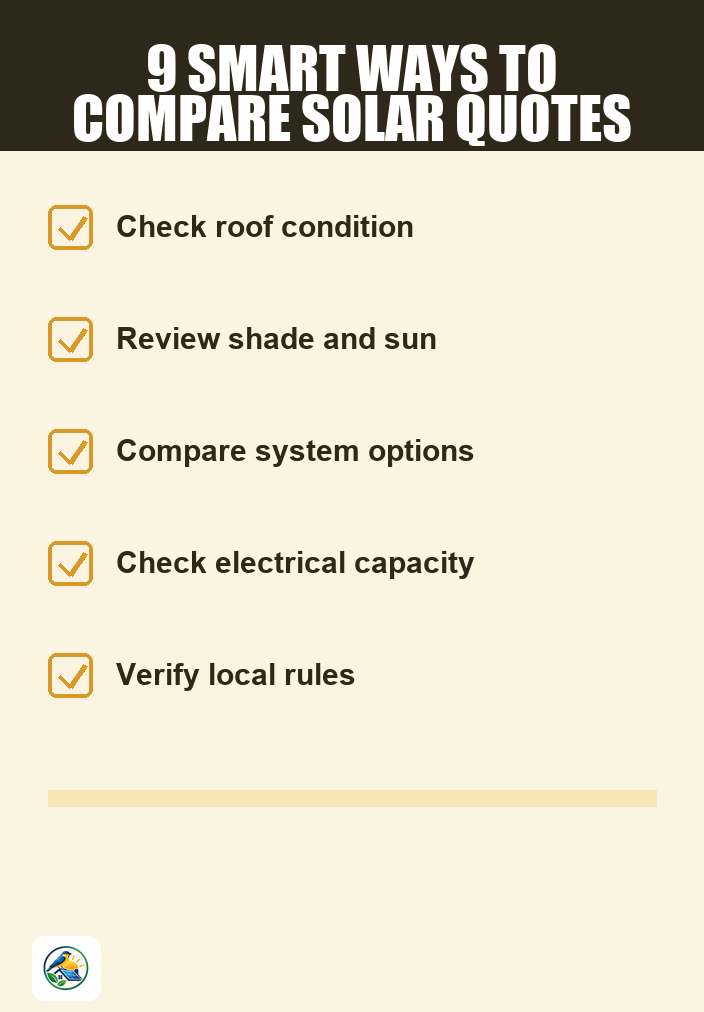
- Roof Condition: If your roof is aging or in poor condition, it may require repairs or replacement before installation, adding to your costs.
- Shading Issues: Trees, buildings, or other obstructions that cast shade on your roof can significantly reduce system efficiency.
- Orientation: South-facing roofs generally receive the most sunlight, while east and west-facing roofs can be less effective.
- Electrical Upgrades: Some homes may need electrical system upgrades to accommodate a solar installation, which can add to costs.
- Battery Limitations: If you’re considering a battery backup system, understand that batteries can add significant costs and have limitations in terms of storage capacity and lifespan.
- Permitting and Utility Rules: Local permitting processes and utility interconnection rules can vary, affecting installation timelines and costs.
Next Steps for Homeowners
Comparing solar installation quotes is a vital step in determining if solar energy is right for your home. As you review and compare, make a checklist of the components discussed in this article to ensure you evaluate each quote thoroughly. Focus on understanding the total cost and potential financing options, and don’t hesitate to ask installers for clarification on any points you find confusing.
By gathering multiple itemized quotes from qualified installers and carefully weighing the pros and cons, you can make a more informed decision that suits your home’s specific needs. Remember to verify the current local utility, government, and installer information to ensure you have the most accurate data for your comparison.


















