
Understanding Your Options: Cash vs. Solar Loan
Deciding to transition to solar energy is a significant step for any homeowner. With the increasing interest in sustainability and the rising costs of electricity, many homeowners are considering whether to pay for a solar system upfront with cash or to finance it through a solar loan. Both options have their advantages and trade-offs, which can impact your financial situation, energy savings, and overall satisfaction with your solar investment.
Cash Purchase: Pros and Cons
Purchasing a solar system outright with cash can be appealing for many reasons. Here’s a closer look at the benefits and drawbacks of this option:
Benefits of Paying Cash
- No Interest Payments: When you pay cash, you avoid any interest charges that come with financing, which can save you money over time.
- Immediate Ownership: You own the system outright from day one, allowing you to benefit from any energy savings immediately.
- Potential Tax Benefits: Depending on current tax incentives, you may qualify for credits that directly reduce your tax liability. However, verify the latest incentives applicable to your situation.
- Increased Property Value: An owned solar system can enhance your home’s value, appealing to future buyers who appreciate energy-efficient features.
Drawbacks of Paying Cash
- High Upfront Cost: The initial investment can be substantial, which may not be feasible for every homeowner.
- Opportunity Cost: Using a large sum of cash for solar may limit your ability to invest that money elsewhere, such as retirement accounts or home improvements.
- Maintenance Responsibility: As the owner, you are fully responsible for any future maintenance costs that may arise.
Solar Loan: Pros and Cons
Financing your solar system through a loan is another option that many homeowners consider. Here’s what you need to know about this financing method:
Benefits of a Solar Loan
- Lower Initial Costs: A solar loan allows you to install a solar system without a large upfront payment, making it accessible for more homeowners.
- Potential Positive Cash Flow: Depending on your loan terms and electricity savings, you might pay less for your monthly loan than you save on your utility bill.
- Various Financing Options: Solar loans come in different forms, including secured and unsecured loans, allowing you to choose what fits your financial situation best.
- Flexible Terms: Many solar loans offer flexible repayment terms, which can be tailored to your budget.
Drawbacks of a Solar Loan
- Interest Costs: Loans can come with interest rates that may add to the total cost of your solar system over time.
- Long-Term Commitment: Committing to a loan means you’ll have a financial obligation for several years, which may not suit every homeowner’s plans.
- Credit Impact: Taking on a loan can affect your credit score, especially if you miss payments.
Key Considerations for Homeowners
As you weigh your options, consider these important factors that can influence your decision:
1. Financial Situation
Assess your current financial situation. Do you have enough cash reserves to cover the upfront cost of a solar system, or would financing be a more manageable option? Consider your monthly budget and whether you can accommodate loan payments.
2. Energy Needs and Goals
Evaluate your energy consumption and future needs. Are you planning to expand your home, add electric vehicles, or increase your family size? Understanding your long-term energy needs can help you size your solar system effectively.
3. System Size and Type
Different homes will require different system sizes and configurations. Factors like roof orientation, shading, and local climate can affect how much energy your solar system will produce. Consult with a professional installer to understand what system size is appropriate for your home.
4. Incentives and Tax Credits
Check for any available local, state, or federal incentives that may apply to your solar installation. These can change over time, so it’s crucial to validate the current offerings that may affect your overall cost.
5. Future Plans
Consider your plans for the home. If you’re thinking about selling within a few years, a cash purchase might yield more immediate value. If you plan to stay long-term, a solar loan could be a feasible option that allows you to enjoy the benefits of solar without the hefty upfront cost.
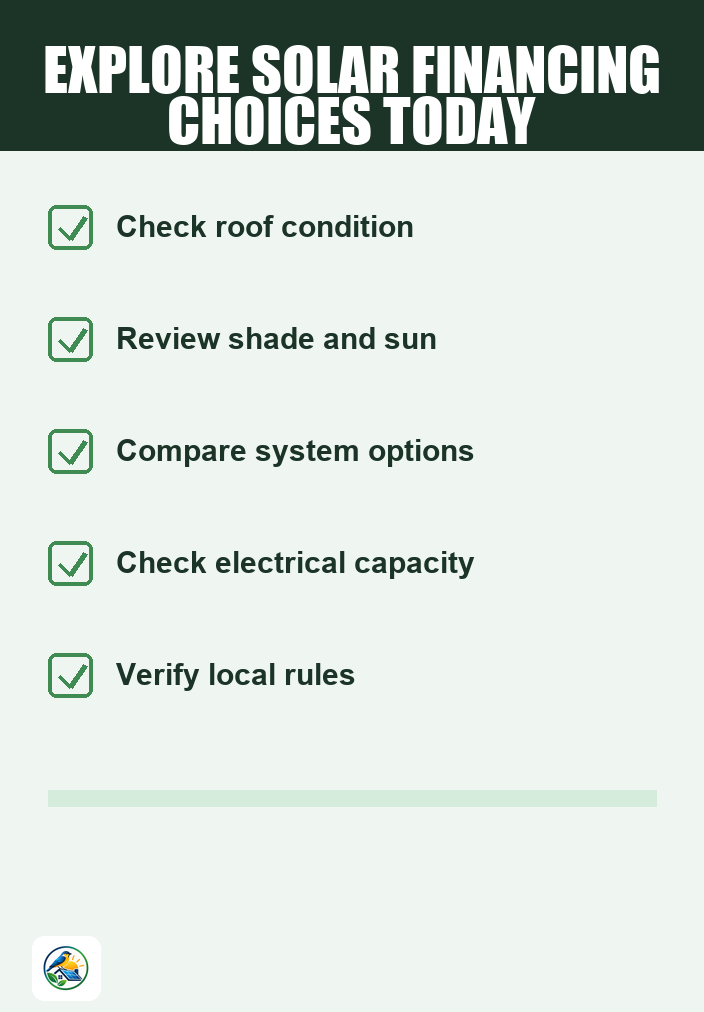
Creating Your Solar Financing Checklist
Now that you understand the key differences between cash and solar loans, here’s a practical checklist to help you make your decision:
- Assess your financial situation and budget for solar.
- Evaluate your energy consumption and future needs.
- Research available solar incentives and tax credits in your area.
- Consult with professional solar installers to get quotes and system size recommendations.
- Compare financing options including interest rates and loan terms.
- Consider the long-term implications of each option on your financial health.
- Make a decision based on your current situation and future plans.
Next Steps
Transitioning to solar energy is a significant decision that requires careful thought and planning. Whether you choose to pay cash or finance your solar system, the key is to gather all pertinent information and consult with qualified professionals. Request itemized quotes from multiple installers to compare pricing and services. This will help ensure that your decision aligns with your financial goals and energy needs.