
Understanding the Importance of Permits for Solar Installation on Historic Homes
When considering a solar installation for your historic home, it’s essential to understand the permitting process. Many homeowners dream of incorporating renewable energy into their residences, yet navigating the regulatory landscape can be daunting, especially for properties that hold historical significance. This article serves as a guide to help you understand the various aspects of obtaining permits for solar installation on your historic home renovation.
Why Permits Matter for Historic Homes
Permits are not just bureaucratic hurdles; they are essential for ensuring that the installation adheres to local, state, and federal regulations. For historic homes, specific guidelines often dictate how and where you can install solar panels. These regulations aim to preserve the architectural integrity and historical value of the property while allowing for modern energy solutions.
Understanding Local Regulations
Each municipality has its own set of rules regarding solar installations, particularly for historic homes. Before you proceed, it’s crucial to research:
- Local zoning laws
- Building codes
- Historic preservation guidelines
Contact your local building department or historic preservation board to gather information specific to your home and neighborhood. They can provide insights into what is permissible and what might require additional scrutiny.
Types of Permits You May Need
Depending on your location, you may encounter several types of permits during the solar installation process. Here are some common ones:
- Building Permit: Required for any structural changes to your home, including mounting solar panels.
- Electrical Permit: Necessary for any electrical work associated with the solar system.
- Historic Preservation Approval: Specific to homes in designated historic districts or on historic registers, this approval ensures that the installation does not compromise the home’s historical character.
Assessing Your Home’s Suitability for Solar
Before diving into the permitting process, take a moment to assess your home’s suitability for solar energy. Consider the following factors:
- Roof Condition: Ensure your roof is in good shape to support solar panels. If it needs repairs, prioritize these before installation.
- Orientation and Shade: Evaluate the roof’s orientation and surrounding trees or buildings that may cast shadows on the panels. South-facing roofs typically perform best.
- Electrical Infrastructure: Check if your existing electrical system can handle the additional load from solar panels. Upgrades may be necessary.
Working with a Professional Installer
Hiring a professional solar installer can significantly simplify the permitting process. Qualified installers are familiar with local regulations and can help ensure that your installation adheres to all necessary codes. Here are some benefits of working with a professional:
- Expertise in Permitting: They can navigate the permitting process on your behalf, reducing the stress on you as a homeowner.
- Customized Solutions: Professionals can assess your home’s unique characteristics and recommend solar solutions that meet both your energy needs and compliance requirements.
- Itemized Quotes: A detailed quote from an installer will include costs associated with permits, equipment, and installation, making it easier for you to compare options.
Challenges of Installing Solar on Historic Homes
While the integration of solar energy into a historic home can be rewarding, there are notable challenges:
- Regulatory Limitations: Some historic homes may have strict guidelines that limit the type of solar technology you can use or where you can install panels.
- Aesthetic Concerns: Homeowners may face opposition from preservation boards or neighbors concerned about the visual impact of solar panels.
- Cost Considerations: The cost of complying with additional requirements for historic homes can add to the overall expense of the installation.
Exploring Alternatives
If traditional rooftop solar doesn’t seem feasible for your historic home, consider alternative options:
- Ground-Mounted Solar: If space allows, a ground-mounted solar system might be a viable alternative that circumvents roof-related concerns.
- Solar Canopies: These can provide shade for outdoor spaces while generating solar energy, keeping aesthetics intact.
- Solar Shingles: These blend more seamlessly with the roof but may come with higher costs and require specific permits.
Next Steps for Homeowners
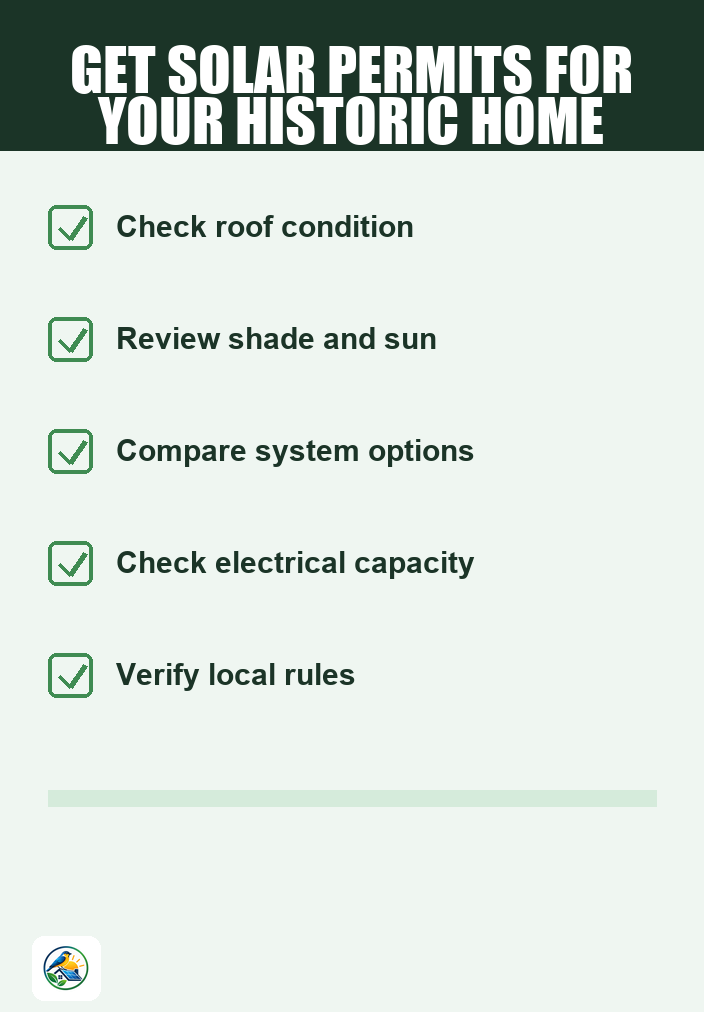
Navigating the permitting process for solar installation on a historic home can be complex, but with careful planning, it’s manageable. Here are practical next steps:
- Research local regulations and contact your local building department or historic preservation board.
- Assess your home’s roof condition, orientation, and existing electrical infrastructure.
- Consult with qualified solar installers to obtain itemized quotes and understand the permitting requirements.
- Compare quotes and consider the options that best fit your home and energy needs.
By taking these steps, you can ensure that your journey toward solar energy is both compliant and beneficial for your historic home. Remember, every home is unique, and what works for one may not work for another. Be sure to verify all local regulations and consult professionals as you plan your solar installation.


















