Understanding Your Energy Needs: The First Step in Sizing Your Solar Battery System
Before diving into the technical aspects of solar battery systems, it’s crucial to assess your energy consumption. Understanding how much energy you use on a daily basis will help determine the size of the battery system that best fits your lifestyle and needs.
Calculating Average Daily Energy Usage
To begin, gather your utility bills from the past year. Look for the total kilowatt-hours (kWh) consumed each month. Once you have that data, calculate your average daily usage by dividing the total annual kWh by 365. For example, if your household consumes 10,950 kWh annually, your average daily usage is about 30 kWh.
Identifying Peak Usage Times
Consider when you use the most energy during the day. Many homeowners have peak usage in the morning and evening when appliances like refrigerators, air conditioners, and lights are running. Understanding these peak times will help you decide how much battery capacity you need to cover these demands.
Determining Battery Capacity: How Much Storage Do You Need?
Once you have a clear picture of your energy usage, the next step is determining how much storage you’ll need. Solar batteries are typically rated in kilowatt-hours. The general rule of thumb is to size your battery system to cover at least one day’s worth of energy usage, but this can vary based on individual circumstances.
Simple Calculation for Battery Sizing
To estimate the required battery capacity, use the following formula:
- Daily Energy Usage (kWh) x Days of Autonomy = Battery Size (kWh)
For example, if your average daily usage is 30 kWh and you want three days of autonomy (to sustain your energy needs in case of cloudy weather or low solar production), you would calculate:
- 30 kWh x 3 days = 90 kWh battery capacity
Choosing Between Different Battery Types
There are various types of batteries available for solar storage, each with its own advantages and disadvantages. The three most common types are lead-acid, lithium-ion, and saltwater batteries.
Lead-Acid Batteries
- Pros: Generally lower cost, widely available.
- Cons: Shorter lifespan, requires maintenance, and less efficient.
Lithium-Ion Batteries
- Pros: Longer lifespan, higher efficiency, and lower maintenance.
- Cons: More expensive upfront costs.
Saltwater Batteries
- Pros: Environmentally friendly, stable chemistry, and long lifespan.
- Cons: Limited availability and potentially higher costs.
Weigh the pros and cons based on your budget and energy needs to choose the right battery type for your system.
Considering Installation and Space Requirements
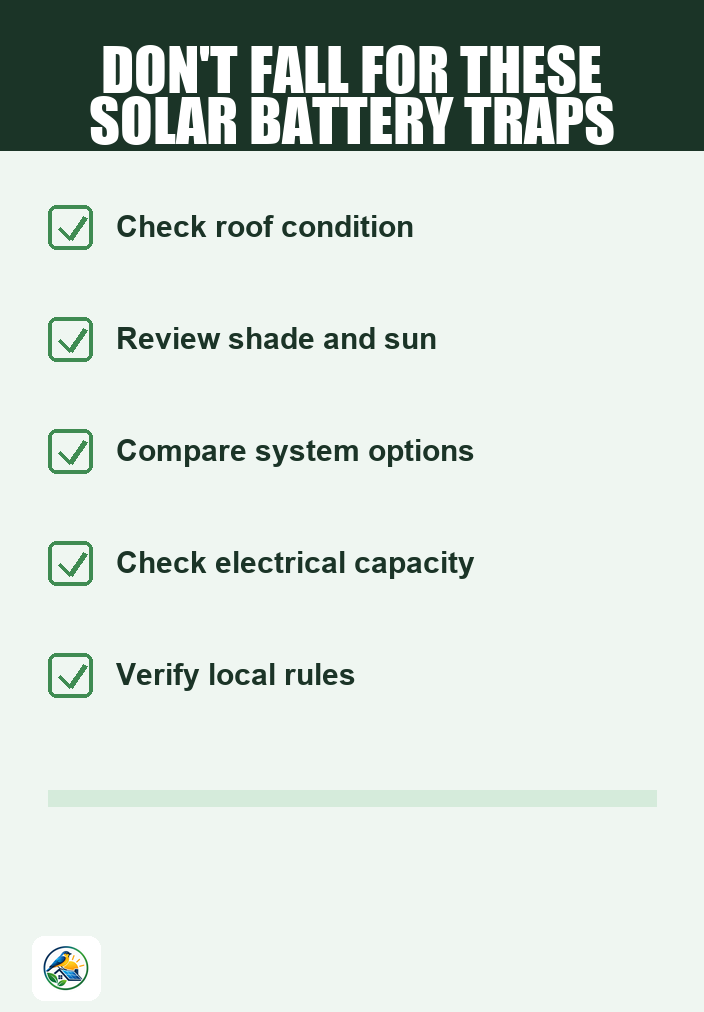
Before making any decisions, consider the physical space needed for solar batteries and the installation process. Battery systems can take up significant space, especially larger capacities. Check if your home has adequate room in your garage, basement, or on your property for the batteries and necessary equipment.
Permitting and Local Regulations
Installing a solar battery system may require permits and adherence to local regulations. Verify with local government agencies or consult with a professional installer about any necessary documentation and guidelines that you need to follow.
Evaluating Your Solar System Options: Grid-Tied vs. Off-Grid
When sizing your solar battery system, it’s essential to understand whether you want a grid-tied system with battery backup or a fully off-grid system. Here are some key points for each:
Grid-Tied with Battery Backup
- Connects to the local electricity grid.
- Allows you to draw power from the grid when solar production is insufficient.
- Battery provides backup during outages and can maximize energy savings through net metering.
Off-Grid Systems
- Completely independent of the local grid.
- Requires a larger battery bank to ensure energy availability at all times.
- Ideal for remote locations but requires careful planning and sizing.
Deciding between these two systems will influence both your battery sizing and overall costs.
Additional Considerations: Maintenance and Longevity
Once your battery system is installed, consider the long-term maintenance and lifespan of the system. Regular checks on battery health, connections, and performance will help ensure everything operates efficiently. Additionally, be aware of the warranty periods for the batteries, which can range from 5 to 15 years depending on the type.
Getting Professional Quotes: What to Expect
After you have a solid understanding of your energy needs and battery options, it’s time to consult with professional solar installers. They can provide detailed quotes based on your home’s energy consumption, roof layout, and local regulations. Make sure to ask for itemized quotes that break down the costs of equipment, installation, and any additional features or services.
Next Steps: Your Path Toward Off-Grid Living
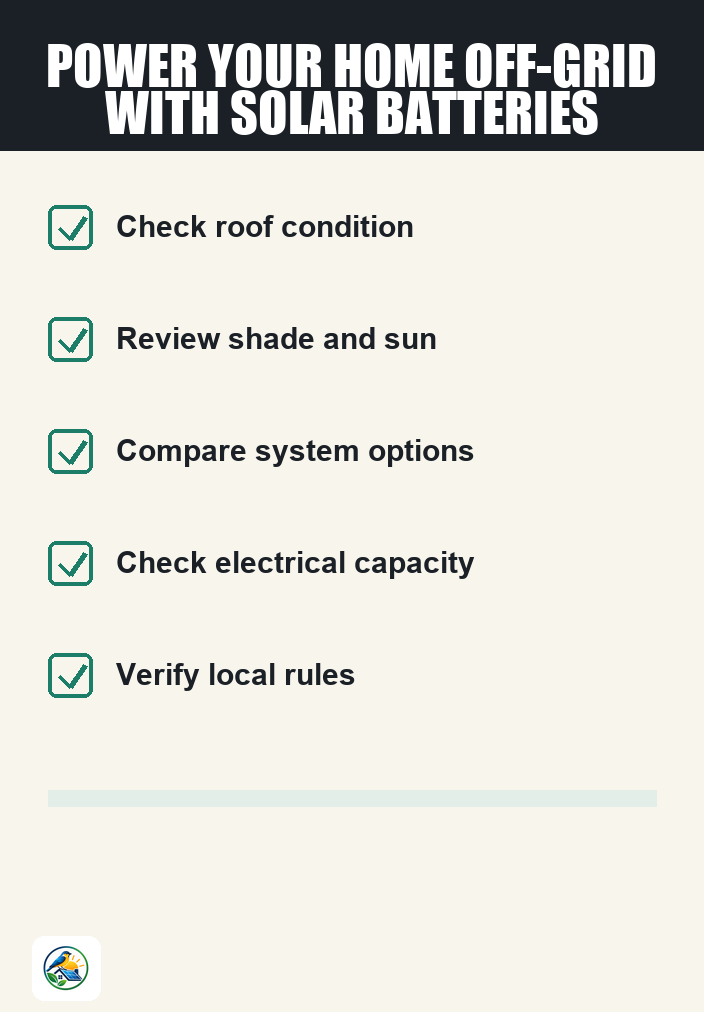
As you consider transitioning to solar energy with battery storage, remember to take the following steps:
- Calculate your average daily energy usage and peak consumption times.
- Determine the appropriate battery capacity based on your energy needs.
- Research different battery types and their pros and cons.
- Evaluate the space and installation requirements for your chosen system.
- Consult with qualified installers for itemized quotes tailored to your specific situation.
By following this checklist and being informed, you can make a well-rounded decision about sizing your solar battery system, setting you up for successful off-grid living.