
Understanding Solar Batteries and Their Place in Your Home
As a homeowner contemplating the shift to solar energy, you may be weighing your options for energy storage. In recent years, solar batteries have emerged as a compelling alternative to traditional generators. This article explores how to prepare your home for solar batteries instead of generators, highlighting the differences, benefits, and considerations you should keep in mind.
Solar Batteries vs. Generators: What You Need to Know
Both solar batteries and generators serve the purpose of providing backup power, but they operate in fundamentally different ways. Understanding these differences can help you make an informed decision.
Solar Batteries
- Energy Source: Solar batteries store energy generated from your solar panels. When the sun is shining, excess energy is stored for later use, such as during the night or during power outages.
- Environmental Impact: Using solar batteries reduces reliance on fossil fuels, making it a more sustainable option.
- Efficiency: Solar batteries are designed to work seamlessly with solar energy systems, providing a clean and efficient way to manage your energy needs.
Generators
- Energy Source: Generators run on fuel—usually gasoline, diesel, or propane—which can be inconvenient and costly to procure.
- Environmental Impact: Generators produce greenhouse gases and contribute to air pollution.
- Operation: Generators can provide immediate power during an outage, but require maintenance and fuel storage.
Preparing Your Home for Solar Battery Installation
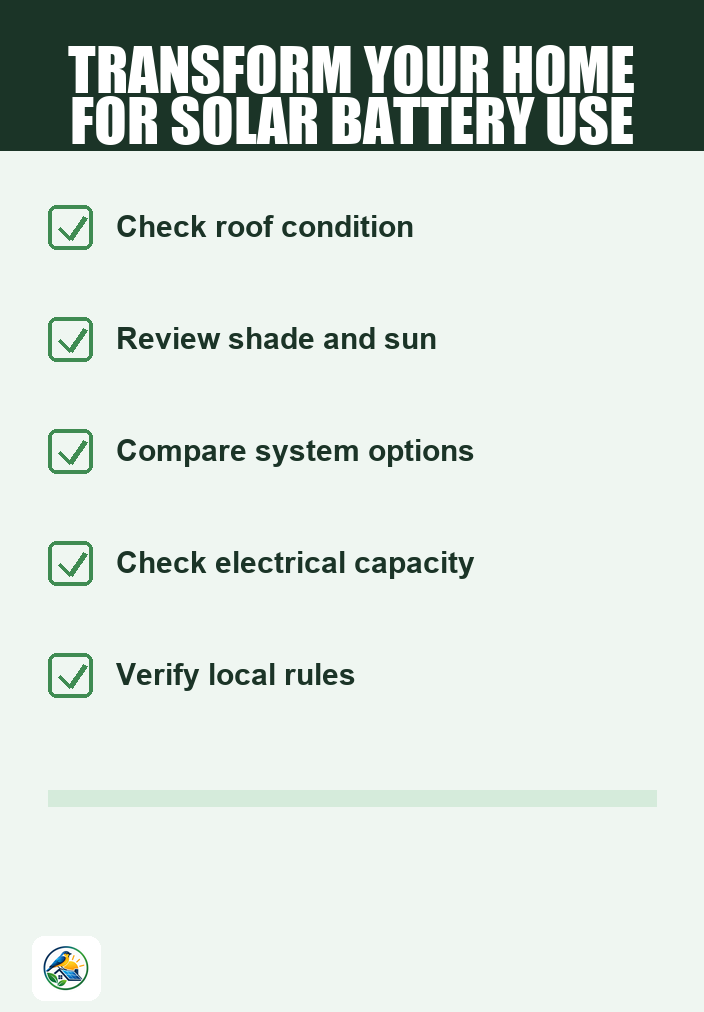
Transitioning to solar batteries involves several steps to ensure your home is ready for this technology. Here are practical considerations before making the switch.
1. Assess Your Energy Needs
Start by evaluating your household’s energy consumption. Understanding how much energy you use will help you determine the size of the solar battery system you need. Look at your utility bills from the past year to get a sense of your monthly usage patterns.
2. Evaluate Your Roof and Solar System Potential
The effectiveness of a solar battery system is directly tied to the performance of your solar panels. Consider the following:
- Roof Condition: Ensure your roof is in good shape. If it needs repairs or replacement, tackle that before installing solar panels.
- Shade and Orientation: Your roof’s orientation and any shading from trees or nearby buildings can affect energy production. A south-facing roof with minimal shade is ideal.
- System Size: Work with a professional installer to determine the appropriate size of your solar panel array based on your energy needs and roof specifications.
3. Understand Local Permitting and Utility Regulations
Every locality has different rules regarding solar installations. Before moving forward, contact your local permitting office to understand what is required for solar battery installation in your area. Additionally, check with your utility company to learn about interconnection processes, net metering policies, and any incentives that might be available.
4. Consider Battery Options and Features
Not all solar batteries are created equal. When selecting a battery for your solar system, consider:
- Storage Capacity: This determines how much energy the battery can store. Choose a capacity that aligns with your energy needs.
- Power Output: The output rating indicates how much energy the battery can provide at once. Ensure it meets your household demands during peak usage times.
- Battery Life and Warranty: Look for batteries with long life spans and robust warranties, which can indicate quality and reliability.
5. Plan for Electrical Upgrades
Depending on the age and condition of your home’s electrical system, upgrades may be necessary to accommodate the new solar and battery setup. This could include:
- Updating your electrical panel to handle increased loads.
- Ensuring wiring is up to code and capable of supporting the system.
Cost Considerations and Financing Options
While solar batteries can initially seem pricey, their long-term benefits may outweigh the costs for many homeowners. It’s essential to understand the financial implications:
- Installation Costs: These can vary significantly based on your location, system size, and specific products chosen. Always get multiple quotes from qualified installers.
- Incentives: Check local, state, and federal incentives. These can impact the overall cost and financial feasibility of your project.
- Financing Options: Look into financing options such as solar loans, leasing, or power purchase agreements (PPAs), which can make the upfront investment more manageable.
Maintenance and Longevity of Solar Batteries
Once your solar battery system is installed, consider how to maintain it for optimal performance:
- Regular Monitoring: Keep an eye on your battery’s performance through monitoring apps or inverters that provide real-time data.
- Professional Maintenance: Schedule periodic check-ups with your installer to ensure everything is functioning correctly.
Limitations to Consider
Despite their benefits, solar batteries come with limitations. Be aware of:
- Capacity Constraints: Solar batteries have finite storage, which may not cover all your energy needs during extended outages.
- Cost of Replacement: Batteries may need replacement after a certain number of cycles or years, which could add to long-term costs.
- Weather Dependency: Battery performance can be affected by extreme temperatures, so consider your local climate when planning your system.
Next Steps: Getting Started with Solar Batteries
As you contemplate making the switch to solar batteries instead of generators, the next step involves gathering detailed information. Start by contacting qualified solar installers for personalized quotes that outline the costs, potential savings, and system specifications tailored to your home. Comparing itemized quotes will help you understand the financial landscape better and make an informed decision.
In summary, preparing your home for solar batteries instead of generators can provide a more sustainable and efficient energy solution. By understanding your energy needs, evaluating your home’s suitability, and considering all aspects of the installation process, you can set the stage for a successful transition to renewable energy.


















