
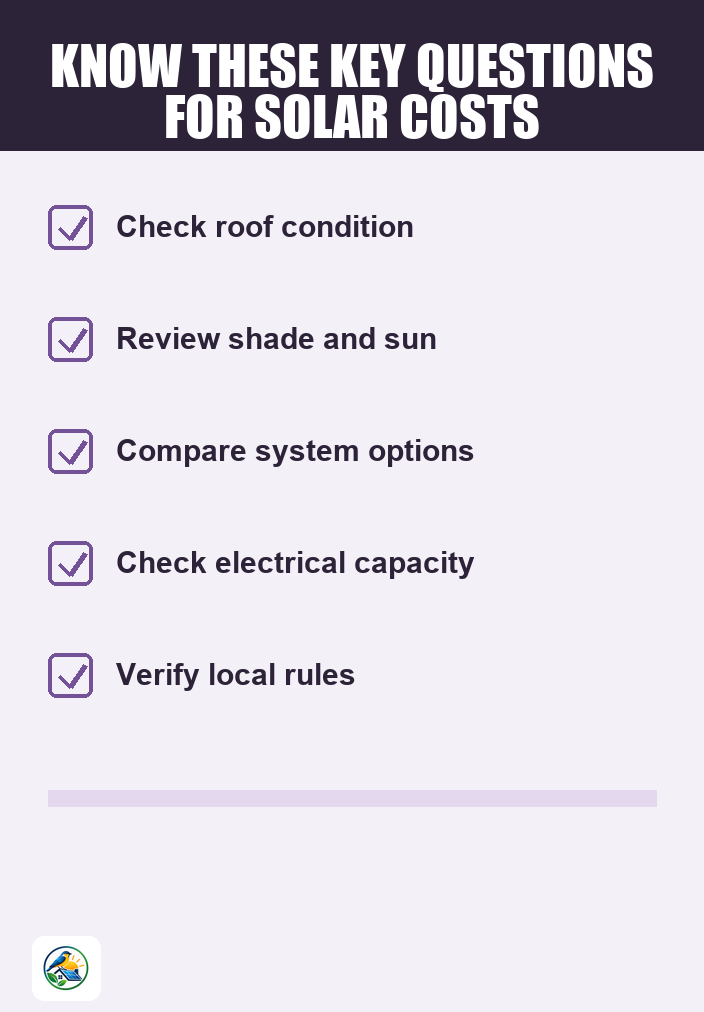
Introduction to Solar Installation Costs for Your Home
Considering a solar installation for your 1,500 square foot home can be a significant decision. With various factors influencing costs, it’s essential to ask the right questions to ensure you’re making an informed choice. This article outlines must-ask questions that will guide you through the complexities of solar installation costs, helping you compare quotes and determine if solar energy is a suitable fit for your home.
Understanding Your Energy Needs
The first step in evaluating solar installation costs is understanding your current energy consumption. Here are some questions to consider:
- What is my average monthly electricity usage? Review your past utility bills to determine your typical kilowatt-hour (kWh) consumption. This information will help in sizing your solar system.
- How much sunlight does my location receive? The amount of sunlight your area receives affects how much energy your solar panels can produce. Research local solar irradiance data to gauge potential output.
- Do I plan to expand my energy usage? Consider future changes such as adding electric vehicles or additional appliances that could increase your energy needs. This can impact the size and cost of your solar system.
Evaluating Solar System Options
There are several types of solar systems available, each with its own cost implications. Here are key questions to help you evaluate your options:
- Should I choose a grid-tied system or an off-grid system? Grid-tied systems are generally less expensive and allow you to draw power from the grid when needed. Off-grid systems provide independence but come with higher costs and complexities, particularly if battery storage is included.
- Do I want battery backup? Battery systems can store excess energy for use during outages or at night. While they add to the initial cost, they offer added security and can maximize your energy independence.
- What type of solar panels should I consider? Different panels vary in efficiency, cost, and space requirements. Research the trade-offs between monocrystalline, polycrystalline, and thin-film options.
Assessing Roof and Installation Conditions
Your home’s roof condition and characteristics play a crucial role in determining installation costs. Consider these questions:
- Is my roof suitable for solar panels? Evaluate the age, material, and pitch of your roof. A roof in poor condition may require repairs or replacement before installation.
- How much shade does my roof receive? Trees, nearby buildings, and other obstructions can affect solar production. A shading analysis can help you understand potential losses in energy generation.
- What is the orientation of my roof? South-facing roofs typically receive the most sunlight, but east and west-facing roofs can also be viable options. Your roof’s orientation will impact the overall efficiency of your system.
Understanding Installation Costs and Financing Options
The costs of solar installation can vary widely based on several factors. Keep these questions in mind when evaluating potential costs:
- What are the installation costs per watt? Get itemized quotes from multiple installers to understand the cost structure. This will help you compare offers based on wattage and installation complexity.
- Are there financing options available? Explore options such as solar loans, leases, or power purchase agreements (PPAs). Each has different implications for ownership, costs, and savings.
- What incentives are available in my area? Research local, state, and federal incentives, including tax credits and rebates. These can significantly affect your overall costs, but always verify current information.
Considering Long-Term Costs and Maintenance
When investing in solar, it’s important to think beyond the initial installation costs. Here are questions to guide your long-term considerations:
- What are the maintenance requirements for my system? Solar panels typically require minimal maintenance, but it’s wise to inquire about cleaning and any potential repairs, especially for systems with battery backups.
- What warranties are offered on the equipment and installation? A quality installer should provide warranties on both the solar panels and the installation. Understand what is covered and for how long.
- How will my utility company handle net metering? If you generate excess energy, net metering policies can affect how you are compensated. Research your utility’s rules to understand how they handle energy credits.
Comparing Quotes from Qualified Installers
Once you’ve gathered answers to these questions, it’s time to compare quotes from qualified solar installers. Here are some tips:
- Request itemized quotes: Ensure each quote breaks down costs for equipment, installation, permits, and any additional services.
- Evaluate installer credentials: Look for licensed and insured professionals with good customer reviews and experience in your local market.
- Discuss financing and incentives: Ask how each installer handles financing options and any available incentives to ensure you’re making an apples-to-apples comparison.
Next Steps
Considering solar installation for your 1,500 square foot home involves careful evaluation of costs and options. By asking the right questions, you can make a more informed decision about whether solar energy is right for you. Begin by assessing your energy needs, exploring system options, and gathering quotes from qualified installers. Don’t forget to verify local incentives and utility regulations to ensure you have the most current information at hand. With thorough research and comparison, you’ll be better positioned to determine if solar installation aligns with your financial and energy goals.


















