
Is Now the Right Time for Your High-Electricity Household to Go Solar?
As energy costs continue to trend upwards, many homeowners are considering whether solar energy could be the right solution for their high-electricity needs. If you find yourself constantly grappling with soaring utility bills, it’s worth exploring if going solar could not only mitigate those costs but also provide a reliable energy source for your home. However, the decision to install a solar system is multifaceted and requires careful consideration. Below, we’ll break down the factors you should evaluate to determine if now is the right time for your household to make the switch to solar.
Understanding Your Energy Consumption
Before diving into the solar world, it’s essential to assess your current electricity consumption. Start by reviewing your utility bills over the past year to identify your average monthly usage. This will not only give you an idea of how much energy you need but also help in sizing the solar system appropriately. Here are some questions to guide you:
- What is your average monthly electricity usage in kilowatt-hours (kWh)?
- Are there specific months where your usage spikes (e.g., summer cooling or winter heating)?
- Do you anticipate any changes in your energy consumption habits, such as adding appliances or electric vehicles?
Understanding your consumption will help you and potential solar installers determine the size and type of solar system that may best fit your needs.
Evaluating Your Roof and Property
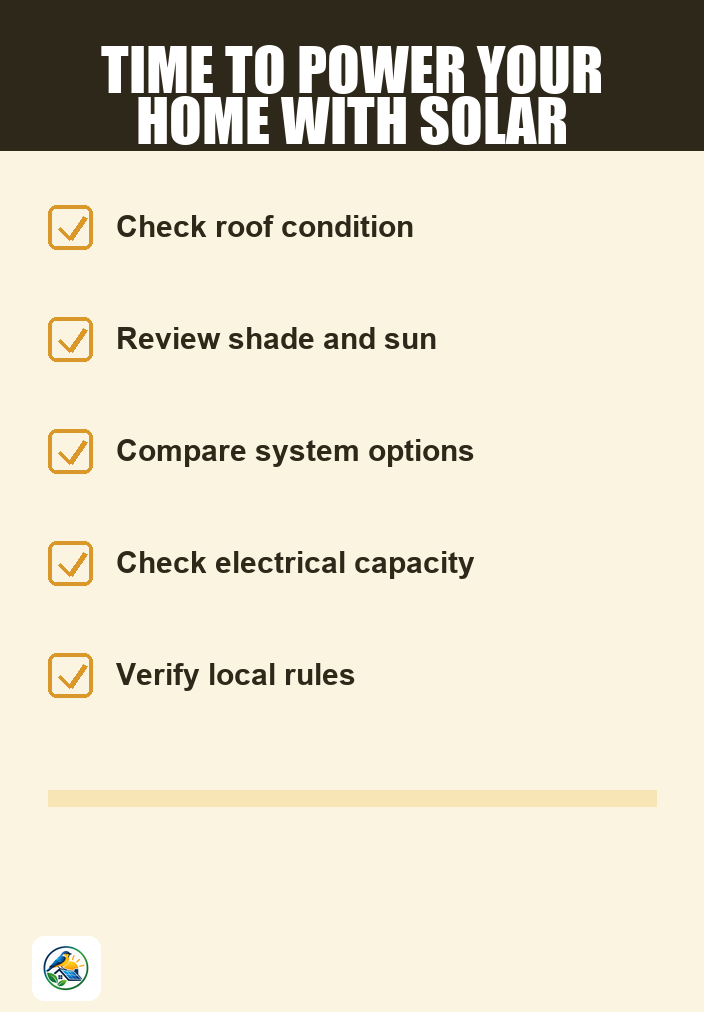
Your roof’s condition and characteristics play a crucial role in determining the feasibility of a solar installation. Consider the following:
- Roof Condition: Is your roof in good shape? If it requires repairs or replacement soon, it might be more cost-effective to address that before installing solar panels.
- Roof Orientation: Solar panels perform best on south-facing roofs, but east and west orientations can also be effective. North-facing roofs are generally less ideal.
- Shade: Are there trees or buildings that cast shade on your roof during peak sunlight hours? Even partial shading can significantly reduce solar panel efficiency.
- Space: Do you have enough space for the number of panels needed to meet your energy goals?
For homes with multiple roof sections or unique layouts, it may be beneficial to consult with a professional installer to assess the potential for solar energy generation.
Financial Considerations: Costs and Incentives
Solar energy systems come with various costs, and understanding these is critical before making a commitment. While it’s tempting to jump at the prospect of saving on energy bills, be aware of the various financial aspects involved:
- Installation Costs: Prices can vary widely based on system size, equipment choice, and installation complexity. Requesting quotes from multiple installers can provide clarity on what to expect.
- Financing Options: Evaluate your financing options, which may include cash purchases, solar loans, or leasing arrangements. Each option has different implications for ownership and potential savings.
- Incentives: Various federal, state, and local incentives may be available to reduce your upfront costs. However, these can change frequently, so it’s important to verify current offerings.
- Net Metering: Some states offer net metering, allowing you to earn credits for the surplus energy your system generates. Understand how this applies in your area.
Engaging with a qualified installer can help you navigate these financial considerations and provide an itemized quote tailored to your specific situation.
Exploring Solar Options: Grid-Tied vs. Battery Backup
When considering solar, you’ll typically encounter two main systems: grid-tied and those with battery backup. Understanding the differences can help you make a more informed decision:
- Grid-Tied Systems: These systems are connected to the utility grid and allow you to draw power from the grid when solar generation is insufficient. They tend to be less expensive upfront but do not provide power during outages unless paired with a backup solution.
- Battery Backup Systems: These systems store excess solar energy for use during outages or at night. While they can offer peace of mind, they come with higher upfront costs and require consideration of battery lifespan and maintenance.
Evaluate your priorities—if maintaining power during outages is crucial, investing in a battery system may be beneficial.
Potential Drawbacks and Constraints
While solar energy presents numerous advantages, there are also potential drawbacks and constraints to consider:
- Permitting and Interconnection: The process for obtaining permits and connecting to the grid can vary significantly by location and may introduce delays.
- Utility Policies: Some utilities have specific rules regarding solar installations, including fees or limitations on net metering. Understanding these policies can impact your decision.
- Maintenance: Although solar systems require minimal maintenance, they do need occasional cleaning and inspections. Factor this into your long-term planning.
- Weather Variability: Solar power generation is influenced by weather conditions. While solar can still produce energy on cloudy days, it’s important to understand how this may affect your energy supply.
Being aware of these constraints will help you set realistic expectations for your solar project.
Next Steps: Getting Accurate Quotes
If you’ve assessed your energy consumption, roof suitability, financial situation, and potential drawbacks and are still considering going solar, the next step is to get professional quotes. Comparing itemized quotes from qualified solar installers will give you a clearer picture of the potential costs and savings specific to your home. Ensure each quote includes details on system size, equipment type, installation costs, financing options, and any applicable incentives.
In conclusion, deciding whether now is the right time for your high-electricity household to go solar involves careful evaluation of your unique circumstances. By considering your energy needs, roof characteristics, financial implications, and potential constraints, you can make a more informed decision that aligns with your goals.


















