
Understanding Solar Leases: Making Informed Choices
As a homeowner considering a residential rooftop solar system, you’re likely exploring various financing options. One popular choice is a solar lease, which allows you to use solar energy without the upfront costs associated with purchasing a system. However, before signing any lease agreement, it’s crucial to understand the nuances, trade-offs, and considerations involved to avoid regret down the line.
What is a Solar Lease?
A solar lease is an agreement where a solar provider installs a solar energy system on your property, and you pay a fixed monthly fee for the energy produced. This arrangement allows you to benefit from solar energy without the initial investment of purchasing the system. It’s important to note that with a lease, you do not own the solar panels; the leasing company retains ownership and is responsible for maintenance and repairs.
Key Considerations When Choosing a Solar Lease
Before committing to a solar lease, consider the following:
- Monthly Payments: Understand the monthly payment structure. Is it fixed, or does it escalate over time? An escalating lease can lead to higher costs in the long run.
- Duration of Lease: Most solar leases last 20 to 25 years. Consider whether you plan to stay in your home for the duration of the lease.
- Energy Production: Review the estimated energy production of the system. Will it meet your energy needs? Ask for an analysis specific to your location.
- Ownership and Maintenance: Since you don’t own the system, the leasing company is responsible for maintenance. Understand what this encompasses and how issues are handled.
- End-of-Lease Options: Know your options once the lease term ends. Will you have the option to purchase the system, renew the lease, or have it removed?
Evaluating the Trade-Offs: Lease vs. Purchase
When considering a solar lease, it’s essential to weigh it against purchasing a solar system. Here are some trade-offs to think about:
- Initial Cost: Leasing typically requires no upfront payment, while purchasing may involve significant initial costs. However, purchased systems can provide long-term savings and potential tax benefits.
- Incentives and Tax Credits: If you purchase a system, you may qualify for federal tax credits and state incentives. These are generally not available with leases, as the leasing company claims them.
- Return on Investment: A purchased system can lead to significant savings on electricity bills over time, while leased systems may provide lower monthly payments without the long-term savings potential.
Homeowner Considerations for Solar Leases
Several factors specific to your home can influence whether a solar lease is a good fit:
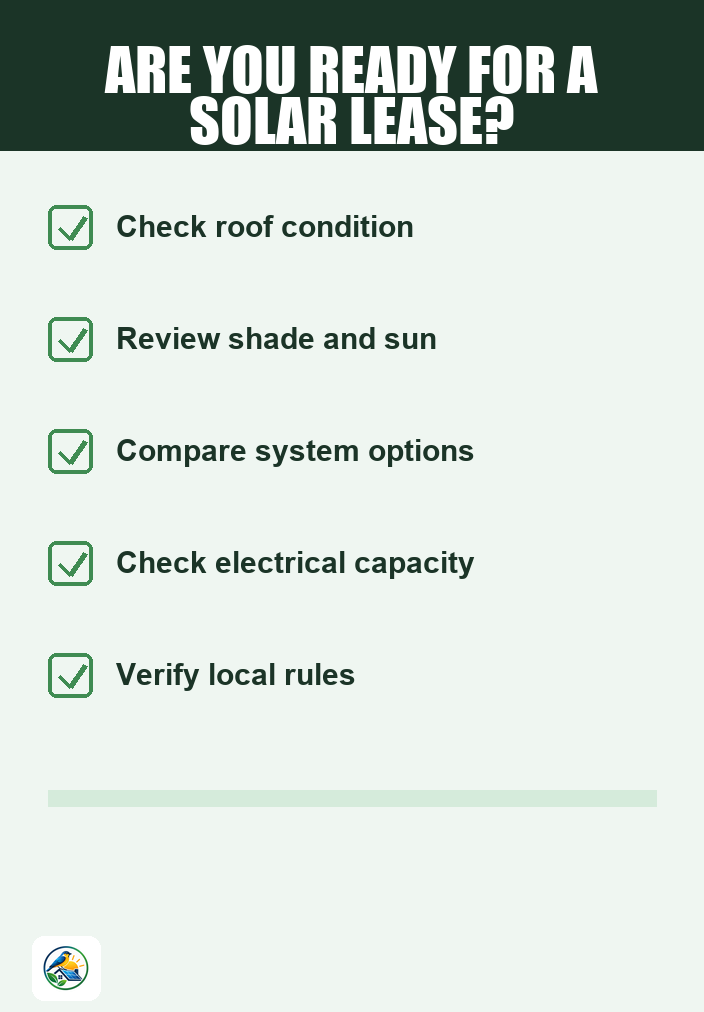
- Roof Condition: A sturdy, well-maintained roof is critical for a solar installation. If your roof needs repairs or replacement, address this before leasing a solar system.
- Shade and Orientation: Evaluate how much sunlight your roof receives during the day. Trees, buildings, or other structures that cast shade can significantly impact energy production.
- Electrical Upgrades: Check if your home’s electrical system is sufficient to handle the solar installation. You may need upgrades, which can add to your costs.
Understanding Local Regulations and Policies
Solar leasing agreements can be affected by local utility rules, permitting processes, and interconnection policies. Here are some aspects to consider:
- Net Metering: Research net metering policies in your area. This allows you to receive credits for excess energy produced by your solar system, which can offset your energy costs.
- Permitting Requirements: Understand any local permits required for installation. Your installer should assist with this, but it’s good to know the process ahead of time.
- Utility Policies: Some utilities may have specific regulations or incentives related to solar installations. Familiarizing yourself with these can aid in your decision-making process.
When to Get a Professional Installer Quote
Obtaining a quote from a professional installer is crucial for several reasons:
- Accurate Assessment: A qualified installer can provide a detailed assessment of your roof’s solar potential, factoring in shading, orientation, and local climate conditions.
- Tailored Solutions: They can recommend specific system sizes and configurations that suit your energy needs and budget.
- Financial Options: An installer can outline various financing options, including leases, purchases, and power purchase agreements (PPAs).
Practical Next Steps
As you navigate your solar leasing options, here are some practical next steps:
- Research local installers and read reviews to find reputable professionals.
- Request itemized quotes from multiple installers to compare costs, terms, and system specifications.
- Ask detailed questions about the lease terms, including any potential escalations in payments and end-of-lease options.
- Verify current local utility, installer, government, or tax information to understand available incentives.
- Consult with a financial advisor if necessary to evaluate the long-term implications of leasing versus purchasing.
Making the right choice regarding a solar lease involves careful consideration of your home’s unique characteristics, local regulations, and financial implications. By following these steps and conducting thorough research, you can ensure that your investment in solar energy aligns with your goals and minimizes the potential for regret.


















