
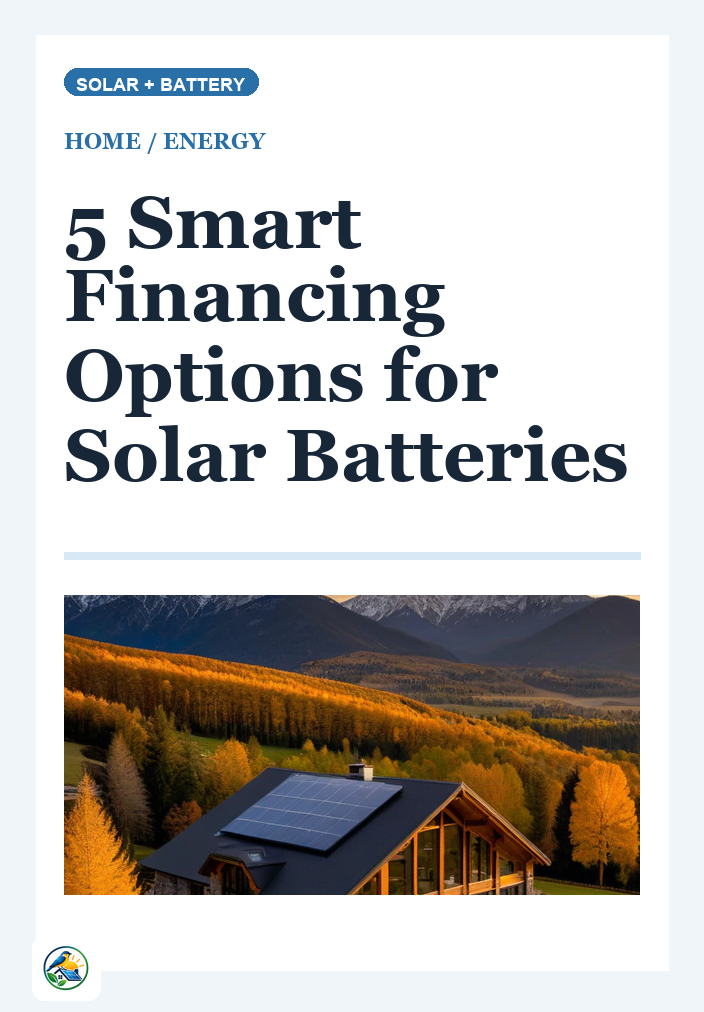
Understanding Solar Battery Backup Financing Options
As U.S. homeowners increasingly look for energy independence and resilience against outages, the combination of solar energy systems with battery backup solutions is gaining popularity. This guide will help you navigate the financing options available for a solar battery backup system, allowing you to make an informed decision tailored to your needs.
Why Consider Solar Battery Backup?
Solar battery backup systems store excess energy generated by your solar panels, allowing you to use this stored energy during outages or when the sun isn’t shining. This capability can provide peace of mind, especially in areas prone to power outages. However, financing these systems can be complex, and it’s essential to understand the various options available to you.
Types of Financing Options
When it comes to financing your solar battery backup system, homeowners typically have several options. Below are the most common methods:
- Cash Purchase: Paying for your system upfront can often be the most straightforward method, allowing you to avoid interest payments. However, it requires a significant amount of capital, which may not be feasible for everyone.
- Solar Loans: Many financial institutions offer loans specifically for solar energy systems. These can be secured or unsecured, with varying interest rates and terms. Secured loans may require collateral, while unsecured loans typically have higher interest rates.
- Leases: In a solar lease, you pay a monthly fee to use the solar system installed on your roof without owning it outright. This option often includes maintenance and monitoring, but you won’t benefit from any energy savings directly.
- Power Purchase Agreements (PPAs): Similar to leases, PPAs allow you to pay for the power generated by the solar system instead of for the system itself. Your payments are typically lower than your average utility bill, but the system remains owned by the installer.
Evaluating Your Financial Situation
Before diving into financing options, consider the following questions:
- What is your budget? Determine how much you can afford to invest in a solar battery backup system.
- How long do you plan to stay in your home? If you plan to move soon, leasing or a PPA might be more suitable.
- What is your credit score? Your credit score will impact the financing options available to you, particularly if you are considering a loan.
- What are your energy needs? Understanding your energy consumption will help you determine the size of the system you need and, consequently, the financing required.
Choosing the Right System Size
Determining the appropriate size for your solar battery backup system is crucial to ensure it meets your energy needs. Consider the following factors:
- Your average energy usage: Review your utility bills to understand your monthly energy consumption. This will help you estimate the size of the solar system and battery storage you require.
- Duration of outages: Consider how long you want your system to provide power during outages. This will impact the capacity of the battery you need.
- Future energy needs: If you plan to add appliances or expand your home, factor these potential changes into your sizing calculations.
Comparing Quotes From Installers
Once you have a grasp of your needs and financing options, it’s time to compare quotes from qualified installers. Here are some tips to make your comparison effective:
- Get multiple quotes: Seek at least three quotes from different installers to understand pricing and options.
- Request itemized quotes: Ensure each quote includes a breakdown of costs, including equipment, installation, and any financing fees.
- Inquire about warranties: Ask about the warranties offered on both the solar panels and the battery system.
- Check reviews and certifications: Research each installer’s reputation and qualifications to ensure they are reputable and experienced.
Understanding Incentives and Rebates
Federal, state, and local incentives can significantly impact the overall cost of your solar battery backup system. However, these incentives vary by location and can change frequently. It’s crucial to verify the current incentives available in your area by consulting local utility companies or government resources.
Potential Drawbacks and Considerations
While the benefits of solar battery backup systems are appealing, it’s important to consider potential drawbacks:
- Initial costs: Even with financing, the upfront costs can be high, and ongoing payments may be necessary for years.
- Battery limitations: Batteries have a limited lifespan and may require replacement after several years, adding to long-term costs.
- Roof condition and orientation: Your roof must be in good condition and ideally oriented to capture sunlight effectively.
- Local utility policies: Be aware of your local utility’s rules regarding net metering, as they can impact the financial viability of your system.
Next Steps
Financing a solar battery backup system can seem daunting, but breaking it down into manageable steps can make the process smoother. Begin by evaluating your financial situation, estimating your energy needs, and exploring various financing options. Once you’re ready, reach out to qualified installers for itemized quotes, allowing you to compare costs and features effectively.
Remember, investing in solar energy and battery backup is a significant decision, and it’s essential to do your homework to ensure it aligns with your goals and circumstances.


















