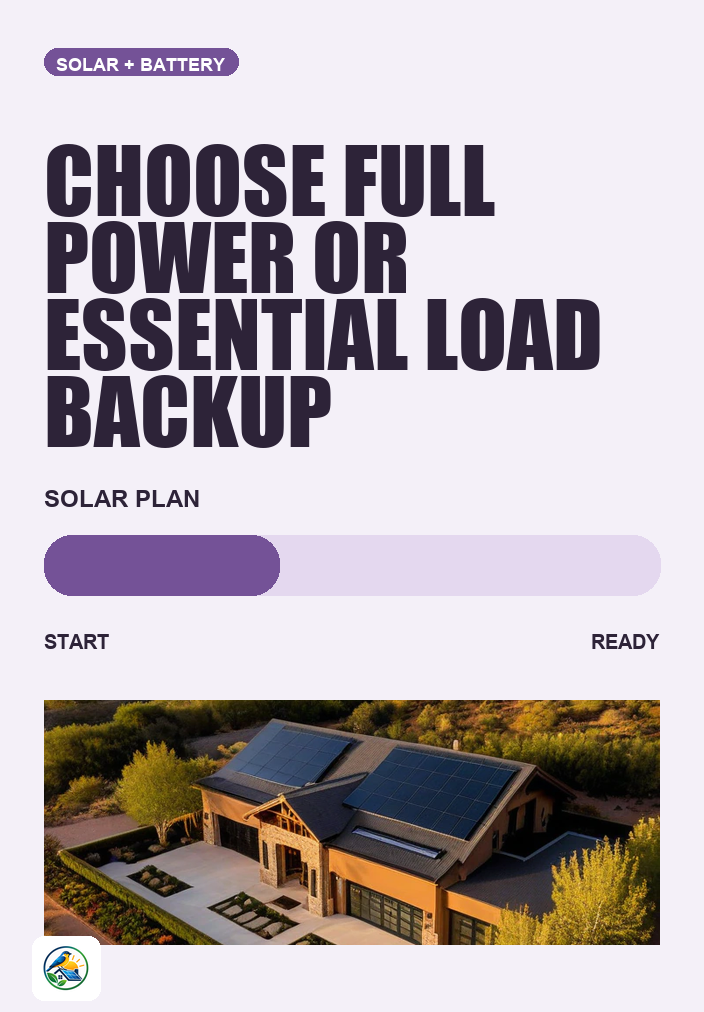
Understanding Whole Home Backup vs. Essential Load Backup
When considering a solar battery system for your home, it’s essential to understand the difference between whole home backup and essential load backup. Each option provides distinct advantages and suits different homeowner needs, particularly when it comes to financing your solar battery options.
Whole home backup means your solar battery can power your entire home during an outage, while essential load backup refers to a system designed to power only critical appliances and systems, such as refrigerators, lights, and medical devices. The choice between these two systems can significantly impact your initial investment, financing options, and overall energy independence.
Evaluating Your Energy Needs
Before deciding which backup option is right for you, evaluate your energy needs. Consider the following factors:
- Household Size: Larger households may require more power to run multiple devices simultaneously, making whole home backup more appealing.
- Critical Appliances: Identify appliances that are essential during outages, such as medical devices or heating/cooling systems.
- Usage Patterns: Assess your typical energy use during the day and night. This can inform how much energy storage capacity you need.
Financing Options for Solar Battery Systems
Financing a solar battery system can be a complex process. Here are some common financing options to consider:
- Cash Purchase: Paying upfront can eliminate financing costs, but requires significant initial capital.
- Solar Loans: Many lenders offer loans specifically for solar installations, allowing homeowners to pay over time while benefiting from immediate energy savings.
- Leasing: In a lease agreement, homeowners pay a fixed monthly fee to use the solar system without owning it. This can reduce upfront costs but may not allow for battery ownership.
- Power Purchase Agreements (PPAs): Homeowners agree to purchase the electricity generated by the solar system at a predetermined rate, often lower than utility rates.
Cost Considerations: Whole Home vs. Essential Load Backup
The costs associated with whole home backup systems are typically higher than those for essential load systems. Here are some factors influencing these costs:
- Battery Capacity: Whole home systems require larger battery banks to store enough energy, increasing initial costs.
- Inverter Requirements: Whole home systems often need more powerful inverters to handle the total load, which can add to the expense.
- Installation Complexity: The installation process for whole home backup can be more complex, requiring additional labor and expertise.
In contrast, essential load systems may require smaller batteries and less complex installations, making them more budget-friendly. However, homeowners should consider whether the potential savings justify the limitations of powering only essential devices.
Trade-offs to Consider
When deciding between whole home backup and essential load backup, consider the following trade-offs:
- Energy Independence: Whole home backup provides greater independence from the grid, while essential load backup may leave some non-essential devices without power during an outage.
- Convenience: Whole home backup allows for seamless power during outages, eliminating the need to manage which appliances can be used.
- Initial Investment: Essential load systems can be a more affordable entry point for homeowners new to solar, while whole home systems require a larger investment upfront.
- Future Flexibility: Consider whether your energy needs might change in the future. Whole home systems may offer more flexibility for adding capacity later.
Assessing Available Incentives and Tax Credits
Financing your solar battery system may be influenced by available incentives and tax credits. However, it’s crucial to verify the current offerings in your area, as these can vary significantly. Some common forms of incentives include:
- Federal Tax Credits: Homeowners may qualify for tax credits on solar installations, but eligibility depends on the current laws and regulations at the time of installation.
- State and Local Incentives: Various states offer their own incentives, such as rebates or property tax exemptions. Research your state’s offerings for potential savings.
- Utility Programs: Some utility companies provide incentives for battery storage installations, which can help offset costs.
Before making any decisions, check with local utility providers and government resources to obtain the most accurate and up-to-date information regarding incentives.
Next Steps: Getting Accurate Quotes
Once you have a clear understanding of your energy needs, financing options, and the differences between whole home and essential load backup, it’s time to take action. Start by obtaining itemized quotes from qualified solar installers. This process will help you:
- Compare pricing for both whole home and essential load backup systems.
- Understand the specific equipment and installation costs.
- Evaluate available financing options tailored to your situation.
Remember, each home is unique, and the right solar battery solution will depend on your specific circumstances and preferences. Take the time to research and consult with professionals to make an informed decision.