Understanding Common Missteps in Solar Battery System Installation
As more U.S. homeowners consider the integration of solar energy into their homes, the addition of a solar battery system often comes into the conversation. While solar panels can generate electricity, pairing them with a battery can provide additional benefits, such as energy storage for use during outages or at night. However, installing a solar battery system comes with its own set of challenges and considerations. In this article, we will explore common missteps that homeowners should be aware of when planning to install a solar battery system.
1. Not Assessing Your Home’s Energy Needs
Before diving into the installation process, it’s crucial to evaluate your household’s energy needs. Many homeowners make the mistake of underestimating their consumption or failing to account for future changes, such as an increase in family size or additional electric appliances.
Checklist for Energy Assessment
- Review past utility bills to determine average monthly consumption.
- Consider seasonal variations in energy use.
- Account for potential future energy needs—like an electric vehicle or a home office.
A professional installer can help you analyze your energy needs and recommend an appropriate battery size. Choosing a battery that doesn’t match your consumption can lead to wasted resources or insufficient energy during peak demand times.
2. Ignoring the Type of System: Grid-Tied vs. Off-Grid
Understanding the difference between a grid-tied system with battery backup and an off-grid system is essential for your project. Grid-tied systems remain connected to the utility grid, allowing you to draw power from the grid when your battery runs low. In contrast, off-grid systems rely entirely on battery storage for power.
Tradeoffs Between System Types
- Grid-Tied with Battery Backup: Typically lower upfront costs, access to net metering, and the ability to sell excess energy back to the grid.
- Off-Grid Systems: Greater independence from utility companies but may require a larger battery capacity and more significant upfront investment.
If you’re leaning toward an off-grid system, consider how much energy you can realistically store and how often you may need to rely on your battery.
3. Overlooking Installation and Permitting Requirements
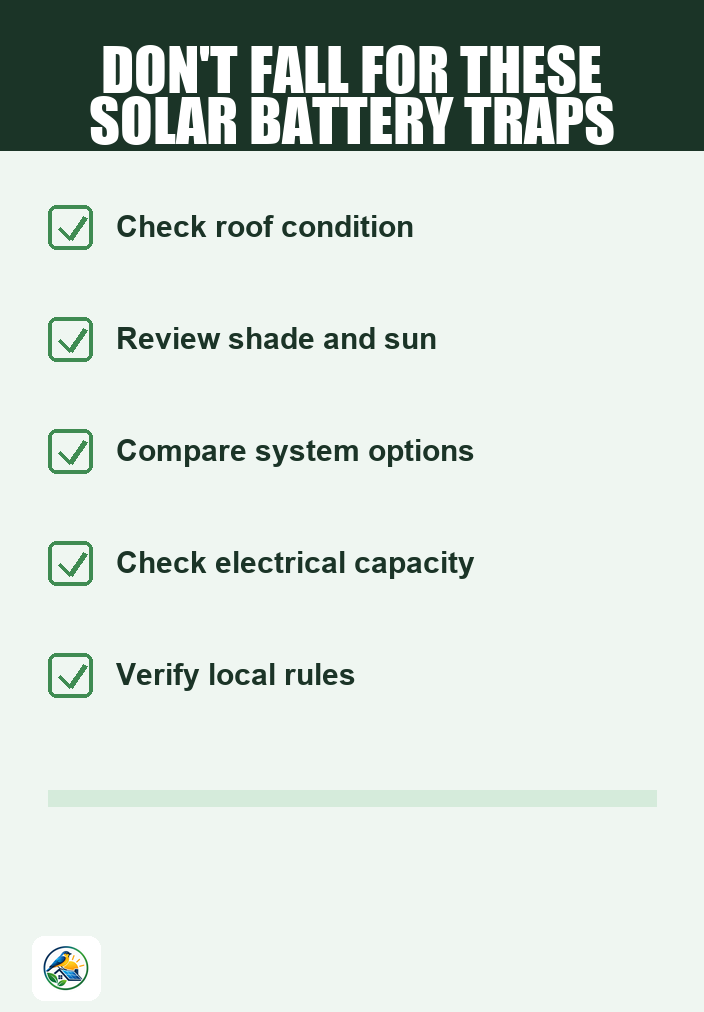
Each locality has its own regulations regarding solar installations, including zoning laws and building permits. Failing to research these requirements can lead to project delays or even fines.
Steps to Ensure Compliance
- Check with your local government or zoning department for specific regulations.
- Verify whether your installer handles permits as part of their service.
- Ensure that your installation complies with local building codes and safety standards.
Having a qualified installer who understands local rules can save you time and frustration during the installation process.
4. Miscalculating Battery Size and Type
Not all batteries are created equal, and choosing the wrong size or type can lead to inefficiencies. Homeowners often select a battery based solely on cost rather than on capacity and usage patterns.
Considerations for Battery Selection
- Capacity: Measured in kilowatt-hours (kWh), this indicates how much energy the battery can store. Calculate your energy use during peak hours to determine the necessary capacity.
- Depth of Discharge (DoD): This indicates how much energy can be safely used from the battery without damaging it. A higher DoD means more usable energy.
- Cycle Life: Refers to how many charge and discharge cycles a battery can undergo before its capacity significantly diminishes.
Consulting with your installer can help you understand which battery options align with your energy use and financial considerations.
5. Neglecting Future Maintenance and Upkeep
Just like any other home system, solar battery systems require maintenance. Homeowners often overlook this aspect, leading to diminished performance over time.
Maintenance Tips
- Regularly check the battery for any visible signs of wear or corrosion.
- Monitor performance metrics to ensure the battery is operating within expected parameters.
- Schedule annual inspections with your installer to ensure optimal performance.
Understanding the maintenance requirements before installation can prevent issues down the road.
6. Ignoring Financial Considerations and Incentives
While many homeowners are eager to go solar, overlooking the financial implications can lead to unexpected costs. It’s essential to understand the total cost of ownership, including installation, maintenance, and potential financing options.
Financial Considerations
- Get multiple quotes to compare pricing and services from different installers.
- Investigate available federal, state, and local incentives, but always verify current information.
- Consider financing options, including loans or leases, and understand their terms.
Taking the time to analyze these financial aspects can help you make a more informed decision about your investment in solar and battery technology.
7. Not Involving Professionals Early in the Process
One of the biggest missteps homeowners make is trying to navigate the complexities of solar battery installation without professional help. Engaging with qualified installers early can clarify your options and ensure a smooth installation.
Why Professional Input Matters
- Expert installers can provide tailored recommendations based on your home’s specific needs.
- They can help navigate local regulations and permitting processes.
- Professionals can ensure that the system is installed correctly and safely, minimizing future issues.
Consulting with an installer can offer insights that might save you time and money in the long run.
Next Steps for Homeowners
Installing a solar battery system can be an excellent way to enhance your home’s energy independence and efficiency. However, avoiding common missteps is crucial for a successful installation. Take the time to assess your energy needs, understand the types of systems available, and engage with qualified professionals to get accurate quotes and guidance.
Before making a decision, compare itemized quotes from multiple qualified installers to ensure you get the best value and service for your solar battery system needs. By doing so, you’ll be better prepared to navigate the complexities of your solar journey.