Understanding the Importance of Solar Battery Backup During Outages
As homeowners increasingly consider solar power, many also contemplate the addition of a battery backup system. Such systems can provide electricity during outages, ensuring your home remains powered when the grid fails. However, mistakes in planning or installation can lead to significant issues. This checklist aims to help you avoid common pitfalls associated with solar battery backup systems during outages.
1. Assess Your Power Needs Accurately
Before investing in a solar battery backup system, it’s essential to accurately assess your household’s power needs. This involves understanding how much energy you consume and which devices you want to power during an outage.
Key Steps in Assessing Power Needs:
- List Essential Appliances: Identify which appliances and systems are crucial during an outage (e.g., refrigerator, heating/cooling systems).
- Calculate Wattage: Check the wattage of each appliance and sum it to determine your total power requirement.
- Consider Duration: Decide how long you want to run these appliances on battery power. This will influence the size of the battery you need.
For example, if your refrigerator consumes 200 watts and you want to power it for 24 hours, you will need a battery capable of delivering at least 4,800 watt-hours (200 watts x 24 hours).
2. Understand Battery Types and Their Limitations
There are several types of batteries available for solar backup systems, each with distinct features and limitations. Understanding these can help you make an informed decision.
Common Battery Types:
- Lithium-ion Batteries: These are popular due to their high energy density and longer lifespan. However, they can be more expensive.
- Lead-acid Batteries: More affordable but have shorter lifespans and require maintenance. They also have lower depth of discharge, meaning you can’t use all the stored energy.
- Saltwater Batteries: An emerging option that’s environmentally friendly but may have limitations in energy density and availability.
When choosing a battery type, consider factors like initial cost, lifespan, maintenance needs, and how they fit into your overall energy strategy.
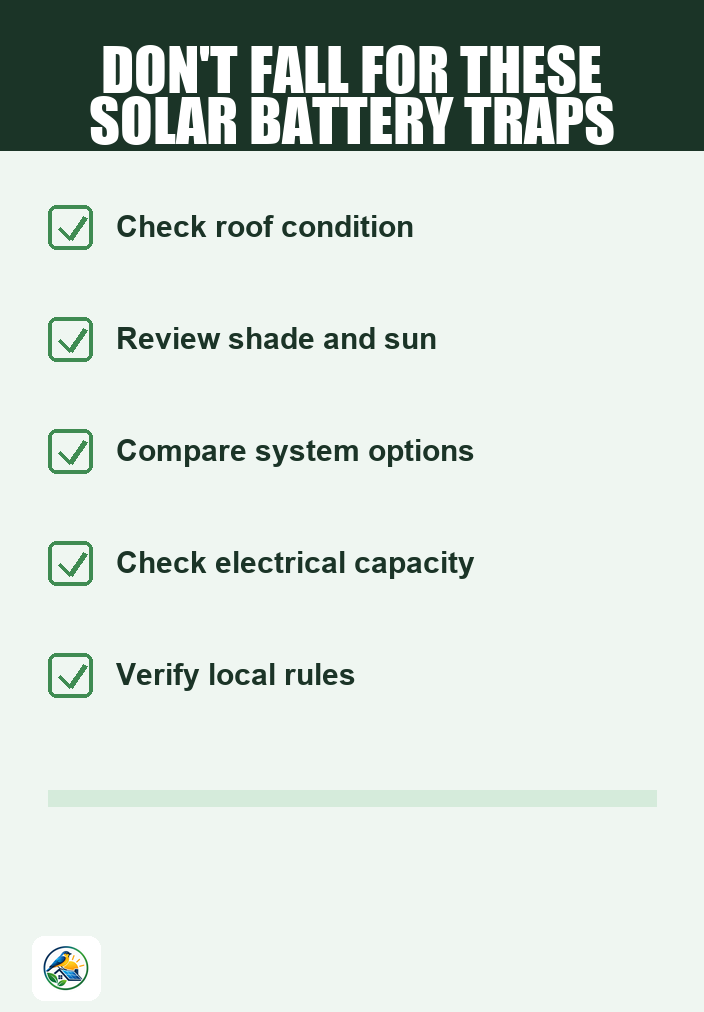
3. Evaluate Installation Options and Costs
Choosing a qualified installer is essential for the success of your solar battery backup system. However, the costs and installation processes can vary widely. Understanding these factors can help you avoid common pitfalls.
Considerations for Installation:
- Get Multiple Quotes: It’s advisable to obtain quotes from several installers to compare pricing and included services.
- Verify Installer Credentials: Ensure your installer is licensed, insured, and has good customer reviews.
- Ask About Warranties: Understand the warranty terms for both the solar panels and the battery system.
Installation costs can vary based on your specific setup, local labor rates, and any necessary electrical upgrades. Always ask for itemized quotes to understand what you’re paying for.
4. Comprehend Local Regulations and Utility Policies
Local regulations and utility policies can significantly impact your solar battery backup system’s performance and installation. Familiarizing yourself with these rules is crucial.
Important Regulatory Considerations:
- Permitting Requirements: Check with your local building authority for any permits required for installation.
- Interconnection Rules: Understand how your system will connect to the grid and any requirements for grid-tied systems.
- Net Metering Policies: Research your local utility’s net metering policies, which can affect how you receive credits for excess energy produced.
These policies can vary widely by location, so ensure you verify this information with local authorities or your installer before proceeding.
5. Plan for Maintenance and Upkeep
A solar battery backup system requires regular maintenance to ensure it operates efficiently. However, many homeowners overlook this essential aspect.
Maintenance Considerations:
- Regular Inspections: Have your system inspected annually to identify potential issues before they become significant problems.
- Battery Monitoring: Utilize monitoring systems to track battery performance and capacity. This can help you catch any irregularities early.
- Cleaning Solar Panels: Ensure your solar panels are clean and free of debris to maximize energy production.
Understanding the maintenance requirements can help you plan for costs and ensure your system remains reliable during outages.
6. Prepare for Potential Drawbacks
While solar battery backup systems offer many benefits, they also come with drawbacks that homeowners should consider. Being aware of these can help you set realistic expectations.
Potential Drawbacks:
- High Initial Costs: The upfront investment for solar panels and battery systems can be significant.
- Limited Storage Capacity: Depending on the battery size, you may not be able to power all devices during an extended outage.
- Weather Dependency: Solar generation can be affected by weather conditions, impacting your battery’s charge.
Understanding these limitations can help you make informed decisions and plan accordingly.
Next Steps: Making an Informed Decision
As you consider a solar battery backup system, take the time to research and evaluate your options carefully. Begin by assessing your power needs, understanding battery types, and gathering quotes from qualified installers. Be sure to check local regulations and utility policies, as these can significantly influence your system’s effectiveness and viability.
Ultimately, taking a methodical approach to your solar battery backup planning can help you avoid common mistakes, ensuring your home stays powered during outages. Remember, comparing itemized quotes from qualified installers is a crucial step in making a well-informed decision.