
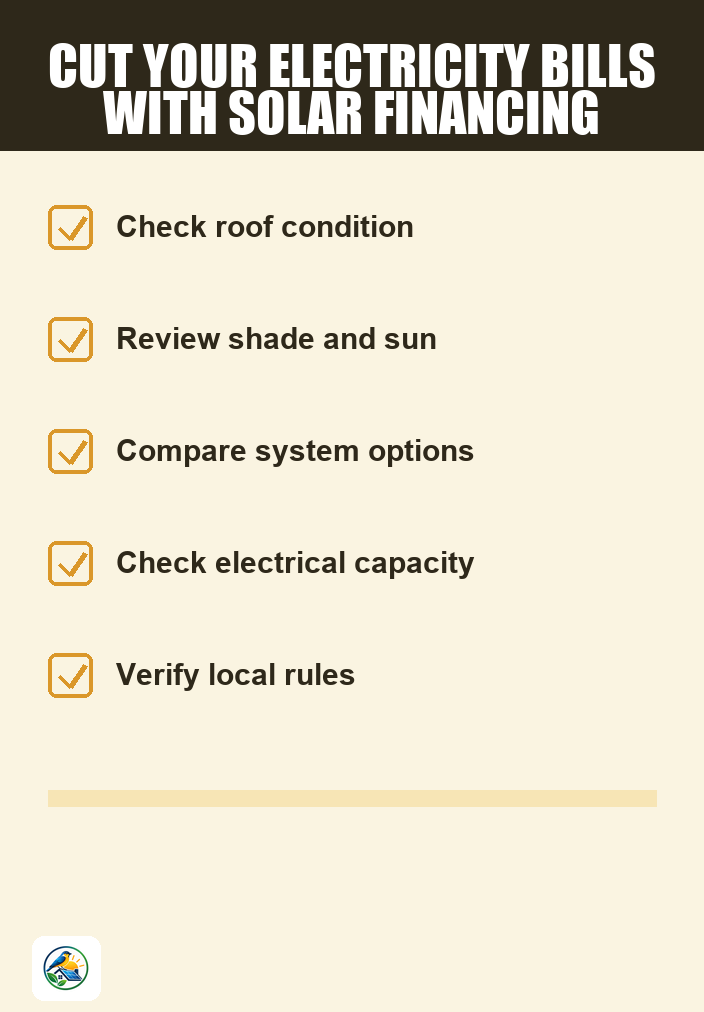
Checklist for Financing Solar Solutions to Lower High Household Electricity Bills
As electricity bills continue to rise, many U.S. homeowners are considering solar energy as a viable solution. However, the decision to install a solar system is not just about environmental benefits; it also involves understanding the financial implications. This checklist will help guide you through the options, considerations, and potential trade-offs of financing solar solutions to help lower your household electricity bills.
Understanding Your Energy Needs
The first step in evaluating solar solutions is understanding your current energy consumption. Begin by reviewing your electricity bills from the past year to determine your average monthly usage. Consider the following:
- Average Monthly Usage: Calculate your kilowatt-hours (kWh) used each month.
- Peak Usage Times: Identify when you use the most electricity, as this can affect your system sizing.
- Future Changes: Anticipate any upcoming changes in your household that may affect energy consumption, such as new appliances or electric vehicles.
Evaluating Your Roof and Property
Once you have a clear picture of your energy needs, assess your roof’s suitability for solar installation. Important factors include:
- Roof Condition: Ensure your roof is in good shape. If it requires repairs or replacement, consider addressing this before installation.
- Orientation and Angle: South-facing roofs generally capture more sunlight, but east- and west-facing roofs can still be effective.
- Shade Issues: Identify any trees, buildings, or other structures that may cast shade on your roof during peak sunlight hours.
Exploring Solar System Options
There are various solar system types available, each with its own financing implications:
- Grid-Tied Solar: This system connects to the utility grid, allowing you to draw electricity when your system isn’t producing enough and potentially sell excess power back to the grid.
- Battery Backup Systems: These systems store excess energy generated during the day for use at night or during outages. However, they can increase initial costs and maintenance considerations.
- Off-Grid Systems: Ideal for remote locations, these systems require a larger upfront investment and ongoing maintenance, as they are self-sufficient.
Financing Your Solar System
When it comes to financing, homeowners have several options to consider, each with its advantages and disadvantages:
- Cash Purchase: Paying upfront can yield the best long-term savings, but it requires significant capital.
- Solar Loans: Various lenders offer loans specifically for solar installations. These can have competitive interest rates but will add to your monthly expenses.
- Leases and Power Purchase Agreements (PPAs): These arrangements involve little to no upfront costs, with payments based on energy production. However, they may not provide the same savings as ownership.
Consider the Long-Term Costs
When choosing a financing option, it’s essential to consider not only the immediate costs but also the long-term implications:
- Interest Rates: Compare interest rates across different financing options to understand how they will affect overall costs.
- System Maintenance: Factor in potential maintenance costs, especially if you choose a battery backup system.
- Incentives and Tax Credits: Research available local, state, and federal incentives, as these can significantly impact your overall investment. Be sure to verify current regulations and requirements.
Getting Professional Quotes
Once you have a grasp of your energy needs, roof suitability, and financing options, it’s time to seek out professional installers. Here are a few key points to keep in mind:
- Multiple Quotes: Obtain quotes from at least three qualified installers. This will help you compare pricing, equipment, and warranty options.
- Itemized Estimates: Request detailed, itemized estimates that break down costs for equipment, installation, permits, and any additional services.
- Installation Timelines: Ask about the expected timeline for installation and any potential delays due to permitting or equipment availability.
Understanding Utility Policies
Each utility company has specific rules and policies regarding solar installations that can impact your project:
- Net Metering: Understand how your utility compensates you for excess energy produced by your solar system.
- Interconnection Agreements: Learn about the requirements for connecting your solar system to the grid, as these can vary widely.
- Utility Incentives: Some utilities offer additional incentives for solar installations. Verify current offerings with your utility provider.
Potential Drawbacks and Considerations
While solar energy can offer significant benefits, it’s essential to be aware of some potential drawbacks:
- Initial Costs: High upfront costs can be a barrier for some homeowners, even with financing options available.
- Weather Dependence: Solar energy production can vary based on weather conditions and seasonal changes.
- Maintenance Needs: While generally low, solar systems may require occasional maintenance or repairs, particularly in harsh climates.
- Permitting and Regulations: The permitting process can be time-consuming and may vary by location.
Next Steps
Financing solar solutions can be a complex process, but by following this checklist, you can make informed decisions that align with your energy needs and financial situation. Start by assessing your energy consumption and roof suitability, explore financing options, and gather quotes from qualified installers. Remember to verify all local utility policies and incentives to make the most of your investment in solar energy. Taking these steps will help you determine if solar is a suitable solution for your household electricity needs.


















