
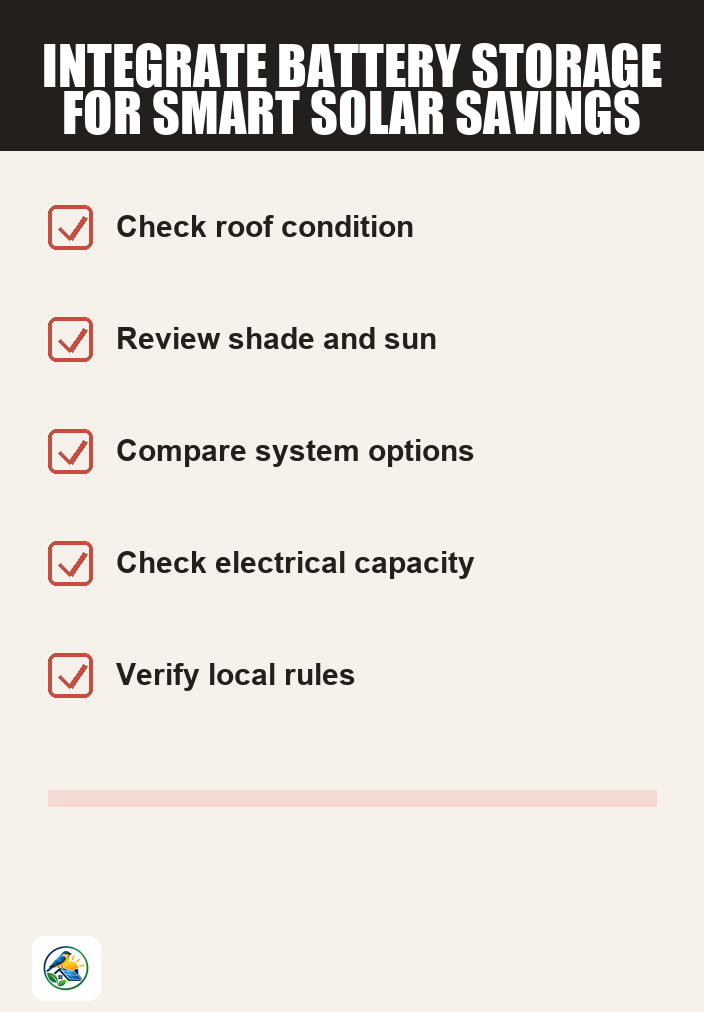
Understanding the Basics of Solar Battery Integration
Integrating battery storage into your solar system can enhance energy independence and provide backup power during outages. However, it’s crucial to approach this integration with a clear understanding of what it entails. As a homeowner considering a rooftop solar system, you must evaluate how battery storage fits into your energy needs and financial situation.
Assessing Your Energy Needs
The first step in determining whether to include battery storage in your solar quote is understanding your household’s energy consumption patterns. Here are some aspects to consider:
- Daily Energy Usage: Review your monthly utility bills to identify how much energy you use on average each day. This will help you gauge the size of battery storage you might need.
- Peak Usage Times: Consider when you use the most energy. If your peak usage coincides with times when solar generation is low (like evenings), a battery can help bridge that gap.
- Backup Power Needs: Evaluate which appliances or systems are crucial during power outages. This will inform the capacity and type of battery system you should consider.
Understanding Different Battery Types
There are various types of batteries available for solar energy systems, each with unique characteristics. Familiarizing yourself with these options can help you make informed decisions:
- Lithium-Ion Batteries: Known for their efficiency and compact size, lithium-ion batteries are widely used in residential solar systems. They have a longer lifespan and can handle more charge cycles compared to other types.
- Lead-Acid Batteries: These are often more affordable upfront but may require more maintenance and have a shorter lifespan. They are less efficient than lithium-ion batteries.
- Saltwater Batteries: An emerging technology that’s environmentally friendly and safe. However, they may still be in the early stages of development and might not be widely available.
Evaluating Installation and Permitting Considerations
Integrating battery storage into your solar installation involves specific installation and permitting requirements. Here are key points to consider:
- Professional Installation: Battery systems should be installed by qualified professionals to ensure safety and compliance with local codes. Look for contractors with experience in solar battery installations.
- Permitting: Check with your local government regarding the necessary permits for installing battery storage. Regulations can vary significantly by location.
- Interconnection: If you plan to connect your battery system to the grid, understand the interconnection requirements from your utility provider. This can affect how your system operates and any potential incentives you might qualify for.
Calculating Battery Storage Size
Determining the right size of your battery storage is essential for maximizing efficiency and performance. Here’s a straightforward approach:
- Identify Your Daily Usage: For example, if your household consumes 30 kWh of energy per day, this will help set your baseline.
- Determine Backup Needs: Decide what percentage of your daily usage you want to cover with battery storage. If you want to cover 50% of your daily needs, you’ll need a battery capacity of roughly 15 kWh.
- Consider Battery Efficiency: Factor in the efficiency of the battery system. For example, if the round-trip efficiency is 90%, you may need a slightly larger battery to account for energy losses.
Weighing Cost Trade-offs
When integrating battery storage into your solar installation, the costs can add up. Here are some trade-offs to consider:
- Initial Investment: Battery systems can significantly increase the upfront cost of your solar installation. It’s crucial to assess whether the added benefits align with your budget.
- Long-Term Savings: While batteries can provide savings through reduced grid reliance, the extent of these savings can vary. Conducting a thorough analysis of your energy needs and potential usage patterns is important.
- Maintenance Costs: Some battery systems require periodic maintenance, which can add to your overall costs. Assess whether you are prepared for potential ongoing expenses.
Understanding Utility Policies and Incentives
Utility policies regarding solar and battery storage can significantly impact your decision. Here’s what to keep in mind:
- Net Metering: Some utilities offer net metering, allowing you to receive credits for energy sent back to the grid. Check how your battery system might interact with net metering policies in your area.
- Incentives: Research any available incentives for battery storage, which can vary by state and local jurisdictions. Verify current tax credits or rebates, as these can change frequently.
- Demand Charges: If your utility has demand charges, a battery could help you avoid high costs by discharging during peak times. Understanding your utility’s pricing structure can inform your decision.
Consider Your Home’s Unique Characteristics
Your home’s specific attributes will play a significant role in the viability of battery storage:
- Roof Condition: Ensure your roof is in good condition before installing solar panels. If repairs are needed, factor those costs into your budget.
- Shade and Orientation: Evaluate how shade from trees or buildings may affect solar panel efficiency. Optimal orientation can enhance energy production.
- Future Plans: Consider your long-term plans for your home. If you plan to move, weigh whether the investment in battery storage aligns with your timeline.
Practical Next Steps
As you consider integrating battery storage into your solar quote, take the following actions:
- Review your energy consumption and backup needs thoroughly.
- Research local installers and obtain multiple itemized quotes for both solar and battery storage systems.
- Verify current utility policies and available incentives relevant to your location.
- Consult with qualified professionals to ensure you understand the costs, benefits, and logistics involved.
By carefully considering these factors, you can make a more informed decision about whether integrating battery storage into your solar quote aligns with your energy needs and financial goals.


















