
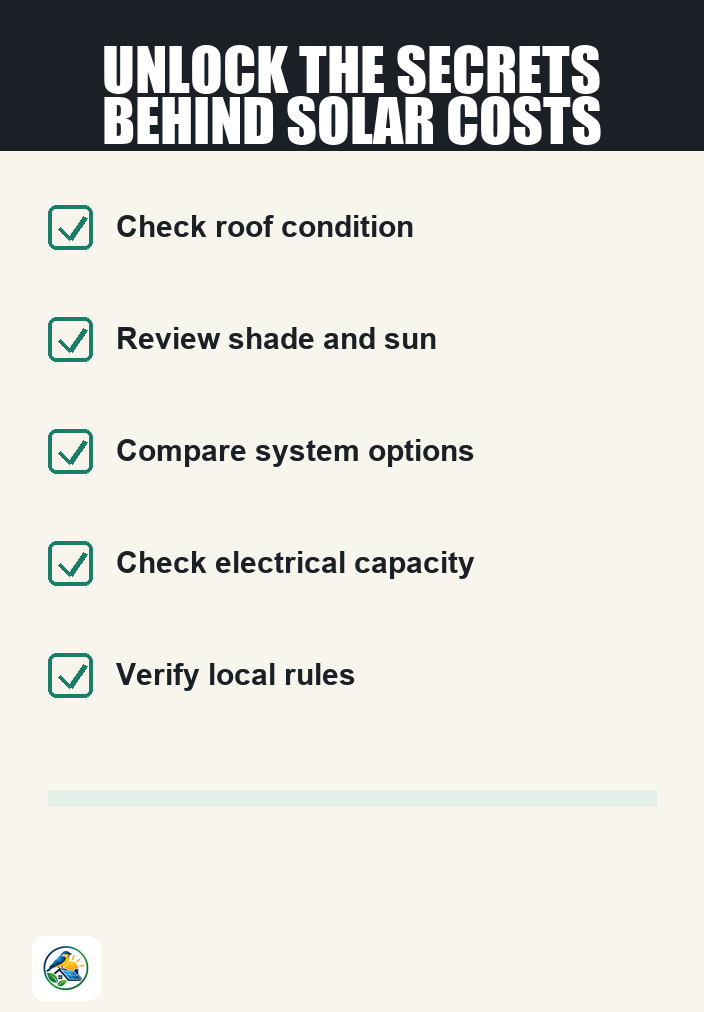
Understanding the Cost Components of Your Solar Proposal
When considering a solar panel system for your medium-sized home, it’s essential to evaluate the various cost factors involved in your solar proposal. This process can help you make an informed decision about whether solar is the right fit for your energy needs and financial situation. Here, we’ll break down the key components of a solar proposal, discuss options and trade-offs, and highlight homeowner considerations that can impact your investment.
Key Cost Factors in Solar Proposals
A solar proposal typically includes several cost components. Understanding these will help you evaluate different quotes effectively. Here are the main elements to consider:
- Equipment Costs: This includes the solar panels, inverter, and mounting hardware. Prices can vary based on the brand, efficiency, and warranty offered.
- Installation Costs: Professional installation is crucial for safety and efficiency. Labor costs vary by region and the complexity of your roof.
- Permitting Fees: Depending on your locality, you may incur fees for permits required to install solar systems. Each municipality has its own regulations.
- Interconnection Costs: This refers to the fees associated with connecting your solar system to the grid. These costs can vary based on your utility company’s policies.
- Home Battery Costs: If you’re considering adding a battery for backup power, factor in the cost of the battery system and associated installation.
- Maintenance and Monitoring: While solar systems require minimal maintenance, there may be costs associated with monitoring software or occasional service calls.
- Financing Costs: If you choose to finance your solar system, consider interest rates, loan terms, and any associated fees, as these will impact your overall investment.
Evaluating Equipment Options
The choice of equipment can significantly affect your solar proposal cost. Here are the primary components to evaluate:
Solar Panels
There are different types of solar panels, such as monocrystalline, polycrystalline, and thin-film. Monocrystalline panels tend to be more efficient and take up less space but come at a higher price. Consider your roof space and energy needs when selecting panels.
Inverters
The inverter converts the direct current (DC) generated by the panels into alternating current (AC) for home use. String inverters are commonly used but may not be as efficient in shaded areas compared to microinverters or power optimizers.
Mounting Systems
Depending on your roof type and angle, the mounting system will differ. Flat roofs may require ballasted mounts, while pitched roofs typically use fixed mounts. Ensure your roof can support the additional weight and that the mounts are compatible with your roof materials.
Understanding Your Energy Needs
Before committing to a solar system, assess your household’s energy consumption. Look at your utility bills from the past year to determine your average monthly usage. This will help you and your installer size the system correctly. An oversized system may lead to unnecessary costs, while an undersized system may not meet your energy needs.
Identifying Local Incentives and Regulations
Incentives for solar installations can vary widely depending on your location. Some states offer tax credits, rebates, or performance-based incentives that can significantly lower your upfront costs. However, these programs often have specific eligibility requirements and deadlines, so be sure to verify current local incentives before making any decisions.
Net Metering
Net metering allows you to receive credits for excess energy your solar system produces and sends back to the grid. Understanding your utility’s net metering policy is essential, as it can affect the financial viability of your solar investment.
Permitting and Interconnection
Every state and locality has different permitting requirements. Make sure to factor in the time and cost associated with obtaining these permits. Additionally, interconnection rules can vary based on your utility provider, impacting how quickly you can connect your system to the grid.
Financial Considerations and Trade-offs
When evaluating the costs associated with a solar proposal, consider the following financial aspects:
- Upfront vs. Long-term Costs: While solar systems require a significant upfront investment, they can lead to long-term savings on energy bills. Weigh the immediate costs against potential future savings.
- Financing Options: Different financing options, such as solar loans or leases, can affect your overall costs. Research and compare terms to find the best option for your budget.
- Return on Investment (ROI): While it’s impossible to guarantee specific savings, understanding the potential ROI based on your energy consumption and local incentives can help you gauge the feasibility of your investment.
- Battery Backup Costs: If considering a battery backup, remember that this will add to your initial costs but may provide peace of mind during power outages.
When to Seek a Professional Installer’s Quote
Obtaining a detailed quote from a qualified solar installer is crucial for understanding the specific costs associated with your home. A professional installer can evaluate your roof condition, shading issues, and energy needs, providing a tailored proposal that reflects your unique situation. Look for installers that offer itemized quotes, as this breakdown can help you compare different proposals more effectively.
Next Steps for Evaluating Your Solar Proposal
As you consider solar for your medium-sized home, keep these practical next steps in mind:
- Review your energy usage and understand your consumption patterns.
- Research local incentives, net metering policies, and permitting requirements.
- Obtain itemized quotes from multiple qualified solar installers.
- Evaluate the costs, equipment options, and financing terms presented in each quote.
- Consider your long-term energy goals and how solar fits into that plan.
By carefully evaluating the cost factors in your solar proposal and considering the various options available, you can make an informed decision that aligns with your energy needs and financial situation. Remember, solar energy can be a valuable addition to your home, but it’s not automatically the right choice for every homeowner.


















