
Understanding Solar Leases for Homeowners with Limited Upfront Cash
For many U.S. homeowners considering a residential rooftop solar system, the financial aspects can be daunting. One popular option that often comes up is a solar lease. But is a solar lease the right choice for homeowners with limited upfront cash? The answer depends on various factors, including personal financial situations, energy needs, and the specifics of the property. This article will break down what a solar lease is, its advantages and disadvantages, and other considerations for homeowners.
What is a Solar Lease?
A solar lease allows homeowners to install solar panels without the hefty upfront costs associated with purchasing a system outright. Instead, homeowners pay a monthly fee to lease the solar equipment. This arrangement typically lasts between 20 to 25 years, during which the homeowner can benefit from solar energy without the burden of ownership. The leasing company is responsible for the installation, maintenance, and insurance of the system.
Key Features of Solar Leases
- No Upfront Costs: Homeowners can install solar panels without a significant initial investment.
- Fixed Monthly Payments: Lease payments are generally fixed for the duration of the lease, making budgeting easier.
- Maintenance Included: The leasing company handles maintenance and repairs, alleviating additional costs for the homeowner.
Advantages of Solar Leases
1. Affordability
For homeowners with limited cash reserves, a solar lease presents an attractive option. Without the need to pay for the system upfront, homeowners can start generating solar energy immediately, which may lead to lower energy bills over time.
2. Simplicity
Solar leases simplify the process of going solar. Homeowners don’t have to worry about the complexities of installation, maintenance, or potential equipment failures—responsibilities that fall to the leasing company.
3. Predictable Costs
Fixed monthly lease payments can help homeowners budget their energy expenses more accurately, especially in regions where energy prices fluctuate. However, it’s essential to understand the terms of the lease, as some agreements may include escalators where payments increase over time.
Disadvantages of Solar Leases
1. Limited Financial Benefits
While leasing can make solar energy accessible, it often comes with fewer financial incentives compared to ownership. Homeowners who purchase their solar systems can take advantage of federal tax credits, state incentives, and increased property value. These benefits typically do not apply to leased systems, as the leasing company retains ownership of the equipment.
2. Long-Term Commitment
A solar lease is a long-term commitment that can last up to 25 years. Homeowners planning to move in the near future may find that a lease complicates the sale of their home, as the new owners would have to assume the lease or negotiate terms with the leasing company.
3. Potential for Increased Costs
While lease payments are often fixed, some contracts may include escalators that raise payments over time. This can offset some of the savings realized from reduced energy bills. Homeowners should carefully review the lease terms to understand any potential future costs.
Considerations for Homeowners
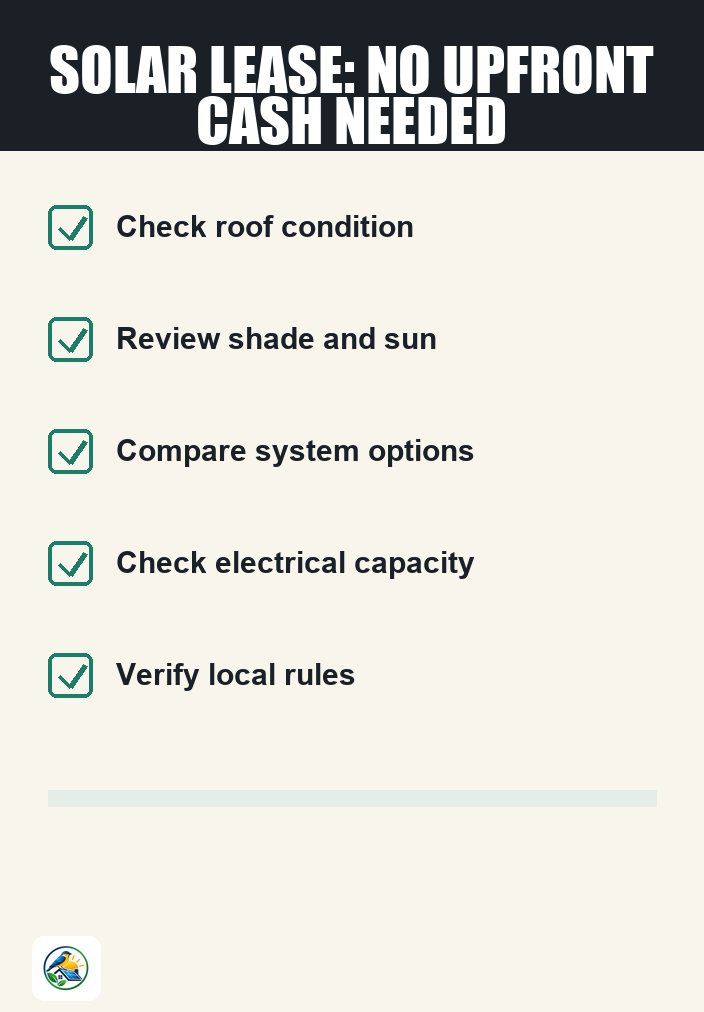
Before deciding on a solar lease, homeowners should evaluate several factors:
- Roof Condition: Ensure that your roof is in good condition and can support the solar panels. If repairs are needed, they should be addressed before installation.
- Orientation and Shade: The roof’s orientation and any shading from trees or nearby structures can significantly impact solar energy production. A professional assessment can help determine the system’s suitability.
- Energy Needs: Consider your current and future energy needs. A solar lease may not be the best fit if your household size or energy consumption is likely to change.
- Financial Goals: Clarify your financial goals. If maximizing savings and incentives is a priority, purchasing a system may be more beneficial.
When to Get a Professional Installer Quote
Getting a quote from a qualified solar installer is critical in assessing the feasibility of a solar lease or any solar option. A professional installer can provide a detailed analysis of:
- Your home’s solar potential based on location.
- Specific installation costs and available financing options.
- Potential savings and benefits tailored to your energy usage.
When requesting quotes, ensure they are itemized, breaking down all costs associated with the installation, including any financing fees. This transparency will help in making a well-informed decision.
Next Steps for Homeowners
If you’re considering a solar lease, start by evaluating your financial situation and energy needs. Gather quotes from reputable solar installers to compare costs and potential benefits. Pay close attention to the terms of any lease agreements and understand what is included in the monthly payments.
Finally, verify any local incentives or tax benefits with independent sources. Solar energy can be a valuable addition to your home, but it’s essential to approach the decision with careful consideration and thorough research.


















