Understanding the Value of Battery Storage with Your Solar System
As more homeowners consider transitioning to solar energy, the question of whether to add battery storage to their solar setup becomes increasingly relevant. Battery storage systems can store surplus energy generated by solar panels for later use, providing benefits such as energy independence and backup power during outages. However, whether adding a battery is worth it at this moment depends on various factors that homeowners should carefully assess.
Assessing Your Energy Needs
Before diving into battery storage, it’s crucial to understand your household’s energy consumption. How much energy do you use on a daily basis? What are your peak usage hours? By analyzing your energy bill and usage patterns, you can gain insight into whether battery storage would be beneficial.
- Daily Usage: Consider how much electricity you use throughout the day. If you have consistent energy needs, a battery can help manage your consumption.
- Peak Hours: Identify when you use the most energy. If your solar system produces energy during the day but you use a lot of electricity in the evening, battery storage can help bridge that gap.
Benefits of Adding Battery Storage
Incorporating a battery into your solar setup can offer several advantages:
- Energy Independence: With a battery, you can store excess energy generated during sunny days for use during cloudy days or at night, reducing reliance on the grid.
- Backup Power: In the event of a power outage, a battery can provide power to essential appliances, giving you peace of mind.
- Time-of-Use Savings: If your utility has time-of-use rates, you can store energy during low-cost periods and use it during peak pricing times, potentially saving on your electricity bill.
Considerations and Trade-offs
While battery storage has its perks, it’s essential to weigh the trade-offs:
- Initial Costs: Battery systems can add significant upfront costs to your solar installation. Depending on your location and the type of battery chosen, prices can vary widely.
- Maintenance and Lifespan: Batteries require maintenance and may need to be replaced after a certain number of cycles. Understanding the expected lifespan and maintenance needs is vital.
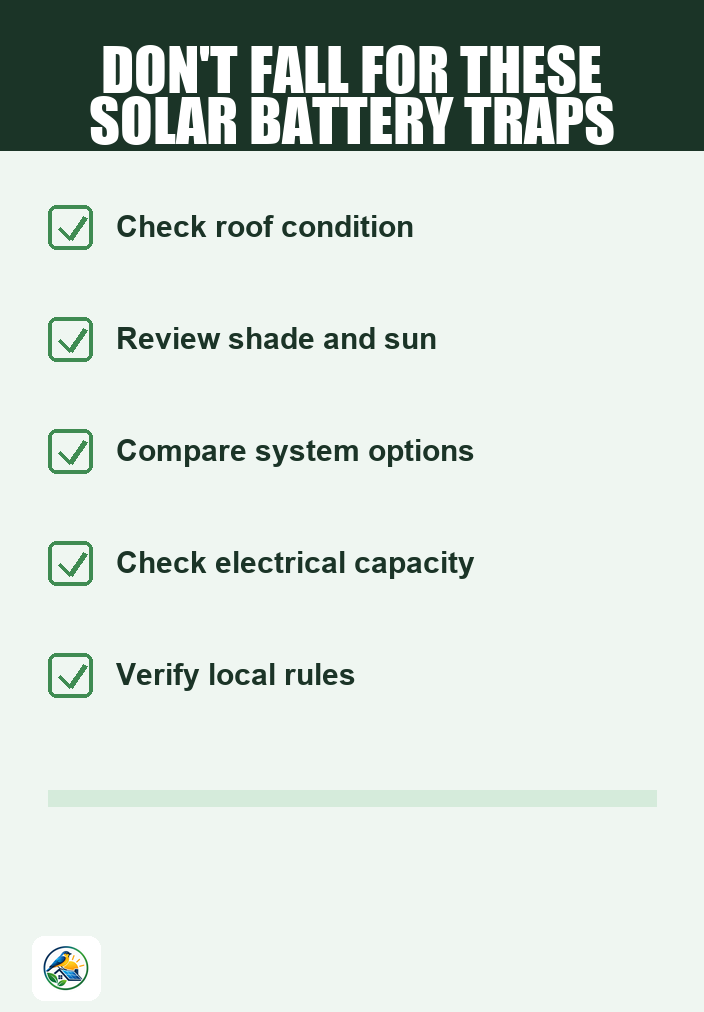
- Space Requirements: Batteries take up space, so you’ll need to consider where to install them. Make sure your home has adequate space for both the solar panels and the battery system.
Evaluating Your Local Utility Environment
Each utility company has different policies regarding net metering, battery storage, and time-of-use rates. Understanding the specifics of your local utility can help you make an informed decision:
- Net Metering: Some utilities offer net metering, allowing you to sell excess electricity back to the grid. This can affect how much you rely on battery storage.
- Incentives: Check for local incentives or rebates for battery storage. These can help offset initial costs, but they vary widely by location and can change over time.
- Utility Policies: Some utility companies have specific rules regarding battery storage integration. Make sure to verify if there are any restrictions or requirements.
Comparing Options: Battery Types and Sizing
When considering battery storage, you’ll encounter different types and sizes. Here’s a quick breakdown:
- Lithium-ion Batteries: These are the most common and offer a good balance of efficiency, lifespan, and cost. They are generally lighter and more compact.
- Lead-acid Batteries: While often cheaper, these batteries have a shorter lifespan and require more maintenance.
- Sizing Your Battery: The size of the battery you need depends on your energy consumption and the capacity of your solar system. A professional installer can help determine the right size based on your specific needs.
When is a Professional Quote Necessary?
If you’re seriously considering adding battery storage to your solar setup, obtaining a quote from a qualified installer is a crucial next step. A professional can provide:
- Site Assessment: They’ll assess your property’s solar potential, roof condition, and energy needs.
- Customized Recommendations: An installer can recommend the best battery type, size, and configuration for your home.
- Cost Estimates: Get a detailed breakdown of costs, including installation, equipment, and any potential incentives available to you.
Final Thoughts and Next Steps
Deciding whether to add battery storage to your solar setup involves careful consideration of your energy needs, local utility policies, and the costs associated with installation and maintenance. While battery storage can enhance the efficiency and reliability of your solar system, it’s not the right fit for every homeowner.
To make a well-informed decision, start by analyzing your energy usage and consulting with qualified installers for itemized quotes. They can provide tailored recommendations based on your specific situation, ensuring you make the best choice for your home and lifestyle.