
Understanding Cash Purchases vs. Solar Loans
As a homeowner considering a professionally installed residential rooftop solar system, you may find yourself weighing the decision between paying for your solar setup in cash or financing it through a solar loan. Both options come with their own benefits and drawbacks, and understanding these can help you determine which choice is more cost-effective for your situation. In this article, we’ll explore the various factors to consider when deciding between a cash purchase and a solar loan, ensuring you have the information you need to make an informed decision.
Evaluating the Cost of Cash Purchases
When you opt for a cash purchase, you pay the full price of the solar system upfront. While this may seem like a straightforward option, it’s essential to consider the implications:
- Immediate Expense: Paying in cash requires a significant upfront investment, which may impact your liquidity or financial flexibility.
- Potential Savings: A cash purchase means you won’t incur interest charges associated with financing, potentially making it cheaper in the long run.
- Ownership: You own the system outright from day one, allowing you to fully benefit from energy savings and any available incentives.
- Opportunity Cost: Consider what else you could do with that cash. Investing it elsewhere might yield better returns.
Understanding Solar Loans
Solar loans allow you to finance your solar installation over time, often making solar more accessible for homeowners who may not have the upfront capital. Here’s what you should know about solar loans:
- Lower Upfront Cost: You can install solar with little to no money down, enabling you to spread the cost over several years.
- Monthly Payments: You’ll make monthly payments, which can vary based on the loan term and interest rate. Ensure you factor these into your budget.
- Potential Savings: Depending on your financing terms and local energy prices, the savings on your electricity bill may exceed your monthly loan payments.
- Incentives: Some loans may allow you to still benefit from available tax credits or local incentives, but verify with your lender.
- Ownership: You still own the system, and once the loan is paid off, the savings revert entirely to you.
Comparing Financial Implications
To determine which option is more cost-effective, consider the following financial aspects:
Cost of Financing
When assessing a solar loan, look at the interest rate, loan term, and any associated fees. A lower interest rate could make financing more appealing, but higher rates might negate any potential savings. For example:
- Loan Amount: $20,000
- Interest Rate: 5% over 10 years
- Total Interest Paid: Approximately $3,200
In contrast, if you pay in cash, your total cost remains $20,000, but you miss out on potential investment growth that could have accrued if the cash was used elsewhere.
Energy Bill Savings
Consider your current energy bills and how much you expect to save with solar. Depending on your local utility rates, the amount of sunlight your home receives, and the size of your system, these savings can vary significantly. Break-even points and payback periods might differ drastically depending on your financing option.
Tax Credits and Incentives
Federal and state incentives can play a role in your financial calculations. A cash purchase allows you to claim these benefits immediately, while with a loan, you may need to wait until tax time. Always verify current tax credits and incentives, as they can change based on legislation.
Additional Considerations
Beyond the numbers, several other factors may influence your decision:
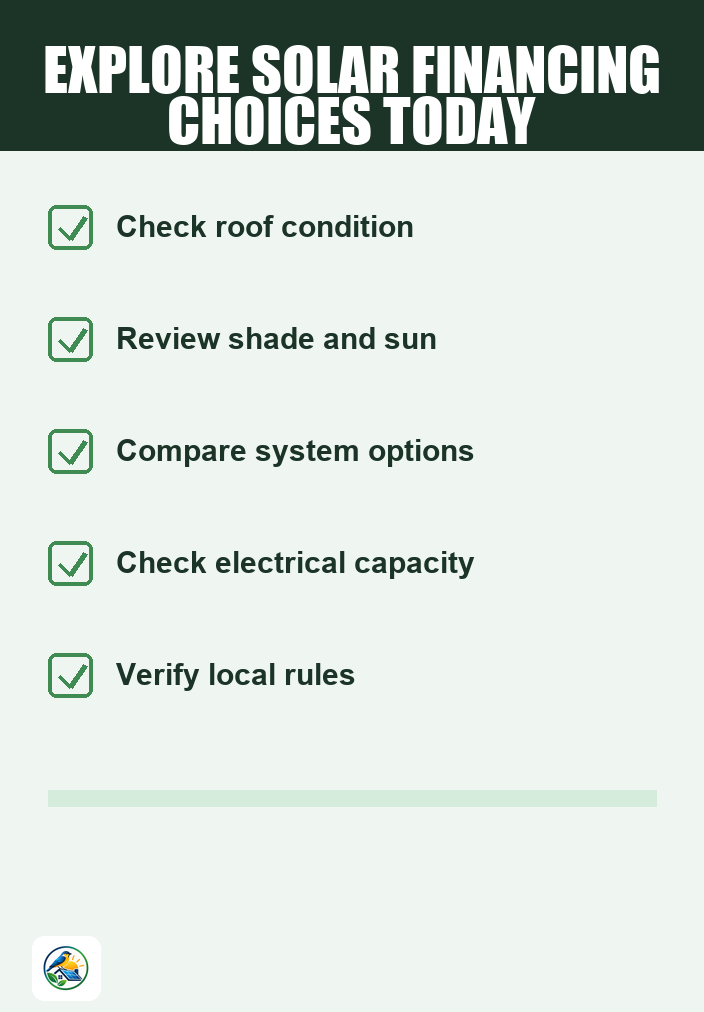
- Home Condition: Ensure your roof is in good condition and suitable for solar installation. Any required repairs could add to your costs.
- Shade and Orientation: Evaluate how much sunlight your roof receives. Homes with ample sunlight are generally better candidates for solar.
- Utility Policies: Understand your utility’s net-metering policies, as they will affect how much you save and how your loan works.
- Future Plans: Consider how long you plan to stay in your home. If you plan to move soon, a solar loan may be more practical.
When to Seek Professional Advice
Getting a professional installer to provide quotes will help you understand the costs associated with both cash purchases and solar loans. A detailed itemized quote can clarify the investment required and potential savings based on your specific circumstances. Installers can help you navigate the available financing options and local incentives, ensuring you make a well-informed choice.
Next Steps: Making Your Decision
Ultimately, whether a cash purchase or solar loan is more cost-effective for you will depend on your unique financial situation, home characteristics, and long-term plans. Here are a few practical next steps to consider:
- Assess your current financial situation and how much cash you can allocate to a solar system.
- Gather quotes from qualified solar installers to compare costs and financing options.
- Research local solar incentives and verify current tax credits to understand potential savings.
- Evaluate your home’s suitability for solar, including roof condition and sunlight exposure.
By carefully considering these factors, you can make an informed decision that aligns with your financial goals and energy needs.