Understanding Your Options: Solar Batteries vs. Generators
As a homeowner considering a residential rooftop solar system, you may be weighing the benefits of adding a solar battery to your setup or opting for a generator. Both solutions can provide backup power during outages and enhance the overall efficiency of your home energy system, but they come with different costs, benefits, and considerations. This article will help clarify these options and guide you toward making an informed decision.
Solar Batteries: A Modern Solution for Energy Storage
Solar batteries store excess energy generated by your solar panels for later use. This technology has gained traction as homeowners look for ways to maximize their solar investment and improve energy independence.
Benefits of Solar Batteries
- Energy Independence: Solar batteries allow you to store energy for use during peak hours or outages, reducing reliance on the grid.
- Cost Efficiency: By using stored energy during times when electricity rates are higher, you can potentially lower your overall energy costs.
- Environmental Impact: Utilizing a solar battery means you can rely more on renewable energy, further decreasing your carbon footprint.
- Grid Services: In some areas, batteries can be used to provide services to the grid, potentially earning you incentives.
Considerations for Solar Batteries
While solar batteries offer various benefits, they also come with challenges. Here are some key considerations:
- Initial Cost: The upfront investment for solar batteries can be significant. Costs vary based on battery capacity, installation, and local incentives.
- Maintenance: Batteries may require maintenance over time, and their lifespan typically ranges from 5 to 15 years.
- Space Requirements: Solar batteries need space for installation, which could be a constraint for some homes.
- Performance Limitations: Batteries have a limited capacity and may not power all home appliances during an extended outage.
Generators: A Reliable Backup Option
Generators serve as an alternative power source that can be used during outages, running on either gasoline, diesel, or natural gas. They are a more traditional solution compared to solar batteries.
Benefits of Generators
- Immediate Power Supply: Generators can provide immediate power to your home without the need for storage, ensuring your appliances and systems remain operational during outages.
- Capacity Options: Generators come in various sizes, allowing you to choose a model that meets your specific power needs.
- Low Maintenance: Generally, generators require less maintenance than solar batteries, though routine checks are still necessary.
- Longer Run Times: Depending on fuel supply, generators can run longer than batteries, making them suitable for extended outages.
Considerations for Generators
Despite their advantages, generators also have limitations. Consider the following:
- Fuel Dependency: Generators require fuel to operate, which may not always be available during widespread power outages.
- Noise Levels: Generators can be noisy, potentially causing disturbances in your neighborhood.
- Emissions: Unlike solar batteries, generators produce emissions, which may not align with your environmental goals.
- Installation Costs: While generally less expensive than solar batteries, costs for generators can still vary widely depending on the model and installation requirements.
Financing Options: Comparing Costs
When it comes to financing your energy solution, both solar batteries and generators offer different financial implications.
Solar Battery Financing
Financing a solar battery often involves several options:
- Loans: Many homeowners finance solar batteries through loans, which can spread the cost over several years.
- Leasing: Some companies offer leasing options for batteries, allowing you to pay monthly without a large upfront cost.
- Incentives: Depending on your location, you may qualify for state or local incentives, but these must be verified independently.
Generator Financing
Generators also have various financing options:
- Loans: Homeowners can finance the purchase of generators through personal loans or home equity loans.
- Cash Purchase: Many choose to buy generators outright, especially smaller models.
- Service Agreements: Some installers offer service agreements that can cover maintenance and repairs.
Making the Right Choice for Your Home
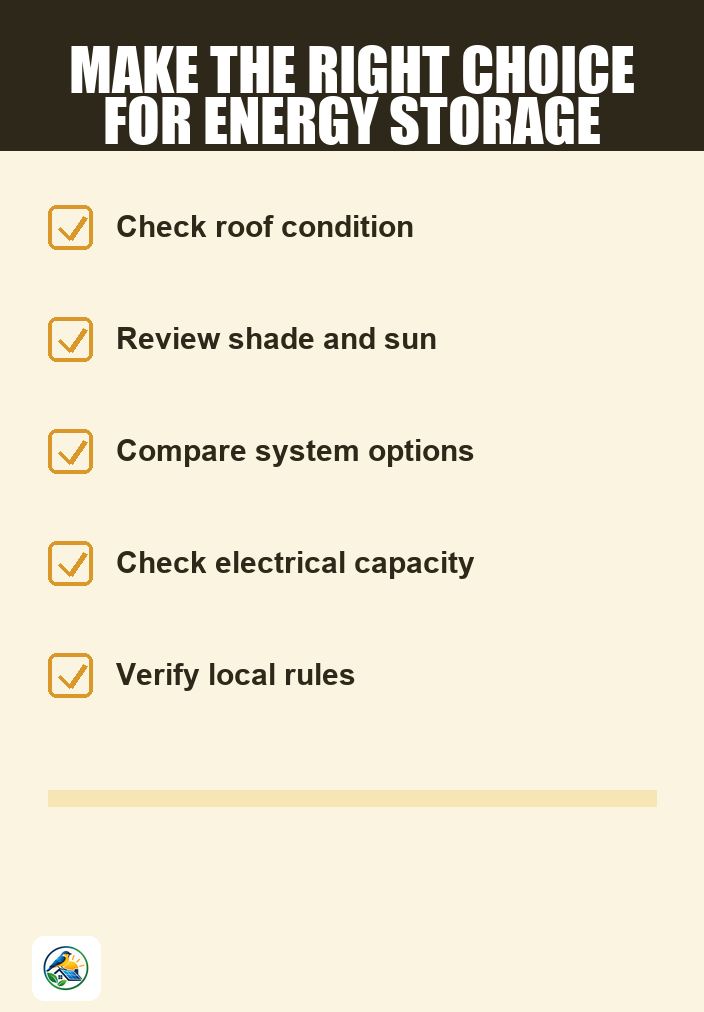
Deciding between a solar battery and a generator depends on several factors unique to your situation, including:
- Energy Needs: Assess your home’s energy consumption and how much backup power you realistically require.
- Budget: Consider your financial situation, including your ability to pay upfront or finance the purchase.
- Environmental Goals: Reflect on how important sustainability is to you and how each option aligns with those values.
- Utility Policies: Your local utility’s policies on net metering and energy storage can greatly influence your decision.
Next Steps: Getting Professional Quotes
Once you’ve weighed your options, the next step is to gather itemized quotes from qualified installers. This will help you understand the costs and benefits specific to your home. A professional assessment can also clarify whether a solar battery, generator, or a combination of both is the best option for your needs.
Remember, the financial landscape for solar and backup power solutions can change rapidly, so ensure you verify current local utility, installer, government, or tax information before making any commitments.