
Understanding Solar Financing Options for Your Home
When considering a residential rooftop solar system, one of the most critical components is the financing. Solar financing options can significantly affect the overall cost, payback period, and long-term savings associated with your solar investment. This article will guide you through the various financing options available, the trade-offs involved, and essential homeowner considerations when comparing solar financing solutions.
Types of Solar Financing Options
There are several solar financing options available to homeowners in the U.S., each with its own advantages and disadvantages. Understanding these can help you determine what might be the best fit for your situation.
- Cash Purchase: Paying for your solar system upfront can eliminate financing costs and maximize your return on investment. However, this option requires a significant initial outlay.
- Solar Loans: These loans allow you to finance the cost of your solar system over time, typically with monthly payments. Loan terms can vary, and you should consider the interest rate and potential fees when comparing options.
- Leases: In a solar lease, you pay a fixed monthly fee to use the solar system installed on your property. You won’t own the system, but this option often requires little to no upfront cost. However, your long-term savings may be limited compared to ownership.
- Power Purchase Agreements (PPAs): Similar to leases, a PPA allows you to pay for the electricity generated by the solar system at a predetermined rate. This option often provides immediate savings, but like leases, it doesn’t offer ownership benefits.
Evaluating Payback Periods
The payback period is the time it takes for your investment in solar to break even based on savings generated from reduced electricity bills. Calculating this can help you make informed decisions about which financing option is best for you.
How to Calculate the Payback Period
To calculate the payback period, follow these steps:
- Estimate your annual electricity savings by comparing your current utility costs to expected solar output.
- Subtract any ongoing costs associated with financing (like loan payments or lease costs) from your savings.
- Divide the total initial investment (including installation and financing costs) by your net annual savings.
This will give you an approximate payback period. Keep in mind that various factors can influence this calculation, including local electricity rates, solar production, and any applicable incentives.
Homeowner Considerations
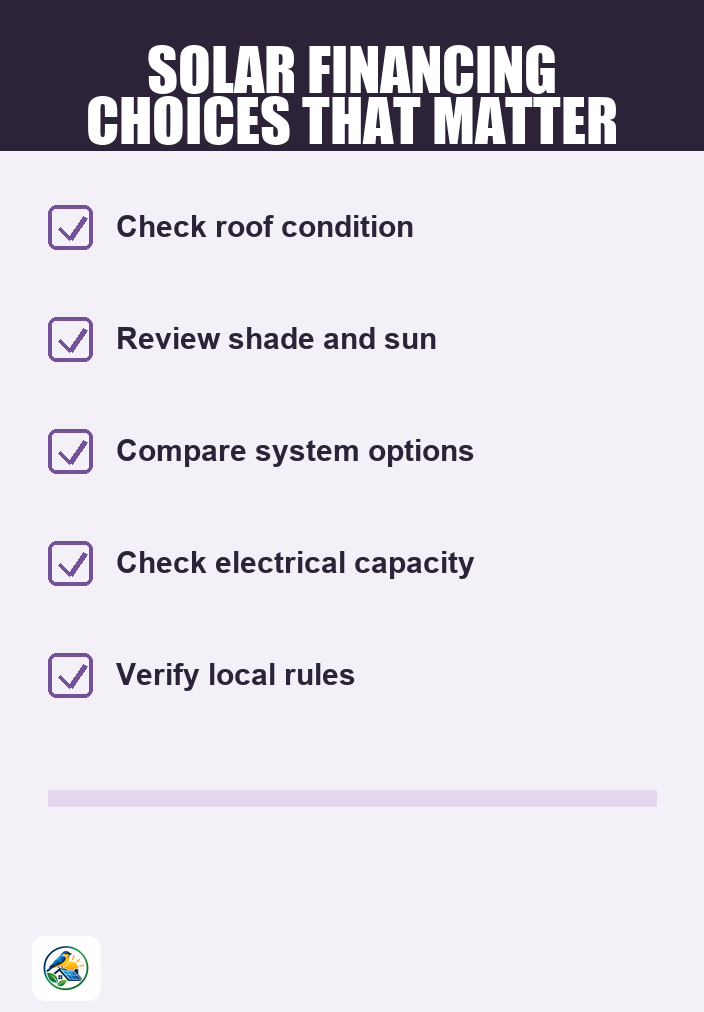
Before committing to a solar financing option, consider the following factors that can impact your overall experience and satisfaction:
- Roof Condition: Ensure your roof is in good shape before installing solar panels. An aging or damaged roof may require repairs or replacement, which can increase your initial costs.
- Shade and Orientation: The effectiveness of solar panels is highly influenced by your roof’s orientation and shading from trees or other structures. Assess your property to determine optimal panel placement.
- Utility Policies: Research your local utility’s net metering rules. This policy allows you to receive credits for excess energy generated by your solar system, which can affect your savings.
- Future Plans: Consider your long-term plans for the property. If you plan to move soon, leasing or a PPA may be more beneficial than owning the system outright.
- Maintenance and Reliability: Understand the maintenance requirements and warranties associated with your chosen financing option. Owning a system usually means you are responsible for maintenance costs.
Comparing Quotes from Solar Installers
Once you’ve decided on the financing option that seems best for you, it’s time to gather quotes from qualified solar installers. Here’s a practical checklist to help you evaluate the quotes:
- Itemized Costs: Ensure each quote breaks down the costs, including equipment, installation, permits, and any additional fees.
- Financing Terms: Compare the interest rates, loan terms, and monthly payments if considering a loan. For leases and PPAs, compare rates per kilowatt-hour.
- Incentives and Rebates: Verify any local, state, or federal incentives that may apply to your installation. Be cautious of claims, as these can change frequently.
- System Performance Estimates: Ask for estimates on the expected energy production of the system based on your location and roof characteristics.
- Warranty Information: Compare warranties on equipment and workmanship to understand your long-term protection.
Next Steps
As you explore your solar financing options, remember to compare itemized quotes from multiple qualified installers. This will provide a clearer picture of the financial implications and help you make an informed decision tailored to your unique circumstances. Since solar financing can vary significantly, always verify current incentives and costs with local resources to ensure you have the most accurate information before proceeding.


















