
Understanding Your Financing Options: Cash vs. Solar Loans
As a homeowner considering a professionally installed residential rooftop solar system, one of the most significant decisions you’ll face is how to finance your investment. The two primary options are paying cash upfront or taking out a solar loan. Each choice has its pros and cons, and the best option depends on your financial situation, goals, and the specifics of your home. This article provides a comprehensive checklist to help you navigate your decision-making process.
Evaluating Your Financial Situation
Before you dive into the specifics of cash versus loans, it’s essential to assess your current financial landscape. Here are a few key factors to consider:
- Available Cash: Determine how much liquid cash you have available to invest in solar. Will using this cash deplete your emergency fund or affect other financial goals?
- Credit Score: A strong credit score can lead to better loan terms. If your credit is less than stellar, you may face higher interest rates and less favorable loan conditions.
- Current Debts: Consider your existing debts. High debt-to-income ratios may affect your ability to secure a loan.
- Future Plans: Are you planning to stay in your current home for the long term? If not, consider how the financing option will affect your return on investment.
Understanding Cash Purchases
Paying cash for your solar system can be a straightforward approach with several advantages:
- No Interest Payments: When you pay cash, you avoid interest charges that can add to the overall cost of your system.
- Immediate Savings: Once your system is installed, you start saving on your electricity bills immediately without the burden of monthly loan payments.
- Full Ownership: Owning your system outright means you can take full advantage of any available incentives or rebates.
- Less Financial Risk: Without a loan, you eliminate the risk of default, which can be especially important if your financial situation changes.
Potential Drawbacks of Cash Purchases
However, using cash also has downsides:
- Upfront Cost: The initial outlay can be significant, which might deplete your savings.
- Opportunity Cost: Consider what other investments you could make with that cash. You may miss out on potential returns from other financial avenues.
Exploring Solar Loans
If paying cash isn’t feasible or appealing, a solar loan may be a more suitable option. Here are the primary benefits:
- Lower Initial Investment: A solar loan allows you to spread the cost of your system over time, making it more accessible.
- Potential Tax Benefits: Some loan structures may allow you to finance the system while still benefiting from available tax incentives.
- Cash Flow Management: Spreading payments over time can help manage your monthly budget, especially if your electricity savings offset the loan payments.
- Improved Credit Building: Successfully managing a loan can help build your credit score, provided you make timely payments.
Drawbacks of Solar Loans
Despite these advantages, there are some considerations to keep in mind:
- Interest Costs: Loans come with interest, which can significantly increase your overall expenditure.
- Long-Term Commitment: A loan ties you to a financial obligation for several years, which can be a burden if your circumstances change.
- Qualification Requirements: Not all homeowners will qualify for a loan, depending on credit scores and financial history.
Making the Right Choice: A Practical Checklist
To help you make an informed decision between cash and solar loans, consider the following checklist:
- Assess Your Financial Health: Review your available cash, debts, credit score, and future plans.
- Get Quotes: Obtain itemized quotes from qualified solar installers to understand the total cost of the system.
- Calculate Potential Savings: Estimate how much you could save on electricity bills with solar, and compare that against loan payments if applicable.
- Consider Incentives: Verify current solar incentives and how they apply to both payment options.
- Review Loan Options: If considering a loan, compare interest rates, terms, and conditions from multiple lenders.
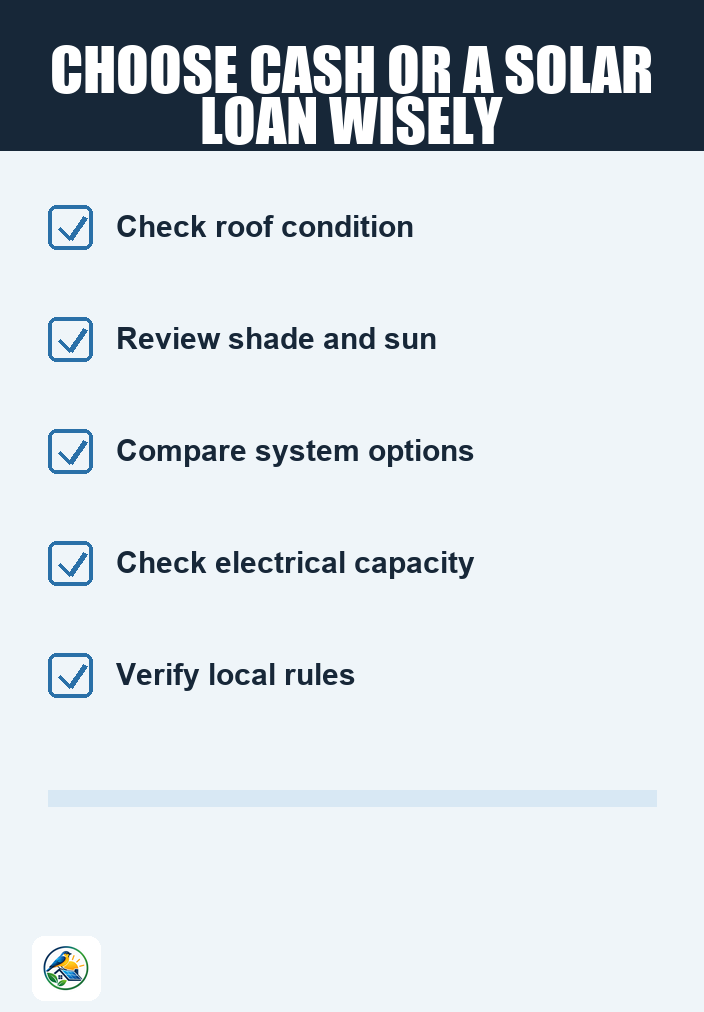
- Evaluate Home Factors: Consider your roof condition, shading, orientation, and local utility rules that could impact your system’s performance.
- Consult Professionals: Speak with a financial advisor or a tax professional to understand the implications of each financing option.
Next Steps: Making Your Decision
Deciding between cash and solar loans involves careful consideration of your financial situation, your home’s specific characteristics, and your long-term plans. To ensure you make an informed choice, gather itemized quotes from qualified solar installers in your area. They can help you understand not only the costs involved but also the potential for savings and the best financing options available. Remember to verify local incentives and financing terms to ensure they fit your needs.


















