
Understanding the Importance of Roof Condition Before Solar Installation
As homeowners contemplate the transition to solar energy, one crucial factor often overlooked is the condition of the roof. An aging roof can present significant challenges when considering a solar installation. Spotting potential issues early can save time, money, and frustration. This article explores the implications of installing solar panels on an aging roof and provides actionable steps to help homeowners make informed decisions.
Why Roof Condition Matters for Solar Panels
Solar panels are a long-term investment, and the roof serves as their foundation. If your roof is nearing the end of its lifespan, installing solar panels may not be the best choice. Here are a few reasons why roof condition is critical:
- Structural Integrity: Solar panels can weigh a significant amount, and an aging roof may not have the structural integrity to support them safely.
- Potential for Repairs: If your roof needs repairs, the costs can add up quickly. Installing solar panels might complicate or delay necessary repairs.
- Longevity Concerns: Solar panel systems are typically designed to last 25 years or more. A roof that requires replacement soon after installation could lead to additional costs and logistical challenges.
Assessing Your Roof’s Condition
Before moving forward with a solar installation, it’s vital to assess the condition of your roof. Here are some steps you can take:
1. Perform a Visual Inspection
Look for visible signs of wear and tear, such as:
- Missing or damaged shingles
- Cracked tiles
- Leaking or water stains in the attic
- Rusty flashing or gutters
2. Check the Age of Your Roof
Know the age of your roof, as different materials have varying lifespans:
- Asphalt shingles: 20-25 years
- Wood shingles: 20-30 years
- Metal roofs: 40-70 years
- Tile roofs: 50-100 years
If your roof is approaching the end of its expected lifespan, consider replacing it before installing solar panels.
3. Hire a Professional Roofer
A professional roofer can provide a detailed inspection and recommend repairs or replacement. Their expertise can help identify issues that may not be immediately visible to the untrained eye.
Evaluating Solar Installation Options
Once you have assessed your roof, you can better understand your options for solar installation, depending on its condition:
1. Replacing Your Roof First
If your roof requires significant repairs or replacement, it might be wise to prioritize that before installing solar panels. This approach can prevent the need to remove and reinstall solar panels later.
2. Roof-Mount vs. Ground-Mount Systems
If you decide that your aging roof can still accommodate solar panels, consider the type of system:
- Roof-Mount Systems: These systems are affixed directly to the roof. Ensure your roof can handle the weight and potential damage from installation.
- Ground-Mount Systems: If a roof replacement is necessary or if the roof is unsuitable, you might consider installing solar panels on a ground-mounted system. This option often allows for easier maintenance and replacement.
Understanding Costs and Trade-offs
Installing solar panels comes with various costs that can vary significantly based on location, roof condition, and system type. Here are some factors to consider:
- Installation Costs: Assess the total cost for roof repairs or replacement along with solar installation. Itemized quotes from qualified installers can provide clarity.
- Financing Options: Explore financing options for both roof repairs and solar installation. Understand the impact of financing costs on your overall budget.
- Incentives and Rebates: Research local, state, and federal incentives, as these can impact your overall costs. Verify current information, as incentives can change frequently.
Permitting and Utility Regulations
Before moving forward, familiarize yourself with local permitting processes and utility regulations. These can vary widely:
- Permitting: Confirm what permits are required for roof repairs and solar installation.
- Utility Policies: Understand net-metering rules and how your utility handles solar installations, as these can affect overall costs and savings.
Next Steps for Homeowners
Installing solar panels on an aging roof requires careful consideration and assessment. To move forward:
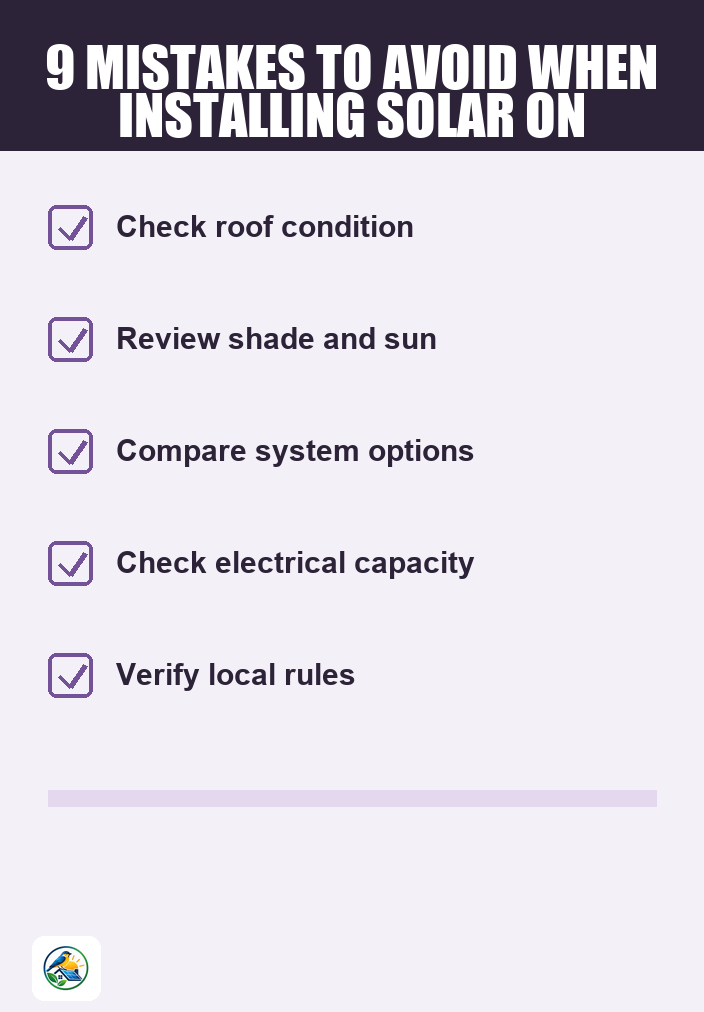
- Evaluate your roof’s condition through inspection and professional advice.
- Decide whether to repair or replace your roof before considering solar.
- Request itemized quotes from qualified solar installers to compare options.
- Research local incentives and verify current information about them.
By taking these steps, you can avoid costly oversights and make informed decisions about your solar energy options, ensuring a smooth transition to renewable energy.


















