
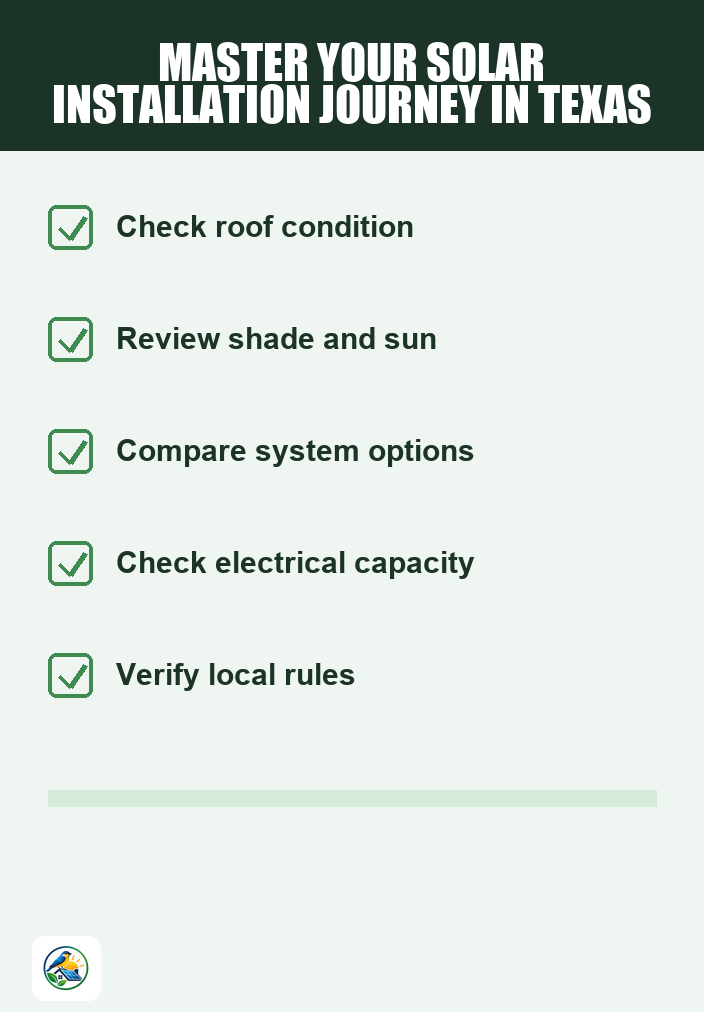
Understanding the Basics of Solar Installation in Texas
Considering solar energy for your Texas home is a significant step toward energy independence and environmental sustainability. However, the preparation process can be complex, involving various considerations. Whether you’re looking to install a traditional grid-tied solar system or enhance your setup with a home battery, it’s essential to understand the steps needed to prepare for installation.
Assessing Your Home for Solar Installation
The first step in preparing for solar installation is assessing your home’s suitability for solar panels. Here are some key factors to consider:
- Roof Condition: Ensure your roof is in good condition. Solar panels can last 25 years or more, so if your roof needs repairs or replacement, it’s wise to address those issues before installation.
- Roof Orientation and Pitch: South-facing roofs typically receive the most sunlight, but east- and west-facing roofs can also be suitable. The pitch of your roof can affect the angle at which panels are installed, impacting their efficiency.
- Shade Analysis: Evaluate any potential shading from trees, buildings, or other structures. Even partial shading can significantly reduce solar output.
Understanding Your Energy Needs
Before moving forward, understanding your household energy consumption is crucial. Here are steps to help you gauge your energy needs:
- Review your past electricity bills for at least the last 12 months to get an average monthly usage.
- Identify peak usage times and consider any potential changes in your consumption—like adding electric vehicles or major appliances.
- Calculate how much of your energy use you’d like to offset with solar. Some homeowners aim for 100% offset, while others may target a lower percentage due to cost considerations.
Choosing the Right Solar System Type
In Texas, homeowners typically have a few options when it comes to solar systems:
- Grid-Tied Systems: These systems are connected to the local utility grid. They allow for net metering, which can credit you for excess energy produced on sunny days.
- Battery Backup Systems: These systems include battery storage to provide power when the grid is down or during peak usage times. They offer more energy independence but come with higher upfront costs.
- Off-Grid Systems: While less common for residential customers in Texas, these systems are completely independent of the grid and rely on battery storage. They require careful planning and sizing to ensure adequate energy supply.
Researching Incentives and Financial Considerations
Understanding financial incentives is crucial when preparing for solar installation. Here are some aspects to consider:
- State and Local Incentives: Texas offers various incentives, but they can vary by location. Check with local utility companies and government programs for available rebates or incentives.
- Federal Tax Credits: While there are federal tax credits available for solar installations, verify the current percentage and eligibility requirements with a tax professional, as these can change.
- Financing Options: Explore different financing options, including solar loans, leases, and power purchase agreements (PPAs). Each option has its pros and cons, so it’s vital to understand how they impact your budget.
Finding and Evaluating Solar Installers
Choosing the right solar installer can significantly affect your installation experience and the system’s performance. Here are steps to help you find a qualified installer:
- Gather Recommendations: Ask friends, family, or neighbors for recommendations based on their experiences with local solar installers.
- Check Credentials: Ensure the installer is licensed, insured, and has experience with residential solar installations in Texas.
- Request Multiple Quotes: Obtain quotes from at least three different installers. Ensure each quote includes a detailed breakdown of equipment, installation costs, and warranties.
Understanding Permitting and Interconnection Processes
Before installation, you will need to navigate local permitting and interconnection requirements. This process can vary significantly by municipality and utility company. Here are some tips:
- Permitting: Most cities in Texas require permits for solar installations. Your installer should facilitate this process, but it’s essential to verify that they have a good track record with local regulations.
- Interconnection Agreements: If you’re connecting to the grid, you will need an interconnection agreement with your utility. This agreement outlines how your system will connect and any requirements for safety and compliance.
Maintenance Considerations for Your Solar System
While solar systems require minimal maintenance, there are some considerations to keep in mind:
- Regular Inspections: Schedule periodic inspections to ensure your system is operating efficiently. This can also help identify any potential issues early.
- Cleaning: In areas with heavy dust or pollen, panels may need cleaning to maintain efficiency. However, rain often does a good job of cleaning them naturally.
- Monitoring Performance: Utilize monitoring systems to track your solar production and energy savings. Most modern systems come with apps that allow you to check performance remotely.
Next Steps: Preparing for Your Solar Installation
Preparing for solar installation in Texas involves careful planning and research. Follow these next steps to ensure a smooth installation process:
- Conduct a thorough assessment of your home’s suitability for solar.
- Understand your energy needs and how a solar system can meet them.
- Research available incentives and financing options.
- Find and compare quotes from qualified installers, focusing on itemized costs and warranties.
- Familiarize yourself with local permitting and interconnection requirements.
By taking these essential steps, you’ll be well-prepared to move forward with your solar installation journey. Remember, every Texas home is unique, and the best approach is to gather detailed information specific to your situation.


















